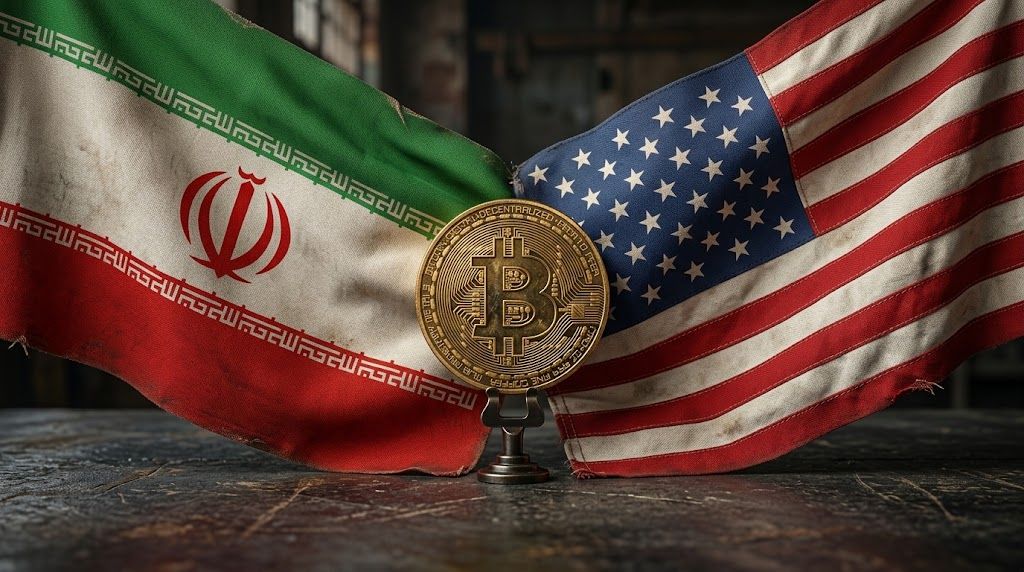
US-Iran Conflict and Bitcoin Price: Why Geopolitics, Oil, and Interest Rates Can Affect BTC?
2026-09-03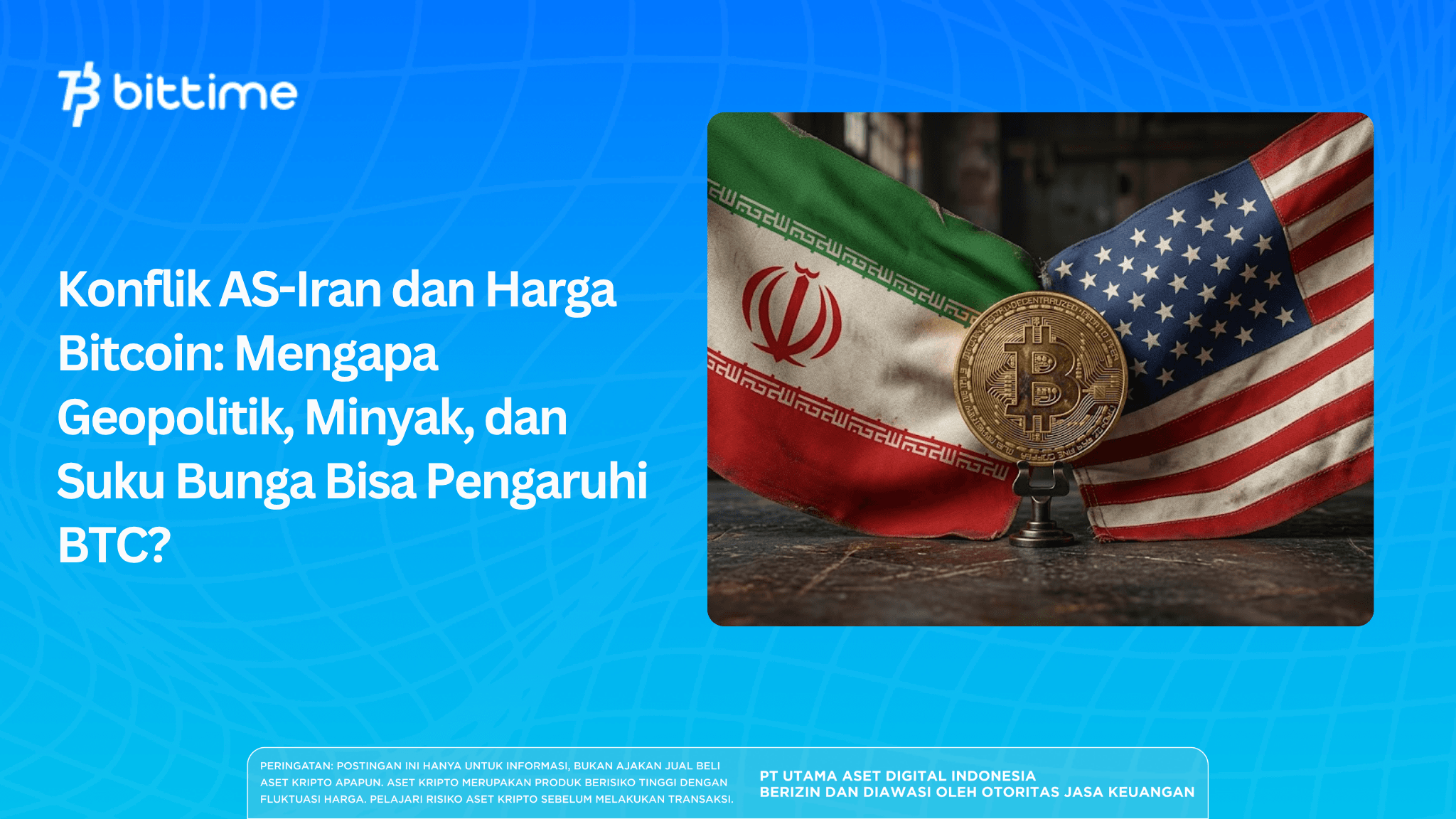
Bitcoin price briefly slipped below the $77,000 level overnight, just as US airstrikes and Iranian missile retaliation erupted again around the Strait of Hormuz. This Bitcoin price movement is no coincidence — every time the US-Iran conflict heats up, oil, bond, and crypto markets typically become volatile within hours.
On the other hand, expectations of Fed rate hikes and risk-off sentiment globally have also put BTC prices to the test today, although some analysts see a resilience that is beginning to differ from previous crisis cycles.
Key Takeaways
- Bitcoin briefly plunged below $77,000 after the US launched new strikes on Iran, though it later held around $78,000 in the following session.
- Brent crude oil jumped above $91–95 per barrel, fueling inflation concerns and driving expectations of Fed rate hikes.
- Gold also weakened alongside Bitcoin, indicating broad risk-off sentiment ahead of this week's US jobs data.
Timeline of US-Iran Escalation That Shakes the Strait of Hormuz Again
Tensions between the United States and Iran have re-escalated after a period of relative calm. US forces launched a new wave of strikes — the second time in about three days — targeting air defence sites, radar, military vessels, mine-laying capabilities, and communication facilities belonging to Iran's Islamic Revolutionary Guard Corps (IRGC).
According to Reuters, these strikes are a continuation of an escalation that had previously shifted into economic deadlock between the two countries.
Iran retaliated by launching missiles toward US military facilities in Jordan and Bahrain. Jordan reported that most missiles were intercepted by its air defence systems, while two oil supertankers attempting to exit the Strait of Hormuz were reportedly hit by projectiles in separate incidents.
Diplomatic prospects appear stalled — President Donald Trump downplayed the possibility of negotiations, while Iranian officials are also sceptical that talks could resume anytime soon.
Phenomena like Bitcoin and geopolitical war have actually repeated several times this year, as the intensity of the US-Iran conflict has fluctuated since early 2026. Such situations make crypto market volatility unavoidable.
For traders looking to capitalise on rapidly changing Bitcoin prices, the Bittime Futures feature can be an option to manage risk in both market directions. Register now at Bittime and explore futures and spot trading features in one platform.
Impact of US-Iran Conflict on Oil Prices and Inflation Threat
The military escalation in the Strait of Hormuz immediately rippled into energy markets. Reuters noted Brent crude rose to around $91 per barrel, after the previous session closed up 2.7% — the highest level since 25 August. WTI also moved in the $86–90 per barrel range. Traders Union even noted Brent briefly hit $95.48 and WTI $90.72 at their peaks.
The Strait of Hormuz is a major concern because this chokepoint carries about one-fifth of the world's oil and gas supplies. Threats to this shipping lane automatically make markets price in higher risk premiums.
Analysts surveyed by Reuters as early as August had already forecast that oil prices would stay above $80 per barrel throughout 2026 as long as shipping disruptions continue.
The effect does not stop in the energy sector. More expensive oil immediately triggers inflation concerns, and that is clearly visible in bond market responses — yields jumped close to levels not seen since 2008.
For investors, the main risk shifts from just the next round of retaliatory strikes to the potential for a protracted conflict that keeps energy costs and appetite for risk assets under pressure.
Read Also: Nvidia's $500 Billion AI Funding, AI Crypto Tokens Also Benefiting?
Bitcoin Price Today, Gold, and Other Crypto Markets Response
This answers the question many are asking: why does the Bitcoin price drop when geopolitical conflicts like this erupt? The answer lies in the chain of cause and effect between oil, inflation, and interest rate policy — and here are the details.
Bitcoin and Altcoins Also Under Pressure
Bitcoin Magazine noted BTC fell more than 2% to $77,363 on Tuesday (1/9), after briefly touching $81,282 the previous Friday. According to CoinMarketCap data, Bitcoin price stood at $77,522.85 on Wednesday (2/9), down 1.44% in 24 hours. Ethereum also weakened 2.34% to $2,413.48, while XRP fell 2.66% to $1.34.
Even so, some market reports showed Bitcoin later held around $78,000 in the following session, and even outperformed gold and stocks throughout August. According to CoinDesk, Bitcoin rose 23% in August, compared with gold's 9% gain and Nasdaq's 4% over the same period — driven by strong spot ETF inflows.
Bitcoin's resilience amid geopolitical escalation has led some analysts to question whether BTC is gradually behaving as a safe-haven asset, though one session is not enough to conclude this definitively.
Read Also: 10 Free Bitcoin Mining and Faucet Sites 2026, Which Are Legit?
Gold Also Came Under Pressure
Normally, gold rises during geopolitical crises due to its status as a safe-haven asset. This time, the situation is different — gold also weakened to around $4,300 per ounce, a four-session losing streak and the lowest level in more than three weeks, according to Tradingeconomics data. Japan's Nikkei index also fell 2.7% amid risk-off sentiment sweeping global markets.
The Fed and the Shadow of Rate Hikes
Macro factors also added to the pressure. Fed Chair Kevin Warsh, in his first speech since taking office at the Jackson Hole forum, stressed that US inflation has not fallen to the desired level.
As a result, market participants are now pricing in the possibility of a rate hike this month, rather than a cut as was previously hoped — with some even estimating a 58% probability of a September rate hike, according to CoinDesk.
Rate hikes directly reduce liquidity circulating in financial markets, including funds that typically flow into risk assets like Bitcoin — thus adding further pressure on BTC prices.
Read Also: Tokenized Stocks vs Regular Stocks: Definition, Differences, and How to Buy
What Should Traders Do When the Market Is Volatile?
Market attention now shifts to US employment data: the ADP report is released on Wednesday, followed by Nonfarm Payrolls on Friday (4/9). Both sets of data have the potential to determine the Fed's next policy direction — and thus the next major catalyst for Bitcoin's price movement in the near term.
Momentary volatility like this is actually one of the scenarios most often used by experienced traders to take positions according to their view of market direction.
The Bittime Futures feature allows users to open long positions when bullish on prices, or short positions when expecting further price pressure, complete with adjustable leverage options.
However, futures trading is not a suitable instrument for all investors or traders. Leverage can magnify potential profits, but it equally magnifies potential losses, including the risk of liquidation if price moves against the position taken. Understand the mechanics and risk management before starting to trade.
Conclusion
The renewed US-Iran conflict underscores the close relationship between Bitcoin and global economic conditions: from geopolitics, oil prices, interest rate policy, to Bitcoin price movements themselves.
Higher oil prices trigger inflation concerns, drive expectations that the Fed will hold or even raise rates, and ultimately weigh on market appetite for risk assets including crypto.
Nevertheless, Bitcoin's resilience, which held around $78,000 amid this turmoil, is an interesting signal to continue monitoring, especially ahead of US jobs data releases that could determine the next market direction.
Check the prices of Bitcoin (BTC), Ethereum (ETH), XRP, Solana (SOL), GRAM, and BNB, and also top memecoins DOGE. You can trade directly on Bittime!

Bittime is a Digital Asset Trading Platform (PAKD) licensed and supervised by the Financial Services Authority — where you can buy Bitcoin in Indonesia and hundreds of other crypto assets starting from Rp10,000. The registration process is fast, secure, and can be started today.
Monitor the USDT to IDR conversion and real-time price movements of your favourite crypto assets. All are available in one crypto investment app that can be downloaded for free on the Play Store.
Ready to start? Register now at Bittime and execute your investment strategy with a platform trusted by millions of users in Indonesia.
FAQ
1. Why does Bitcoin price drop when geopolitical conflicts like US-Iran heat up?
Geopolitical conflicts usually push oil prices higher, which then triggers inflation concerns. Investors tend to reduce exposure to risk assets like Bitcoin due to expectations of tighter monetary policy.
2. What is the relationship between oil prices and Bitcoin price movements?
High oil prices increase energy costs and global inflation risks. This condition affects expectations of Fed interest rates, which in turn influences liquidity and market appetite for Bitcoin.
3. How do Fed interest rates affect Bitcoin prices?
Higher interest rates usually reduce liquidity flowing into risk assets like Bitcoin. Conversely, low-rate policies tend to support Bitcoin's performance in the medium-to-long term.
4. Can Bitcoin be a safe-haven asset during war or geopolitical crises?
The response is still mixed — Bitcoin sometimes falls along with other risk assets, but at other times it holds up better than gold and stocks. One session of movement is not enough to conclude that Bitcoin is a consistent safe-haven asset.
5. How do you trade Bitcoin futures when the market is volatile?
Traders can use the futures feature to take positions in both market directions, whether prices are rising or falling. It is important to always pay attention to risk management such as leverage and stop-loss, given the high volatility in periods like this.
Disclaimer: The views expressed belong exclusively to the author and do not reflect the views of this platform. This platform and its affiliates disclaim any responsibility for the accuracy or suitability of the information provided. It is for informational purposes only and not intended as financial or investment advice.

.png)