Oil Prices Plunge 9% After US and Iran Agree to Discuss Opening the Strait of Hormuz
2026-08-03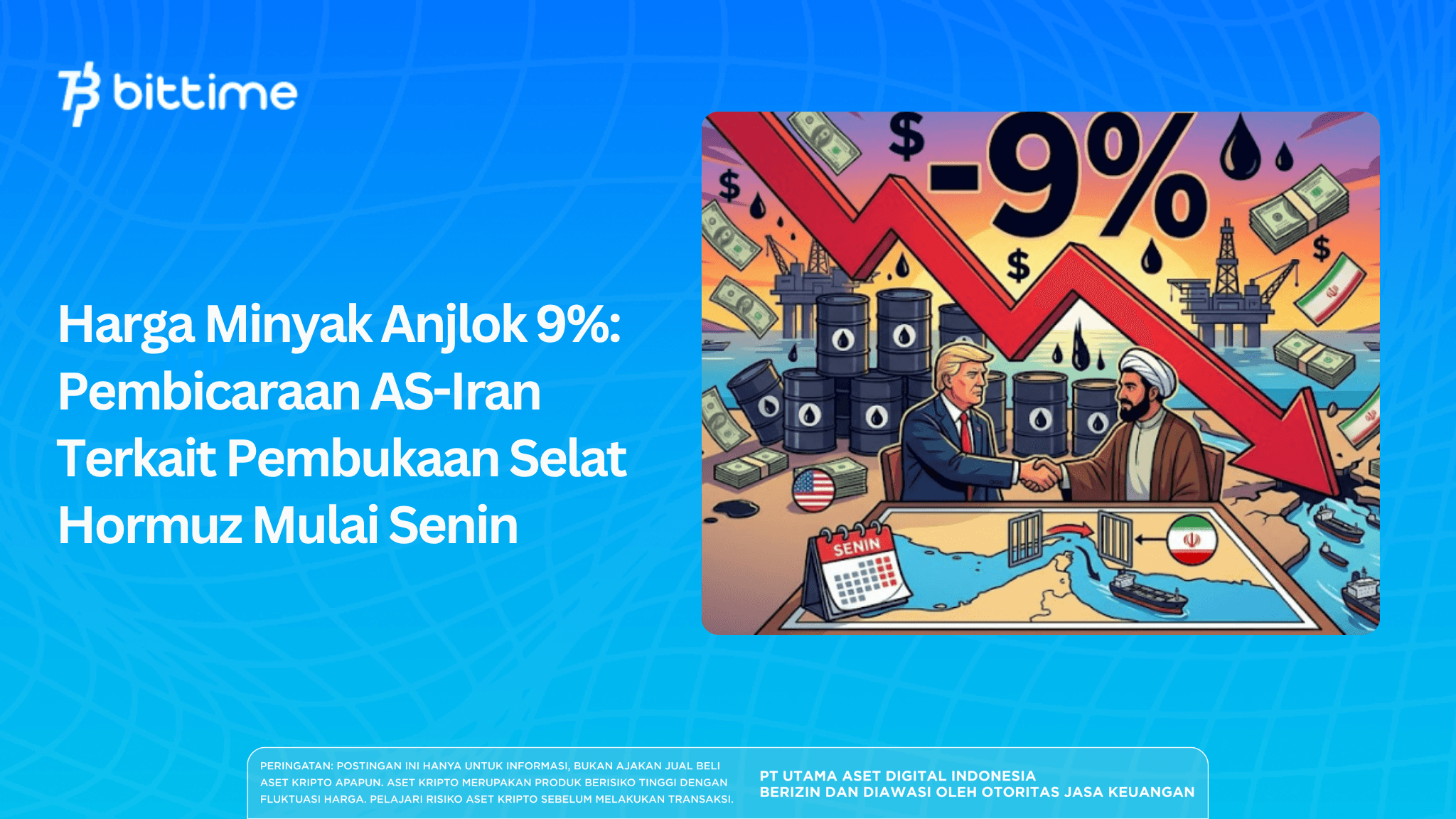
Traders who just locked in long oil positions last Wednesday, when Brent jumped 9.6% on Strait of Hormuz concerns, may be biting their nails this weekend.
Global oil prices plunged 9% overnight after US President Donald Trump canceled plans for an attack on Iran and scheduled US-Iran talks starting this Monday—reversing energy market sentiment in a matter of days.
Brent briefly touched a low of $82.83 from its previous close of $91.03, before recovering slightly to around $84 per barrel.
WTI also slumped 4.74% to $80.66. A drop this sharp usually requires a very clear signal, and this time the signal is the hope of reopening one of the world’s busiest oil shipping routes.
Key Takeaways
- Global oil prices plunged sharply—Brent to the $83–84 range, WTI to $80.66—after Trump canceled plans for an attack on Iran and scheduled negotiations for this Monday.
- Iran officially denied Trump’s claim of a request to delay the attack, while tanker attacks around the Strait of Hormuz in fact continue.
- OPEC+ added further downward pressure by approving a production increase of 188,000 barrels per day starting in September, amid uncertainty over the negotiation outcome.
Chronology Behind the Oil Price Plunge
The US-Iran conflict has been ongoing since late February 2026 and briefly eased through a memorandum of understanding (MoU) signed by both parties on June 17. That MoU provided a 60-day negotiation window, which is now nearly exhausted.
Throughout July, oil prices actually rose more than 20% as US-Iran exchanges of fire resumed and attacks on several tankers near Oman made ships reluctant to enter the Gulf.
Last Saturday night, as reported by BeInCrypto, Trump announced via Truth Social that Iran and several other Middle Eastern countries had requested additional time to finalize an agreement—with the promise of fully reopening the Strait of Hormuz and ending Iran’s nuclear threat.
Read Also: After the Strait of Hormuz Reopens: Will the AI Sector Become the Darling Again?
He claimed to have agreed to cancel major attack plans, provided an agreement could be reached quickly, and named Saudi Arabia, the UAE, Qatar, and even Iran itself as the parties making this request.
Saudi government media confirmed part of the story, stating that Crown Prince MBS pushed Trump toward de-escalation via a weekend phone call.
Iran has a different story. The semi-official Fars news agency instead mocked Trump’s claim and called it baseless, showing no sign of softening its stance on control of the Strait of Hormuz. Talks are scheduled to begin this Monday afternoon—meaning today is D-Day for the discussions that triggered the price plunge.
Sign up at Bittime with a fast, secure, and easy process so you can trade futures whether the crypto market is bearish or bullish!
Latest Price Data and Factors Adding to Downward Pressure
This week’s volatility has been extreme. Brent jumped 9.6% last Wednesday on Hormuz concerns, then plunged another 9% this weekend as soon as de-escalation signals appeared. Such sharp up-and-down patterns reflect how sensitive energy markets are to every statement from Washington or Tehran.
Another factor weighing on prices: On Sunday, OPEC+ approved a production quota increase of around 188,000 barrels per day starting in September, completing the unwinding of previous voluntary production cuts.
This additional supply arrives precisely as market sentiment leans toward reduced geopolitical risk, amplifying the effect.
Read Also: Global Crude Oil Prices Rise Today Amid Iran–Israel War Impact
Even so, the situation on the ground is not yet fully calm. UK Maritime Trade Operations reported three additional tanker attacks since Saturday, and ship traffic through the Strait of Hormuz has slowed.
Several tankers carrying Saudi oil have even been diverted via the Bab-el-Mandeb Strait from the Red Sea to avoid the Hormuz route entirely.
IG market analyst Tony Sycamore warned that the biggest risk this week is a repeat of last week’s pattern—hopes for a deal that collapse again because Iran has yet to show signs of softening, while the 60-day MoU window continues without pause, as reported by BeInCrypto.
Conclusion
This 9% oil price plunge is purely a reflection of market hopes, not proof that the crisis is over. Continuing tanker attacks and Iran’s official denial show that the gap between the diplomatic narrative and real conditions on the ground remains quite wide.
The outcome of Monday’s talks will determine the price direction this week—whether it truly becomes a turning point toward stability, or simply adds another round to the “up on escalation, down on hopes for peace” pattern that has repeated since February.

Check the prices of Bitcoin (BTC), Ethereum (ETH), XRP, Solana (SOL), GRAM, and BNB as well as popular memecoins like DOGE. You can trade directly on Bittime!
Bittime is a Digital Financial Asset Trader (PAKD) platform licensed and supervised by the Financial Services Authority — where you can buy Bitcoin in Indonesia and hundreds of other crypto assets starting from Rp10,000. Registration is fast, secure, and can begin today.
Monitor the USDT to IDR conversion and real-time price movements of your favorite crypto assets. Everything is available in one crypto investment app that can be downloaded for free on the Play Store.
Ready to start? Register now at Bittime and execute your investment strategy on a platform already trusted by millions of users in Indonesia.
FAQ
Why did oil prices drop 9% today?
Oil prices dropped sharply after US President Donald Trump canceled plans for an attack on Iran and announced that talks would begin this Monday to reopen the Strait of Hormuz. This reduction in geopolitical risk was reinforced by OPEC+’s decision to increase production starting in September.
What are the current prices of Brent and WTI?
Brent briefly touched $82.83 before recovering to around $84 per barrel, while WTI fell to $80.66 per barrel. Both benchmarks remain highly volatile depending on negotiation developments.
When will the Strait of Hormuz reopen?
Trump promised a full reopening of the Strait of Hormuz as part of the agreement being negotiated starting this Monday, but there is no definite date yet because Iran has not confirmed the deal. Continuing tanker attacks show that the situation on the ground is not yet fully safe.
Did Iran agree to the request to delay the attack claimed by Trump?
No. Iran’s semi-official news agency Fars denied the claim and called it baseless, showing no softening of its stance on the Strait of Hormuz.
What role did OPEC+ play in this oil price drop?
OPEC+ approved a production increase of around 188,000 barrels per day starting in September, adding global supply precisely as geopolitical risk sentiment was declining. The combination of both factors accelerated the price drop.
Could oil prices rise again?
Very possibly, given that tanker attacks around Hormuz continue and Iran has yet to show signs of agreeing to a deal. If Monday’s talks fail, the sharp rally pattern seen last Wednesday could potentially repeat.
Disclaimer: The views expressed belong exclusively to the author and do not reflect the views of this platform. This platform and its affiliates disclaim any responsibility for the accuracy or suitability of the information provided. It is for informational purposes only and not intended as financial or investment advice.

.png)