What Is Farming Season? The RWA Game on Robinhood Chain
2026-10-15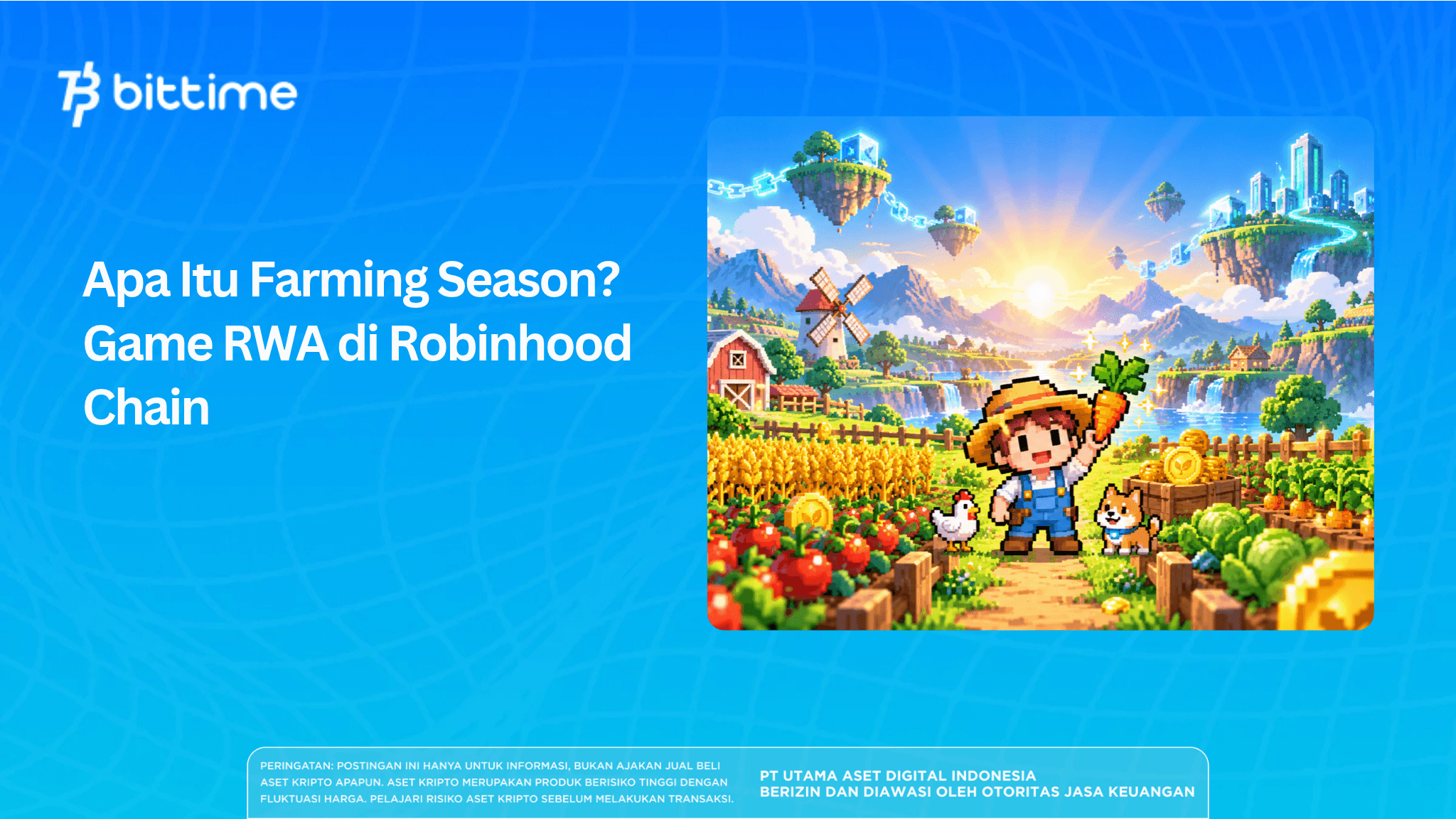
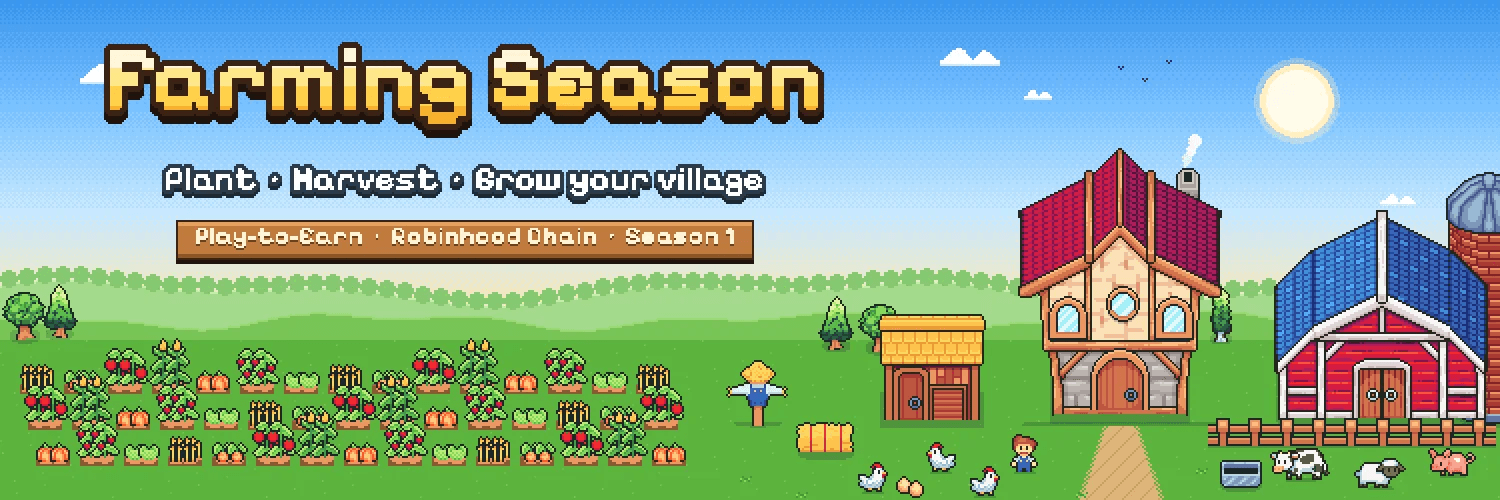
Farming Season is introduced as a Web3 farming-themed game built around the concept of Real World Assets, or RWA on Robinhood Chain. Its introductory materials mention mining gold and silver, while supporting descriptions explain the use of real-world market prices for certain resources. The key question is whether this concept gives players ownership of actual assets or simply uses their prices within the game.
This distinction matters before trying a game that uses the term RWA. Understanding how prices, game rules, and player rights interact can help you evaluate the experience without immediately treating it as an investment opportunity.
Key Takeaways
- Farming Season introduces a Web3 gaming concept that links in-game resources to real-world market prices.
- Using commodity prices does not prove that players own gold, silver, or other physical assets.
- The game's availability, costs, wallet requirements, and reward mechanisms should be checked before participating.
What Is Farming Season?
Farming Season is a gaming project that combines farming themes, resource gathering, and the RWA concept. This places it within the broader discussion of Web3 gaming, which uses blockchain components in the player experience or asset management.
However, the Web3 label alone does not explain how an entire game works. Developers still need to clarify which activities are recorded on the blockchain, how digital assets function, and which parts of the game operate through conventional systems.
For this project, the available information is not yet sufficient to confirm that all features are accessible. Its introductory materials should therefore be understood as an overview of the concept, not proof that every mechanism is operational.
Read also: What Is American Rewards Fund (ARF)? How It Works and Its Risks
How Does Farming Season Work?
Resource-gathering activities
The project's introductory materials identify gold and silver mining as part of the game concept. Supporting descriptions also include oil among the resources linked to market-price data.
This information does not yet explain the complete gameplay sequence. Production times, equipment requirements, storage limits, and rules for using gathered resources still require more detailed documentation.
Given these limitations, an accurate step-by-step guide to getting started cannot yet be provided. Players need access to the game or official instructions showing what actions they can take and their consequences.
Market prices as a reference
In principle, market data can allow the value of a resource to change in line with a reference price outside the game. However, the effect on players still depends on the formula established by the developers.
As a hypothetical illustration, a game might increase the sale value of a virtual resource when its reference commodity price rises. Another game might use the same data only as an indicator, without changing players' balances or rewards.
This example is not a verified Farming Season mechanism. Understanding how the concept is implemented requires details about price sources, update frequency, commodity units, and how the data affects the in-game economy.
Read also: What Is FISH Token? Exploring the Fair Pond Game on Solana
The RWA Concept in Farming Season
RWA stands for Real World Assets, meaning assets that exist in the physical world. In the context of blockchain, the term often refers to digital representations of assets or rights connected to assets outside the network.
In gaming, connections to the real world can take different forms. It is important to distinguish the use of price data, the existence of digital tokens, and rights to the underlying assets.
- Price reference: the game uses market information to determine certain values or parameters.
- Digital representation: an asset or right is represented in token form.
- Holder rights: the product's terms explain what users can actually do or claim.
These three elements do not necessarily come together. An in-game item can track the price of gold without granting the right to receive physical gold or redeem it for a particular financial product.
Based on the information reviewed, the most limited and relevant description of Farming Season is that its in-game resources are linked to market prices. Evidence of asset reserves, custodians, or redemption rights has not been verified.
The term farming in the game's name is also insufficient to establish that it involves yield farming. Gathering resources in a game differs from depositing assets into decentralized financial services to earn returns.
Read also: What Is FarmFun (FARM)? Token Utility, Tokenomics, and Ecosystem
The Relationship Between Farming Season and Robinhood Chain
The project introduces Farming Season as a game built on Robinhood Chain. The network itself is described as an Ethereum-compatible Layer 2 blockchain that is open to application developers.
Layer 2 refers to a network designed to help process transactions within an underlying blockchain ecosystem. Its open nature allows third-party developers to build applications without making every application an official product of the network provider.
Therefore, mentioning Robinhood Chain identifies the project's choice of infrastructure. It does not, by itself, establish a partnership, funding arrangement, joint development effort, or guarantee from Robinhood.
You should also distinguish network readiness from game readiness. An available network does not mean a particular application has been fully developed, passed testing, or opened to the public.
How It Differs from Traditional Farming Games
In many conventional farming games, resource values are determined by internal rules. Players learn how production time, material requirements, and selling prices interact as they progress through the game.
Farming Season's proposed concept adds a reference to external markets. If incorporated into its core mechanics, changes in those data could become an additional consideration when managing resources.
Another difference involves what players need to understand. Beyond the game rules, blockchain-based games may require familiarity with wallets, transaction approvals, and managing access to assets.
Nevertheless, a game's quality should still be judged by the playing experience. Clear objectives, intuitive controls, and balanced progression remain important even when blockchain technology is involved.
Read also: What Is Altai the Tiger (ALTAI)? Exploring the Viral Solana Memecoin
What to Check Before Playing
- Official access channels. Match the website address against links shared by the project's official account. Do not rely on private messages or advertisements offering exclusive access.
- Launch status. Check whether the available option is a waitlist, a demo, limited testing, or a publicly accessible game. Registering your interest does not necessarily grant immediate access.
- Account and wallet requirements. Look for instructions covering login methods, the network used, and supported wallets. Do not assume every crypto wallet is compatible.
- Cost components. Distinguish access fees, item purchases, and network transaction fees. If the details are unavailable, avoid stating definitively that the game is free or paid.
- Asset and reward rules. Check whether gameplay produces points, items, or transferable assets. Also review any usage restrictions and redemption terms, if available.
- Permission requests. Understand what you are approving when connecting a wallet or signing a transaction. Never share your recovery phrase or private keys.
This checklist can help determine whether the available information is sufficient to proceed. If essential requirements remain unclear, following developments is more sensible than acting on instructions that cannot be verified.
Read also: What Is Digital American Water Supply (DAWS)? Utility and Tokenomics
Farming Season's Potential and Risks
The potential of this concept lies in using price movements as part of learning and decision-making. Through gameplay, players could be introduced to the relationships between resources, value, and time.
However, these potential benefits reflect an assessment of the concept, not findings from testing Farming Season. Their realization depends on a design that makes market information understandable while supporting an engaging game experience.
The first risk involves data quality. If external prices are used, developers need to explain how the system responds when data is delayed, unavailable, or unusually priced.
The second risk concerns the balance of the in-game economy. Changes in item values, costs, and production rules may affect player progress, especially if the rules change after players have invested time or money.
The third risk involves application security and sustainability. Blockchain use does not eliminate the possibility of software bugs, misuse of permissions, or service termination by the developers.
If asset trading becomes available later, players should also assess how easily those assets can be sold. A displayed price does not necessarily equal the amount a user can receive from a transaction.
Developments to Watch
The next priority is gameplay documentation that shows player activities from start to finish. A verifiable demonstration would help explain how each resource works and how prices influence gameplay decisions.
Next, watch for explanations of blockchain integration. Useful details include transaction types, application contract functions, and how responsibilities are divided between the game system and the network.
Asset and access terms also warrant attention. These documents should explain costs, participation limits, rule changes, and how player progress is handled during testing.
Conclusion
Farming Season proposes a concept that connects resource-management gameplay with real-world market data. A fuller assessment requires verifiable gameplay, an explanation of its economy, and clear terms governing player rights.
To learn more about managing crypto assets, you can explore educational materials and sign up for Bittime if you wish to use its services. This registration is separate from Farming Season access or rewards.
Bittime is a Digital Financial Asset Trader (PAKD) licensed and supervised by Indonesia's Financial Services Authority (OJK) — where you can buy Bitcoin in Indonesia and hundreds of other crypto assets starting from IDR 10,000. Registration is quick and secure, and you can get started today.
Track the conversion of USDT to IDR and the real-time prices of your favorite crypto assets. Everything is available in one crypto investment app that you can download for free from the Play Store.
Ready to get started? Sign up for Bittime now and put your investment strategy into action on a platform trusted by millions of users in Indonesia.
FAQ
What Is Farming Season?
Farming Season is introduced as a farming-themed Web3 game incorporating the RWA concept on Robinhood Chain. Its introductory materials mention resource gathering, including gold and silver mining.
What Is the Connection Between Farming Season and Robinhood Chain?
The project identifies Robinhood Chain as the network on which the game is being built. Using that network does not automatically indicate a partnership with or official backing from Robinhood.
How Is the RWA Concept Used in Farming Season?
Available descriptions link the prices of in-game resources to real-world market data. The implementation formula and its full effect on gameplay have not been verified.
Is Farming Season Free to Play?
The reviewed information is insufficient to confirm the cost of playing. You should separately check access conditions, item purchases, and potential transaction fees.
Do Players Own Real-World Assets?
No verified evidence establishes that players have rights to physical assets. Tracking commodity prices does not, by itself, confer ownership or redemption rights.
Disclaimer: The views expressed belong exclusively to the author and do not reflect the views of this platform. This platform and its affiliates disclaim any responsibility for the accuracy or suitability of the information provided. It is for informational purposes only and not intended as financial or investment advice.
.png)