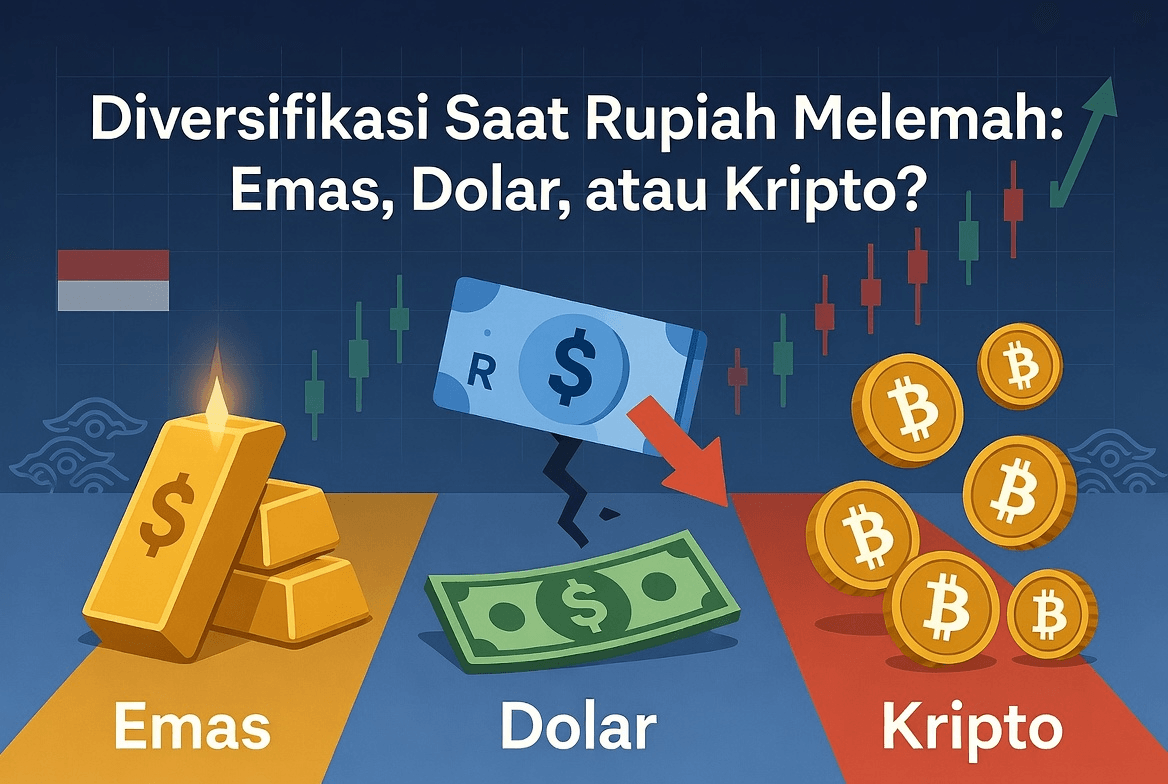
Diversification When the Rupiah Weakens: Gold, Dollar, or Crypto?
2026-06-08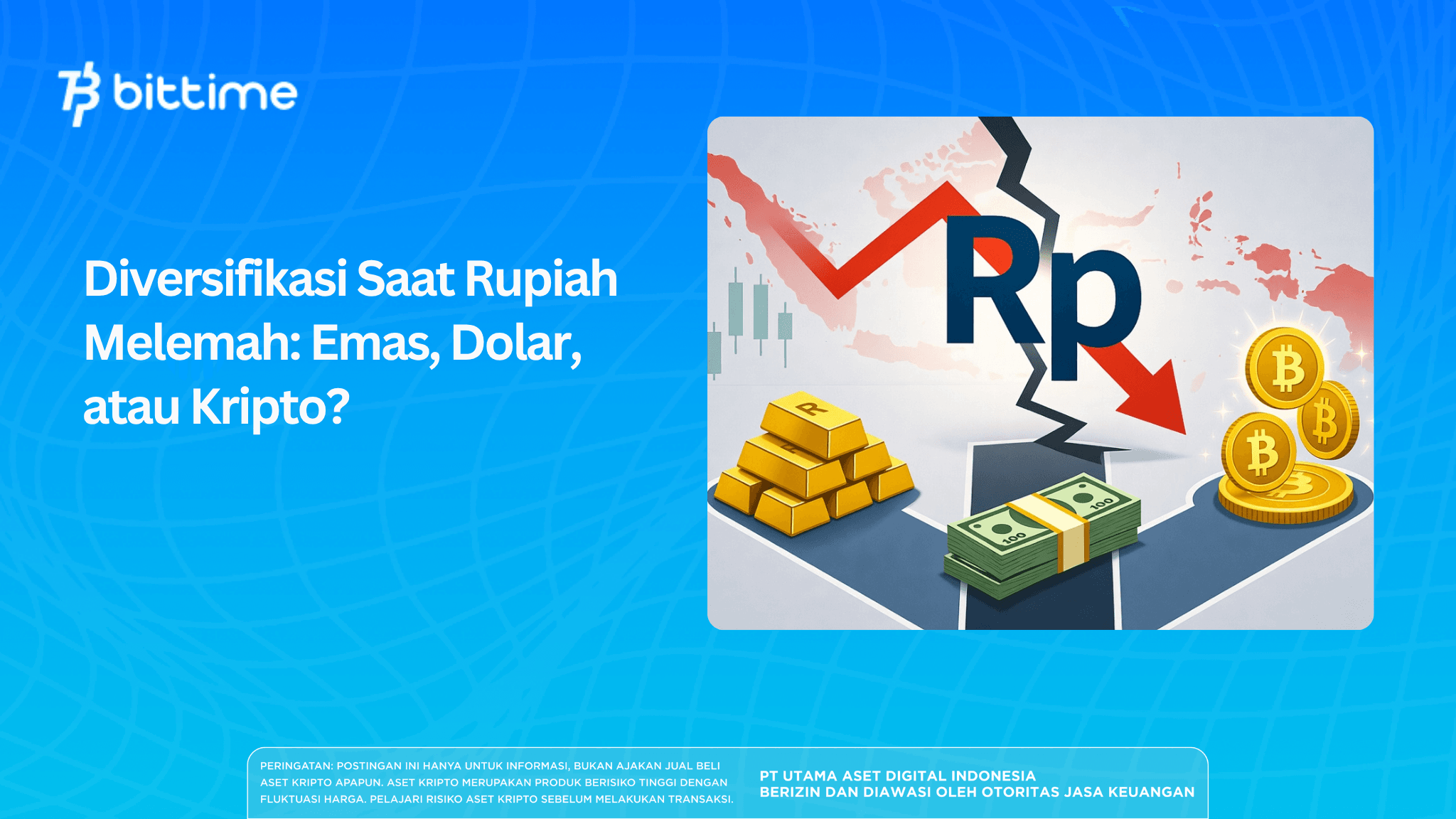
Moment the rupiah weakened against the US dollar, many people are starting to consider how to protect their money. On June 5, 2026, the rupiah exchange rate was at Rp18,036 per US dollar, after weakening 0.86 percent in a week.
This situation puts pressure on daily living costs and opens up opportunities and risks for various investment types. Portfolio diversification, which involves spreading funds across several different asset classes, is a frequently discussed strategy for dealing with currency fluctuations.
The rupiah's depreciation is usually influenced by external factors, such as high interest rates in the United States, which attract capital out of developing countries. Domestically, economic growth prospects and foreign capital inflows also play a role.
As a result, imports become more expensive, inflation could rise, and the rupiah's purchasing power could decline. On the other hand, exports of commodities such as palm oil and mining products could benefit because dollar-denominated revenues become more valuable when converted into rupiah.
Key Takeaways
- A weakening rupiah increases the cost of imported goods and the burden of foreign debt, while commodity exports tend to benefit.
- Gold and US dollar-denominated assets often serve as hedges because their value tends to rise or stabilize in rupiah terms when the local currency weakens.
- Cryptocurrencies like Bitcoin and the USDT stablecoin can be a form of diversification due to their global nature, although they are highly volatile and require careful risk management.
Register at Bittime now and start trading crypto with a fast, safe, and easy process in the app.
What is the Weakening of the Rupiah and its Impact on Finances?
Rupiah weakens this means the rupiah exchange rate against the US dollar has fallen. This means that one US dollar requires more rupiah to buy. In early June 2026, the rupiah briefly reached Rp18,036 per dollar.
Projections for the second half of this year indicate volatility, with a range between Rp17,200 and Rp18,200 depending on the Federal Reserve's interest rate policy and foreign capital flows.
The impact is felt across several sectors. Imported goods such as electronics, industrial raw materials, medicines, and some foods become more expensive. Production costs for import-dependent industries rise, and this can drive overall inflation.
People's purchasing power has decreased because spending on daily necessities such as formula milk, gadgets, clothing, or education and health costs that involve foreign components has also increased.
On the positive side, commodity exporters such as palm oil and mining benefited. Their US dollar revenues were worth more when converted to rupiah.
Domestic tourism could also increase as Indonesia becomes more affordable for foreign tourists. However, the government's foreign currency debt burden will increase, as will the cost of paying higher energy subsidies.
For individuals, savings and salaries in rupiah lose their purchasing power. Those working for foreign companies and receiving their salaries in dollars typically benefit. Small businesses catering to foreign tourists or selling local products also see opportunities.
Overall, this situation is prompting many people to rethink their asset allocation to avoid over-reliance on a single currency.
Why Portfolio Diversification is Important When the Rupiah Weakens
Portfolio diversification is a strategy of spreading investments across various types of assets that don't always move in the same direction. The goal is to reduce the risk if one asset declines in value. When the rupiah weakens, assets whose value in rupiah is rising or stable can help maintain the purchasing power of the overall portfolio.
Without diversification, someone who only keeps money in rupiah accounts or time deposits could see the real value of their savings eroded by inflation and currency depreciation.
Conversely, holding a mix of assets such as gold, dollar-based instruments, or other global assets provides a cushion. However, diversification is no guarantee of profit and requires an understanding of the risks of each instrument.
Bank Indonesia typically intervenes to stabilize the exchange rate, but fluctuations persist. Therefore, many investors choose to build portfolios that are more resilient to exchange rate fluctuations. This step is taken gradually while maintaining sufficient liquidity for emergencies.
Read also: Gold Crashing? Bearish Breakout Accelerates Price Decline
Gold as a Hedging Option
Gold is often considered a safe haven or protective asset during economic uncertainty. When the rupiah weakens, the price of gold in rupiah typically rises as investors seek assets whose value isn't directly tied to the local currency. This makes gold a widely discussed option for diversification.
There are several forms of gold ownership. Physical gold, such as jewelry or bullion, provides immediate security, but carries storage and security costs. Gold ETFs or gold-based mutual funds are more liquid and easily traded through investment platforms.
There is also tokenized gold, which combines gold ownership with blockchain technology for higher liquidity and lower storage costs.
Gold's advantages lie in its scarcity and stable global demand. However, gold does not provide income like dividends or interest. Its price can also fluctuate in the short term. For conservative investors, a small allocation, such as 10 percent of the portfolio, is often recommended to balance risk.
Read also: USD to IDR: How Much is 100 Million Dollars in Rupiah?
US Dollar and USD-Based Assets
Holding some funds in US dollars or dollar-denominated instruments can act as a direct hedge against rupiah depreciation. The dollar tends to appreciate relative to the rupiah when global conditions strengthen the dollar. Dollar deposits or foreign currency accounts provide stability in foreign currency.
Additionally, investing in US stocks or ETFs, particularly in the technology, healthcare, and consumer goods sectors, can offer long-term growth potential through capital gains and dividends.
The value of these assets in rupiah automatically increases when the dollar strengthens. Many investment platforms now facilitate access to US stocks with relatively small initial capital.
The main drawbacks are exchange rate risk if the dollar weakens, as well as taxes and conversion fees. Investing entirely in dollars is not recommended, as growth opportunities in other assets could be missed. Combining it with rupiah-denominated assets helps maintain balance.
Read also: If You Bought 1 Million Rupiah of Bitcoin in 2016, How Much Would It Be Worth Now?
Crypto for Diversification: Bitcoin and Stablecoins
Crypto offers diversification options because it's global and not tied to a specific country's currency. Bitcoin is often discussed as an asset with a limited supply, which some investors see as similar to digital gold.
As fiat currencies weaken, some see bitcoin as a hedge due to its decentralized nature and global demand.
Stablecoins like USDT are designed to maintain a value equal to one US dollar. When the rupiah weakens, holding USDT and then converting it back to rupiah can yield a profit in rupiah terms.
A real-life example shows that someone holding USDT when the rupiah moved from a lower level to Rp17,730 per dollar could have gained about 7.9 percent in rupiah without making any additional transactions.
Indonesian platforms like Bittime facilitate access to Bitcoin, Ethereum, and stablecoins. Several industry players note that crypto investments remain attractive for diversification despite the weakening rupiah, due to the cross-border nature of these assets.
However, crypto volatility is extremely high. Bitcoin prices can rise or fall sharply in a short period of time, making it suitable for only a small portion of portfolios and requiring a clear risk management strategy.
Cryptocurrencies also come with varying regulatory risks, digital wallet security, and liquidity. For beginners, starting with a small amount and learning how stablecoins and Bitcoin work can be a safer first step.
Comparison and How to Start Diversification
Here's a quick comparison of the three main options:
- Gold: Tends to rise during times of high uncertainty, moderate liquidity, low to moderate risk.
- US Dollar and USD assets: Stability of value against the rupiah, growth potential from US stocks, exchange rate risk and conversion costs.
- Crypto (bitcoin and USDT): Global hedging potential, high volatility, easy access via local platforms, suitable for partial diversification.
Example of a simple portfolio allocation based on risk profile:
- Conservative: 60 percent money market or deposits, 30 percent bonds, 10 percent gold.
- Moderate: 50 percent money market, 30 percent bonds, 10 percent stocks, 10 percent gold.
- Aggressive: 30 percent stocks, 30 percent bonds, 30 percent money market, 10 percent gold.
To get started, follow these steps:
- Build an emergency fund of at least 3 to 6 months of expenses in liquid instruments such as deposits or money markets.
- Determine your risk profile and short-term and long-term investment goals.
- Gradually allocate funds to gold, dollars, or crypto according to a comfortable portion.
- Monitor indicators such as the 10-year US bond yield, foreign capital flows into Indonesia, and the rupiah exchange rate.
- Avoid emotional decisions like selling during a market downturn. Diversification is for the medium to long term.
Trusted platforms in Indonesia make it easy to buy digital gold, foreign exchange, US stocks, and crypto. Always conduct your own research and consider applicable fees and taxes.
Conclusion
The weakening rupiah poses challenges to purchasing power and the cost of living, but it also presents an opportunity to restructure portfolios. Gold, the US dollar, and crypto each have characteristics that complement each other in a diversification strategy.
Gold acts as a traditional safe haven, the dollar provides exchange rate stability, while bitcoin and the USDT stablecoin offer global options with varying levels of risk.

Now that you know the rupiah has weakened today, let’s take a look at some gold- and silver-backed digital assets like XAUT dan SLVON. Both are now available on Bittime!
Bittime is a licensed and regulated Digital Financial Asset Trader (PAKD) supervised by Indonesia’s Financial Services Authority (OJK) — where you can buy Bitcoin in Indonesia and hundreds of other crypto assets starting from just Rp10,000. The registration process is fast, secure, and you can get started today.
Track USDT to IDR conversions and monitor your favorite crypto assets in real time. Everything is available in one crypto investment app that you can download for free on the Play Store
Ready to start? Register now on Bittime and execute your investment strategy with a platform trusted by millions of users in Indonesia.
FAQ
What is the main impact of the weakening rupiah on ordinary people?
A weakening rupiah makes imported goods more expensive, leading to rising inflation and a decline in the rupiah's purchasing power. Daily living costs, such as food, gadgets, and medical expenses, could rise.
Why is gold often recommended when the rupiah weakens?
The price of gold in rupiah typically rises when the local currency weakens. Gold is considered a hedge because its demand is stable globally and its supply is limited.
How can the USDT stablecoin help when the rupiah weakens?
USDT is designed to be equivalent to one US dollar. When the rupiah weakens, the value of USDT in rupiah rises. For example, holding USDT when the exchange rate changes to Rp17,730 per dollar can yield a return of around 7.9 percent when converted back to rupiah.
Is Bitcoin suitable as a hedge against a weakening Rupiah?
Bitcoin has a limited supply and is global, leading some investors to view it as similar to digital gold. However, it is highly volatile and doesn't always move inversely to the rupiah, making it suitable only as a small part of a portfolio.
How to start diversifying safely?
Start by building an emergency fund, determine your risk profile, and then gradually allocate it to gold, dollars, or crypto through a trusted platform. Monitor market conditions and avoid investments beyond your financial means.
Disclaimer: The views expressed belong exclusively to the author and do not reflect the views of this platform. This platform and its affiliates disclaim any responsibility for the accuracy or suitability of the information provided. It is for informational purposes only and not intended as financial or investment advice.

.png)