Examples of Demand Deposits: From Giro, Checks to Digital Wallets
2026-07-29
Demand deposits have become a crucial part of the modern payment system. While people used to rely primarily on cash for transactions, now most financial activities are conducted cashlessly through bank accounts and digital payment services.
Starting from interbank transfers, payments using checks, to transactions via banking applications, all are forms of using giro money.
In fact, technological developments have made people start to question whether digital wallets are also considered demand deposits or are actually included in the electronic money category.
So, what exactly is demand deposits, how do they work, and what are some examples of them in everyday life? Read on for a complete explanation.
Key Takeaways
Demand deposits are funds held in bank accounts and used for non-cash transactions through various payment instruments.
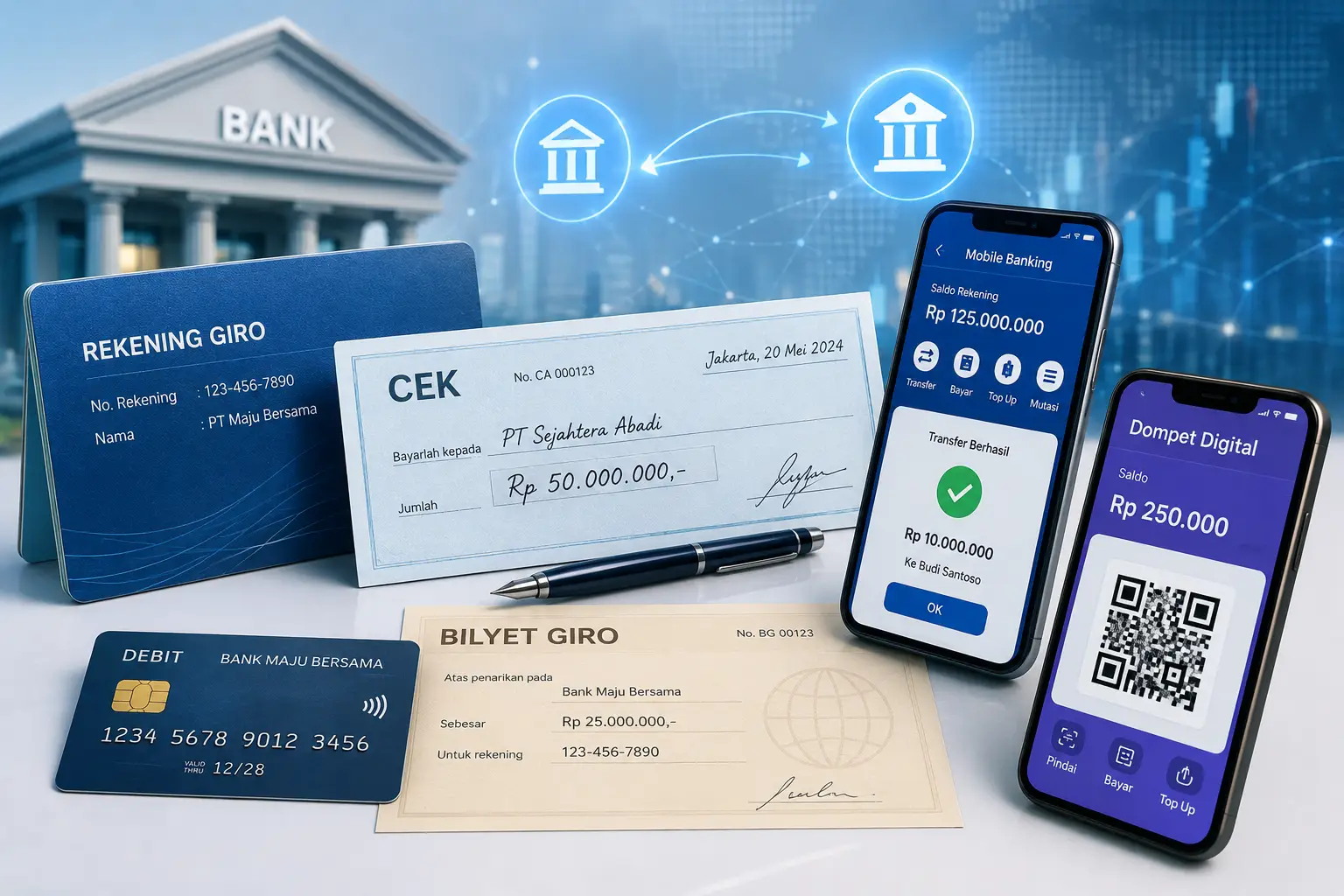
Examples of demand deposits include current accounts, checks, giro bills, bank transfers, debit cards, and account balances used via mobile banking or internet banking.
Demand deposits are different from cash and electronic money because they involve deposits in banks as the basis for transactions.
Want to start trading digital assets easily? Register at Bittimenow and enjoy a practical and safe crypto investment experience.
What is Demand Deposit and How Does It Work?
Source: AI
Demand deposits are a means of payment in the form of savings in a bank that can be used to make transactions without using cash directly.
The value of the demand deposit is recorded in the customer's account and moves through the banking administration process.
Unlike fiat money, which comes in the form of banknotes and coins, demand deposits have no physical form. Their existence is reflected in an account balance that can be used for various payment needs.
The way it works is quite simple. When someone makes a transfer or payment using a bank account, funds are transferred from the sender's account to the recipient's account through the bank's payment system. As long as the balance is sufficient, the transaction can be completed without the need for cash.
As digitalization advances, the use of demand deposits is expanding through mobile banking, internet banking, QRIS (Qualified Transactions) linked to accounts, and debit cards.
Read Also: Trading Psychology: Understanding Emotional Phases and How to Manage Them
What are the characteristics of demand deposits?
Demand deposits have several characteristics that distinguish them from other types of money.
First, demand deposits can only be issued by banks through customer deposits. This means that a person must have an account before using demand deposits.
Second, demand deposits do not have a physical form so all transactions are carried out through electronic recording and banking documents.
Third, its use requires an intermediary in the form of a bank payment system, either through transfer, check, debit card, or other payment instruments.
Another characteristic is that transaction amounts are not limited by the amount of cash a person carries. As long as the balance is available and meets bank regulations, large transactions can be conducted more conveniently.
Read Also: How to Avoid Margin Calls in Futures Trading: 5 Risk Management Tips
What are some examples of demand deposits in everyday life?
In daily activities, people actually use demand deposits more often than they realize.
One of the most obvious examples generally is an account which is widely used by companies and business actors to make large business payments.
The next example is a check, namely a written order from the account owner to the bank to disburse a certain amount of funds to the recipient.
In addition to checks, there are transfer functions as an order to transfer funds from one account to another without cash disbursement.
Transfer bank also aThis is the most common form of money transfer used by the public. When someone sends funds via mobile banking or internet banking, the funds are transferred between accounts without involving physical cash.
Then ayesdebit cardwhich allows customers to pay directly usingaccount balance. When the card is used, funds will be automatically deducted from the bank account.
All balances stored in savings accounts and used through digital banking services are also included in the form of demand deposits.
Read Also: Trading Psychology: Understanding Emotional Phases and How to Manage Them
Are Digital Wallets Considered Demand Deposits?
This question often arises because transactions using digital wallets look similar to payments through bank accounts.
The answer is,not completely.
Digital wallets such as DANA, GoPay, OVO, and ShopeePay are generally categorized as electronic money (e-money), not demand deposits. The balance in a digital wallet represents the amount of money that has been deposited in advance with the issuer and stored in an electronic system.
Meanwhile, demand deposits still refer to funds held in bank accounts.
However, when users link their bank accounts to digital payment applications or make payments directly from their accounts via QRIS or mobile banking, these transactions still use demand deposits as the source of funds.
Read Also: Forex Trading: Definition and Complete Explanation for Beginners
How is Demand Deposit Used in Transactions?
Demand deposits play an important role in almost all modern transactions.
In the business world, companies use checking accounts to pay suppliers, receive customer payments, and pay employee salaries.
At the individual level, demand deposits are used to pay electricity, water, internet, credit installments, taxes, and even for online shopping.
In fact, cross-border transactions now also utilize the international banking system, which is basically the transfer of demand deposits between banks.
This convenience has led to a decline in cash usage, especially in areas with high adoption rates of digital banking services.
What is the Difference Between Demand Deposits, Cash, and Electronic Money?
Even though they are both used as a means of payment, the three have different characteristics.
Paper money is physical money in the form of paper and metal money issued by the central bank and is legally used for all transactions.
Demand deposits are funds stored in a bank account and used through non-cash payment instruments such as transfers, checks, or debit cards.
Meanwhile, electronic money is the value of money stored in electronic media owned by the issuer, such as prepaid cards or digital wallet applications.
The main difference lies in where the funds are stored.
Demand deposits are held in bank accounts, while electronic money is held in the payment service provider's system.
Read Also: Crypto Investment with USDT in Indonesia for Beginners
What are the advantages and disadvantages of demand deposits?
The use of demand deposits offers many advantages, especially in terms of efficiency.
Transactions are faster, safer, and more convenient because users no longer need to carry large amounts of cash. Furthermore, every transaction is recorded, simplifying financial management and auditing.
On the other hand, demand deposits also have several limitations. Users need a bank account, internet access or a payment network, and are dependent on the banking system to operate smoothly at all times.
Other risks include system disruptions, service maintenance, and the threat of cybercrime if users do not maintain the security of their banking accounts.
Conclusion: Why is Demand Deposit Important in Payment Systems?
Demand deposits have become the main foundation of modern payment systems because they allow transactions to be carried out quickly, safely, and efficiently without using cash.
The most common examples of demand deposits include current accounts, checks, giro bills, bank transfers, debit cards, and account balances used through digital banking services.
Although often used side by side with digital wallets, the two have different concepts because digital wallets are generally included in the electronic money category.
Understanding the differences between demand deposits, cash, and electronic money helps people choose the payment method that best suits their needs while improving financial literacy in the digital era.
FAQ
What is meant by demand deposits?
Demand deposits are funds stored in bank accounts and used as a means of non-cash payment through various banking instruments.
What are some examples of demand deposits?
Examples of demand deposits include checking accounts, checks, giro bills, bank transfers, debit cards, and account balances used via mobile banking or internet banking.
Is bank transfer included in demand deposits?
Yes. Bank transfers are a form of using demand deposits because funds are transferred directly from the sender's bank account to the recipient's account.
Are digital wallets considered demand deposits?
No. Digital wallets are generally considered electronic money because the balance is stored in the service provider's system, not directly as a bank account deposit.
What is the difference between demand deposits and cash?
Demand deposits are in the form of account balances and are used in a non-cash manner, while cash is in the form of paper and metal money which is used in cash transactions.
Disclaimer: The views expressed belong exclusively to the author and do not reflect the views of this platform. This platform and its affiliates disclaim any responsibility for the accuracy or suitability of the information provided. It is for informational purposes only and not intended as financial or investment advice.

.png)


