HYPE and PUMP Buybacks: Is This Strategy Really Boosting Prices?
2026-09-01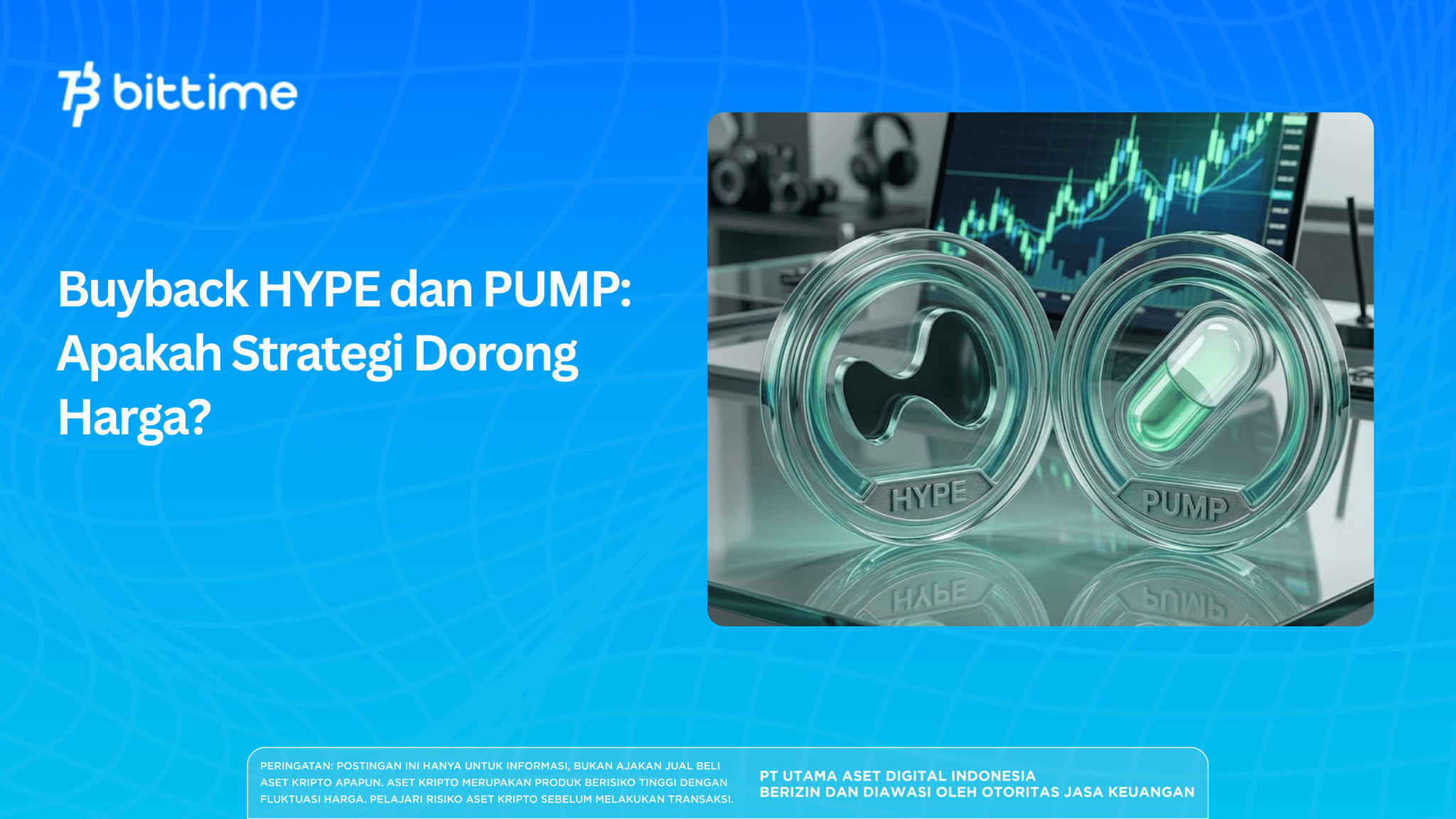
The 2026 crypto market is marked by one striking phenomenon: a record-breaking wave of token buybacks. The two names most frequently appearing in headlines are HYPE from Hyperliquid and PUMP from Pump.fun, together accounting for nearly 90% of the total $638 million buybacks so far this year.
The question now emerging among retail traders and investors is simple but crucial: do HYPE buybacks and PUMP buybacks really manage to push prices, or are they just temporary bullish narratives?
Key Takeaways
- Token buybacks hit a record $638 million in 2026, dominated by Hyperliquid and Pump.fun.
- HYPE and PUMP significantly outperform BTC, up 145% and 109% year-to-date respectively.
- Buyback success depends on revenue sustainability, net supply change, and program transparency.
Why Are Token Buybacks Becoming a Hot Trend in 2026?
Token buybacks are not a new concept in crypto, but 2026 is the year this strategy truly exploded. Protocols with recurring revenue—especially from trading fees and platform fees—are starting to treat their tokens like stocks whose value can be "returned" to holders through repurchase and burn mechanisms.
The backdrop is quite clear: a generally bearish market has put many altcoins under pressure. Amid this pressure, project teams see buybacks as a way to signal confidence to the community, while also attempting to support their token prices.
Data shows total buybacks in 2026 have reached $638 million, up 17% from the same period in 2025 ($545 million) and a sharp jump compared to 2024, which only saw $366 thousand.
Interestingly, nearly all of this momentum is driven by just two protocols: Hyperliquid and Pump.fun. Such concentration raises questions about the trend's sustainability: is this the beginning of mass adoption of the buyback model across the industry, or just a narrow phenomenon fueled by two specific ecosystems?
Ready to start your crypto journey with more confidence? Register now at Bittime and access various secure and reliable trading features.
How Do HYPE and PUMP Buybacks Work?
Hyperliquid: 99% of Revenue Allocated to HYPE Buybacks
Hyperliquid runs one of the most aggressive buyback programs in the industry. This DEX protocol allocates roughly 99% of its trading fee revenue to periodically buy back HYPE tokens, with most of the purchased tokens then burned.
This mechanism creates what is often called a "flywheel": the higher the trading volume on the platform, the more fees are collected, the more massive the buyback and burn, which in turn reduces circulating supply and potentially pushes the price higher.
As of the end of August 2026, Hyperliquid has spent approximately $370 million on HYPE buybacks, accounting for more than half of the total industry-wide crypto buybacks this year.
Read Also: How to Buy HYPE on Bittime
Pump.fun: 50% of Net Profit for PUMP Buybacks and Burns
Pump.fun, the memecoin launchpad that went viral since 2024, runs a similar model but with a different proportion. This protocol allocates approximately 50% of its eligible net profit to buy back and burn PUMP tokens.
By the end of August 2026, more than 16% of the initial PUMP supply has been burned, creating a strong scarcity narrative in the eyes of investors.
Total PUMP buybacks reached around $200 million in 2026, making Pump.fun the second-largest contributor after Hyperliquid in this year's buyback wave.
Read Also: PUMP Price Converter on Bittime
Key Differences from Other Burn Models (e.g., BNB)
The HYPE and PUMP buyback programs differ from the already well‑known burn model like BNB. BNB runs a quarterly burn program that follows a fixed formula and is more predictable, while HYPE and PUMP buybacks are more discretionary and highly dependent on fluctuating operational revenue.
This difference makes BNB's burns easier to price in by the market, while HYPE and PUMP buybacks are more sensitive to changes in trading volume and short‑term sentiment.
Impact of Buybacks on Price: Data, Facts, and Limitations
HYPE and PUMP Outperform the Market
Price data shows a positive correlation between aggressive buyback programs and token performance. HYPE is up 145% year‑to‑date, while PUMP is up 109% over the same period. These numbers far exceed Bitcoin's performance, which is down about 10%, and the total crypto market capitalization, which corrected 11.9% over the same timeframe.
This fact is often used as the main argument by proponents of the narrative that token buybacks are indeed effective in pushing prices. However, correlation does not imply causation: many other factors could be contributing, including community momentum, speculation, and media exposure.
Not All Tokens with Buybacks Succeed
On the other hand, broader data shows that not all tokens with active buyback programs manage to outperform. Research indicates that only about 30% of tokens with active buyback programs are able to beat Bitcoin's performance. This means the majority of tokens with buybacks still lag behind or even underperform.
The reason is quite logical: the net effect of buybacks depends on the net supply change. If a protocol does a buyback of 5% of supply but at the same time releases 10% of new supply through emissions and token unlocks, the circulating supply still increases despite the buyback.
The Net Supply Change Formula Traders Need to Understand
To assess whether a buyback truly reduces supply or not, traders can use the following simple formula:
\Delta \text{Supply} = \text{Emissions} + \text{Unlocks} - \text{Buybacks} - \text{Burns}
If the result is positive, circulating supply still increases despite the buyback. If negative, supply truly shrinks. This formula helps investors distinguish between substantial buybacks and purely symbolic ones.
Risks and Challenges: Is This Model Sustainable?
Risk Concentration in Two Protocols
The fact that nearly 90% of 2026 buybacks come from Hyperliquid and Pump.fun raises concerns about risk concentration. If one of these two protocols experiences a decline in revenue—for example, due to falling trading volume or tighter regulatory oversight—the entire industry buyback narrative could be disrupted.
Dependence on Recurring Revenue
The sustainability of buyback programs heavily depends on stable recurring revenue. Hyperliquid and Pump.fun both rely on trading fees and platform activity. If market conditions worsen and volumes drop, revenue will also decline, automatically reducing buyback capacity.
Regulatory Risks
In some jurisdictions, token buybacks can be considered a form of market manipulation if not conducted transparently or properly disclosed to the public. Regulators in the US and Europe are increasingly scrutinizing this practice, especially when buybacks are carried out by decentralized protocols that lack a clear corporate structure.
Conclusion
HYPE and PUMP buybacks have indeed posted impressive performances in 2026, with both tokens significantly outperforming the broader market. However, this success cannot be directly generalized to the entire industry. Buyback success depends on revenue sustainability, a negative net supply change, and program transparency.
For investors, the key is to read the data behind the narrative: does the buyback truly reduce supply, or is it just a camouflage for larger emissions and unlocks?
Check the prices of Bitcoin (BTC), Ethereum (ETH), XRP, Solana (SOL), GRAM, and BNB as well as leading memecoins DOGE. You can trade directly on Bittime!

Bittime is a licensed Digital Financial Asset Trader (PAKD) platform supervised by the Financial Services Authority — where you can buy Bitcoin in Indonesia and hundreds of other crypto assets starting from Rp10,000. The registration process is fast, secure, and can be started today.
Monitor USDT to IDR conversion and the price movements of your favorite crypto assets in real-time. All are available in one crypto investment app that can be downloaded for free on the Play Store.
Ready to start? Register now at Bittime and execute your investment strategy with a platform trusted by millions of users in Indonesia.
FAQ
Does token buyback always increase the price?
Not always. Data shows only about 30% of tokens with active buybacks outperform Bitcoin. The effect depends on net supply change and revenue sustainability.
What is the total crypto token buyback in 2026?
Total buybacks reached $638 million as of the end of August 2026, up 17% from the same period in 2025.
Which protocols are the most dominant in 2026 buybacks?
Hyperliquid and Pump.fun together account for nearly 90% of total buybacks, with $370 million and $200 million respectively.
Are the Hyperliquid and Pump.fun buyback models sustainable?
Their sustainability depends on stable trading fee revenue. If volumes drop, buyback capacity can shrink drastically.
How can traders assess the effectiveness of a buyback?
Use the net supply change formula: Supply = Emissions + Unlocks − Buybacks − Burns. If the result is negative, supply truly shrinks.
Disclaimer: The views expressed belong exclusively to the author and do not reflect the views of this platform. This platform and its affiliates disclaim any responsibility for the accuracy or suitability of the information provided. It is for informational purposes only and not intended as financial or investment advice.

.png)