Not Just a Price Rally, 6 Market Signals of Rebound from Crypto Winter
2026-09-17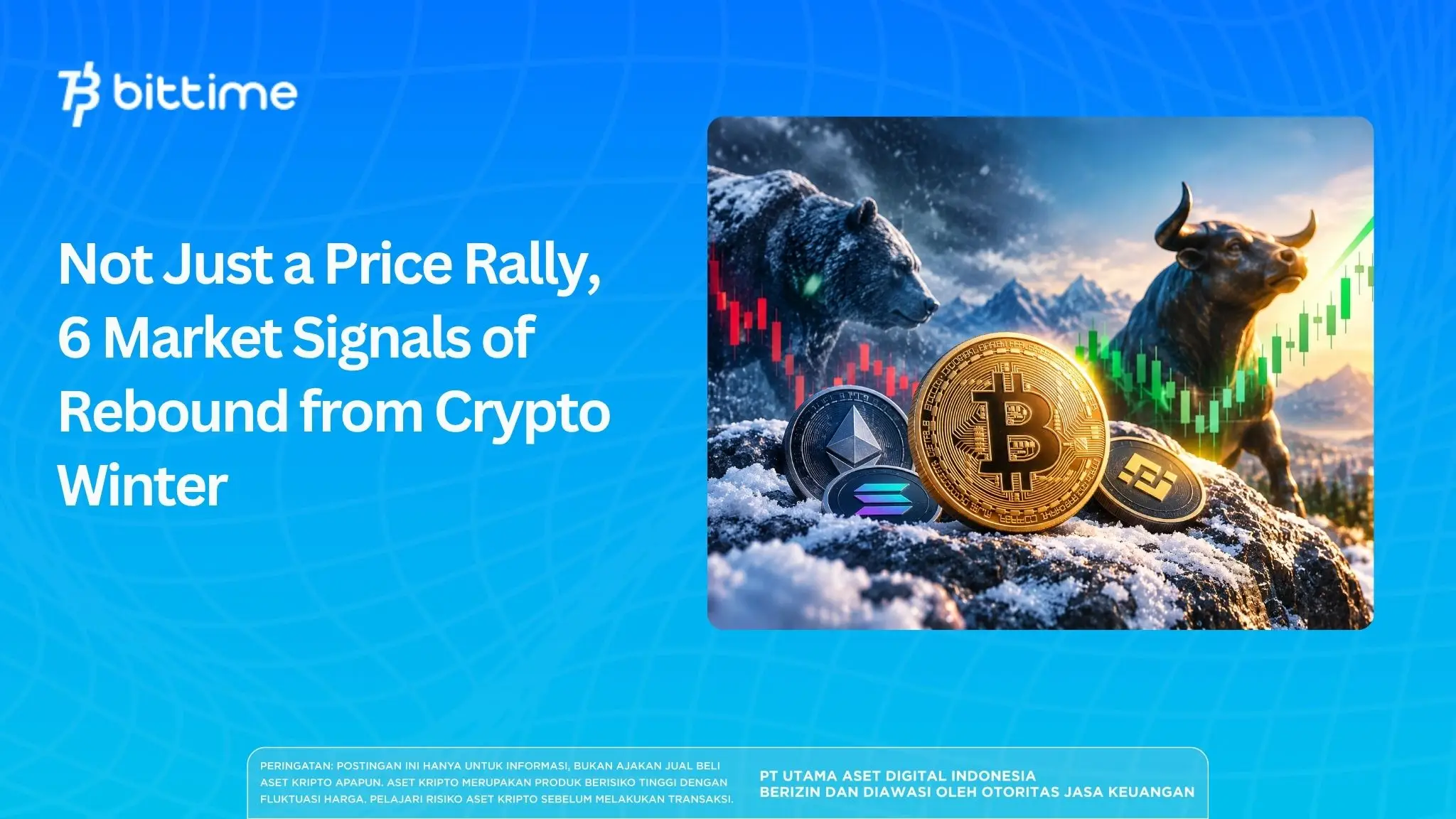
Cryptocurrency market back in the spotlight after Bitcoin and a number of altcoin starting to show strengthening.
This price increase raises a big question for investors: is the market really out of phase crypto winter, or just experiencing a temporary rally?
Some analysts see signs of recovery as Bitcoin continues its upward movement, altcoins begin to follow suit, and investor activity begins to increase.
In recent periods, Bitcoin has again broken through the price area aboveUS$70,000 after previously experiencing long pressure.
However, understanding whether crypto winter is over requires broader analysis.
Price is only one part of the market cycle.
Condition of motherStrides, project funding, developer activity, and investor sentiment are also important indicators.
Key Takeaways
The end of crypto winter is determined by the rise in Bitcoin prices, but also by changes in sentiment, the influx of new capital, industry growth, and blockchain activity.
Crypto winter differs from a bear market. Bear markets focus more on price declines, while crypto winters reflect prolonged pressure on the entire ecosystem.
History shows that every crypto winter has a pattern: a sharp decline, a consolidation phase, then a recovery towards a new cycle.
Crypto Bear Market vs Crypto Winter: What's the Difference?

Illustration: Source: AI
Many people use the term bear market and crypto winter interchangeably, even though they both have different meanings.
A bear market is more closely related to price movements. Generally, a market is considered bearish when asset prices decline by 20% or more from their previous high.
Meanwhile, crypto winter has a broader scope. Crypto winter describes a period of prolonged pressure when not only prices are falling, but the entire industry is slowing down.
In the crypto winter phase, the impact can be seen through:
decreasing investor interest,
decline in venture capital funding,
reduction in the number of crypto company workforces,
declining blockchain project development activity.
In other words, a bear market is a price issue, while a crypto winter is the overall climate condition of the industry.
Read Also:Ethereum (ETH) Price Prediction 2026: Long-Term Outlook
Understanding this distinction is important because a rise in Bitcoin's price doesn't automatically mean the entire industry is out of crypto winter.
History of Crypto Winter and Bitcoin's Bearish Cycle
Crypto winter is nothing new. Bitcoin's history shows that the cryptocurrency market moves in recurring major cycles.
Each downturn has different causes, but the general pattern is nearly the same: high euphoria, a major correction, a holding phase, then recovery.
Read Also:Bitcoin Price History from 2009–2026
Crypto Winter 2014–2015: Krisis Mt. Gox
The first major crypto winter occurred after the collapse of Mt. Gox, one of the largest Bitcoin exchanges at the time.
The incident caused a loss of confidence in the security of the exchange and pushing Bitcoin to a decline of around85% of its peak price.
However, this period was also a learning phase for the industry. Many companies started improving security standards and crypto trading infrastructure.
Read Also:10 Ways to Make Money Online Without Capital, Perfect for Beginners
Crypto Winter 2018–2019: The ICO Bubble Burst
After Bitcoin's massive surge in 2017, the market entered a long correction phase.
Many Initial Coin Offering (ICO) projects fail to meet investor expectations, resulting in causing a decline in confidence in new crypto projects.
Bitcoin experienced a decline of around84% of its highest point.
Although seen as a negative period, this phase laid the foundation for the birth of various innovations such as the first generation of DeFi protocols.
Crypto Winter 2022–2023: FTX, Terra Luna, and High Interest Rates
The latest crypto winter was triggered by a combination of factors.
Rising global interest rates have put pressure on risk assets. At the same time, the collapse of the Terra Luna ecosystem and the bankruptcy of FTX worsened market sentiment.
Bitcoin is down around 77% of its peak price.
The impact is not only visible in prices, but also in many crypto companies reducing activities, laying off employees, and tightening funding.
Read Also: Trade Futures on Bittime and Get a Bonus of up to 5,000 USDT!
6 Strong Signals Crypto Winter Is Beginning to End
1. Bitcoin Creates a Healthier Market Structure
One of the early signs of crypto recovery is a change in Bitcoin's pattern.
In the crypto winter phase, selling pressure dominates as investors lose confidence.
However, when Bitcoin started to form a more stable uptrend, the market started to enter an accumulation phase.
Bitcoin is often a leading indicator because it is the largest in capitalization and usually be the first asset to move in everyBitcoin cycle.
Read Also:5 Bitcoin Facts This Week You Should Know!
2. Institutional Investors Begin to Return
One of the biggest changes in the latest crypto cycle is the increased involvement of institutions.
Large investors are starting to view Bitcoin not just as a speculative asset, but as part of an alternative investment portfolio.
The entry of institutional capital can be one of the crypto rising sign because it indicates stronger demand.
Bitcoin ETFs and digital investment products also help open access for traditional investors.
Read Also:How to Buy Bitcoin with DANA on Bittime
3. Cryptocurrency Market Liquidity Increases
Liquidity is an important factor in determining whether the market enters a bullish phase.
During the crypto winter, many investors withdrew funds, causing trading volumes to decrease.
As liquidity begins to return, trading activity increases and investors begin to take greater risks.
Liquid recovery is one of the important indicators in analysis of cryptocurrency because it shows that capital is starting to return to the market.
4. Blockchain Activity is Growing Again
Market recovery is not only visible in prices.
The number of network transactions, active users, DeFi application development, and developer activity are also important indicators.
If the blockchain ecosystem continues to thrive, it will demonstrate that the industry is not driven solely by price speculation.
Read Also: Understanding Altseason Index and Altcoin Season
5. Altcoins Start Following Bitcoin's Movement
In many previous cycles, Bitcoin has typically moved earlier before altcoins have rallied.
When investors start to have confidence in the market, capital usually starts to move to other crypto assets.
The rise in altcoins is one sign that risk sentiment is starting to return.
However, investors still need to distinguish between projects with strong fundamentals and assets that are only experiencing temporary increases.
6. Investor sentiment shifts from fear to optimism
Sentiment is an important part of the crypto market.
As the crypto winter progresses, many investors choose to stay away due to a loss of confidence.
As the market began to recover, investor attention returned. Community discussions, trading activity, and interest in blockchain projects began to grow.
Changes in market psychology are one of the factors that support the possibility of entering the crypto bull run phase.
Read Also:Easy Steps to Invest in Bitcoin Safely
Is This the Start of the Next Crypto Bull Run?
While many indicators point to recovery, there is no certainty that the market has entered a full-fledged bull run.
Price rallies can occur due to various temporary factors, so investors need to see whether the positive trend is supported by fundamentals.
Currently, several factors such as increasing institutional interest, regulatory developments, and improving liquidity are positive catalysts for the market.
However, macroeconomic factors such as central bank policies and global economic conditions remain risks that need to be considered.
Historically, the crypto market has taken time to move from a recovery phase to a Bitcoin bull market.
Therefore, the main question is not just “are prices going up?”, but whether the entire ecosystem is starting to show sustainable growth.
Read Also: Bitcoin Bull Run 2026? CryptoQuant Reveals NUPL Signal for Long-Term Holders

Bittime is a licensed and regulated Digital Financial Asset Trader (PAKD) supervised by Indonesia’s Financial Services Authority (OJK) — where you can buy Bitcoin in Indonesia and hundreds of other crypto assets starting from just Rp10,000. The registration process is fast, secure, and you can get started today.
Track USDT to IDR conversions and monitor your favorite crypto assets in real time. Everything is available in one crypto investment app that you can download for free on the Play Store
Ready to start? Register now on Bittime and execute your investment strategy with a platform trusted by millions of users in Indonesia.
FAQ
What does it mean when crypto winter ends?
The end of crypto winter means the cryptocurrency market is starting to emerge from a long period of pressure marked by improving prices, increased industry activity, and a return of investor interest.
What is the difference between crypto winter and bear market?
A bear market focuses on a decline in asset prices of around 20% or more, while a crypto winter describes a prolonged period of adverse conditions that impact the entire crypto industry.
Does Bitcoin's rise mean the crypto bull run has begun?
Not necessarily. Bitcoin's rise is one early indicator, but a crypto bull run typically requires support from liquidity, institutional investors, and ecosystem growth.
How long does crypto winter usually last?
Crypto winters can historically last around 12–18 months or more depending on the cause and global market conditions.
What are the signs that crypto is heading towards a bull market?
Some signs of crypto bulls include a strengthening Bitcoin trend, increasing trading volume, an influx of institutional capital, blockchain growth, and improving investor sentiment.
Disclaimer: The views expressed belong exclusively to the author and do not reflect the views of this platform. This platform and its affiliates disclaim any responsibility for the accuracy or suitability of the information provided. It is for informational purposes only and not intended as financial or investment advice.

.png)