What Is a Seized Asset Custody Fund (SACF)? Solana Tokens and How to Buy Them
2026-07-28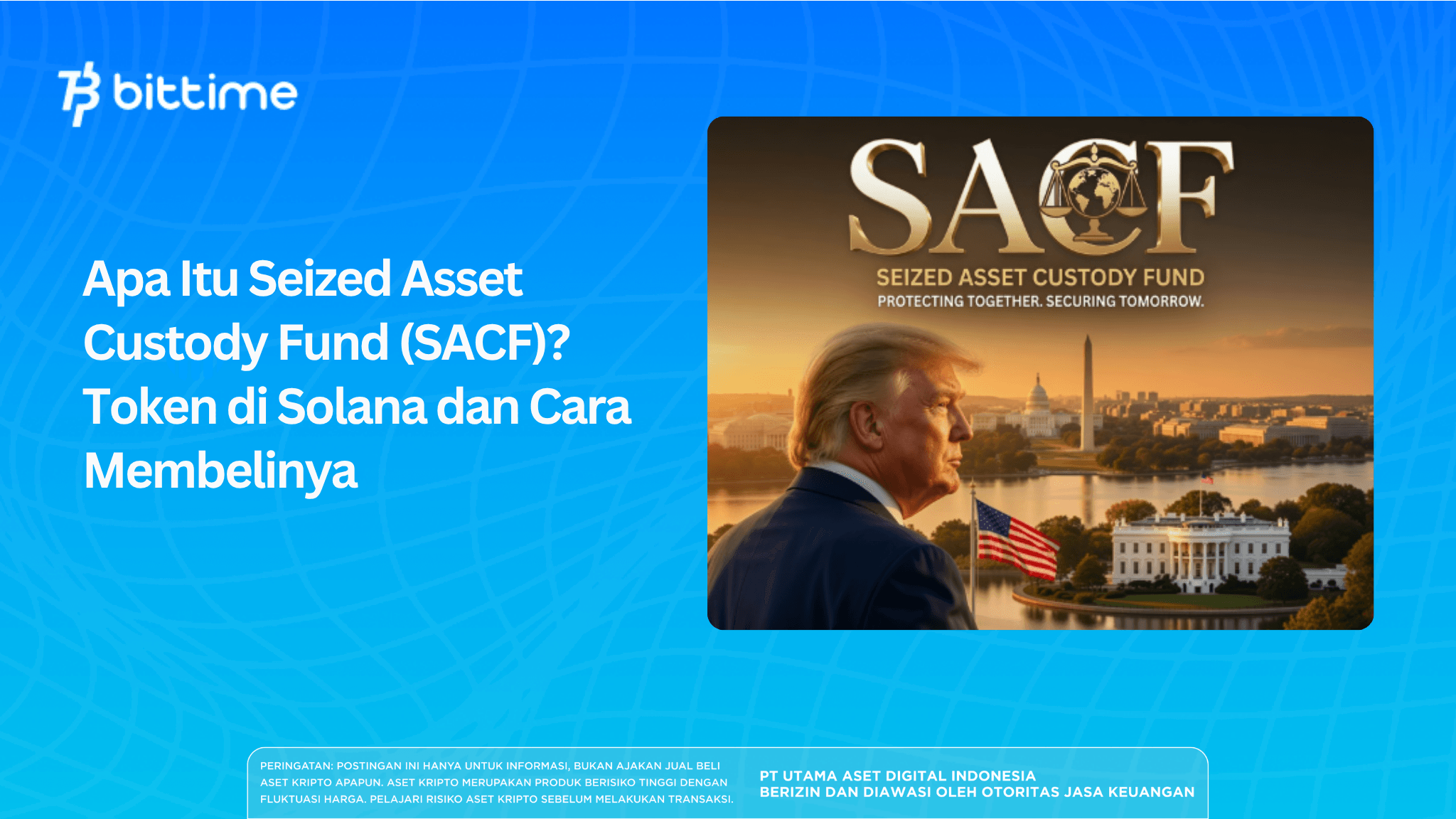
What is the Seized Asset Custody Fund (SACF)? The SACF is a SPL token on the Solana network which carries a narrative about the management and tokenization of confiscated assets.
The project considers various types of assets, from crypto wallets, property, gold, vehicles, businesses, and even natural resource rights, as part of the asset reserve concept it aims to represent on-chain.
However, SACF tokens cannot yet be directly considered proof of ownership of these assets.
Key Takeaways
- SACF is a Solana-based token with a contract addressSACFEuRRK1QxJV1PEXTaWo88DSfk2hxjnSton9Ehdad.
- The project narrative focuses on seized assets, but evidence of reserves, asset audit reports, and legal relationships have not been adequately presented.
- SACF is traded through a decentralized liquidity pool so liquidity risks, volatility, and contract address errors need to be considered.
What is a Seized Asset Custody Fund (SACF)?
The Seized Asset Custody Fund, or SACF, is a token launched on the Solana network. The project leverages the idea that assets seized from fraud, money laundering, organized crime, or forfeiture proceedings can be managed in a more transparent reserve.
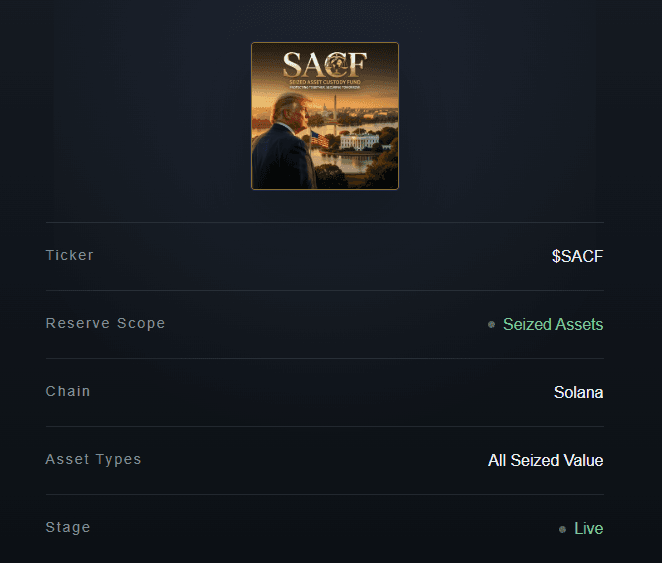
In its narrative, the SACF aims to be a public symbol representing various categories of seized assets. Its scope is claimed to include:
- Crypto wallets and assets
- Land and real estate
- Oil, gas and mineral rights
- Gold, diamonds, and precious metals
- Vehicles, ships and aircraft
- Luxury goods
- Stocks and financial instruments
- Business ownership
- Cash and property from forfeiture
This distinction is crucial. Tokens can be created and traded on the blockchain without automatically granting rights to property, income, auction proceeds, or any specific physical asset.
Read also:What Is Catecoin (CATE)? Solana's Cat Meme Coin
Who is the Team Behind the SACF Project?
Based on the public pages reviewed, detailed information regarding the names of the founders, team members' experience, legal entity, company address, advisors, or parties responsible for managing assets is not yet visible.
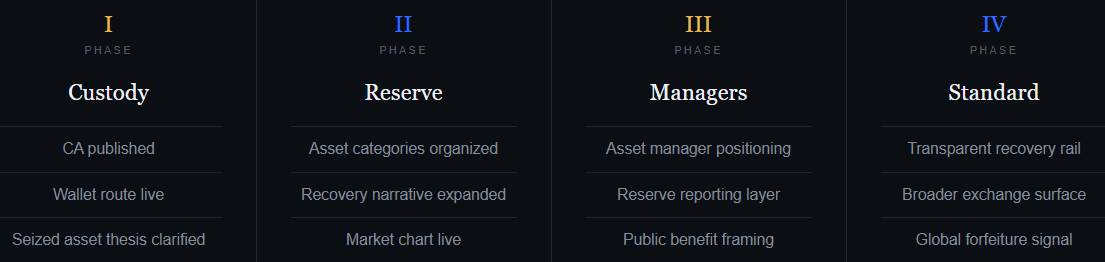
The project roadmap lists stages such as custody, reserves, managers, and standards. However, this section focuses more on general objectives, such as developing a reserve reporting system and expanding market access.
The name of the party who will perform the manager or custodian function has not been disclosed.
Before considering a purchase, investors should look for:
- Identity of founders and managers
- Legal entity that issues tokens
- Country where the legal entity is registered
- Team experience in asset recovery
- Name of asset custodian
- Audit and reporting mechanisms
- Explanation of token holder rights
Read also:What Is SLVR.fun? An Introduction to the Ethereum-Based Grid Mining Protocol
What Does the SACF Project Claim?
The SACF raises the claim that various types of seized assets can be pooled into a secure reserve and represented transparently via blockchain.
In general, the project carries four main ideas.
1. All types of confiscated assets can be included in one proposal
Digital assets, physical property, commodities, luxury goods, vehicles, business ownership, and financial instruments are depicted as part of a single reserve concept.
2. Blockchain can increase transparency
The use of tokens is said to make the asset management process easier for the public to monitor compared to a completely closed custodial system.
3. The value of the recovery proceeds can be used for public interest.
The project states that the value of the recovered assets should be directed to provide benefits to the public.
4. SACF becomes the public representation of the reserves.
The SACF token is described as a ticker that connects the concept of managing various confiscated assets to the on-chain ecosystem.
The problem is, conceptual claims don't equate to operational proof. Available public materials don't provide a list of assets actually under the project's control, ownership documents, valuation reports, proof of custody, independent audit reports, or a mechanism for exchanging tokens for underlying assets.
Therefore, readers should treat statements regarding asset reserves as project claims until verifiable evidence is available.
Read also:What Is XSolut AI (XST)? An Infrastructure Project for America's AI Future
Is SACF Connected to Government or Legal Institutions?
There is no adequate public evidence that SACF is an official program of the government, law enforcement agencies, courts, prosecutors, or confiscated asset management institutions.
The name “Seized Asset Custody Fund”, the use of the term public recovery, and references to international financial meetings do not automatically prove official affiliation.
In legitimate confiscated asset management institutions, the custodial process typically requires a legal basis, documentation of asset transfers, inventory records, asset security, and an auditable distribution or auction mechanism.
Managing seized crypto also requires control over private keys, chain of custody documentation, valuations, and asset transfer procedures.
Meanwhile, the SACF page reviewed does not yet display:
- Letter of appointment from a government agency
- Official contract or cooperation number
- Name of partner law enforcement institution
- Court documents related to assets
- Permission to manage confiscated goods
- Audits from government agencies
- Legal framework for token holders
Therefore, SACF should not be referred to as a government token or an official token of a legal entity until there is independently verifiable documentation.
Read also:What is o1.exchange? A Meta DEX Aggregator Backed by Coinbase Ventures and a16z
How Does Confiscated Asset Tokenization Work?
In a more comprehensive real-world asset tokenization framework, the process doesn't stop at token issuance. Several layers are typically required.
Verification and determination of asset status
Assets must first be identified, assessed, and their legal status ascertained. Newly confiscated assets may not immediately become the property of the government or the managing entity, as legal proceedings may still be ongoing.
Formation of a legal entity
A legal entity or special purpose vehicle may be required to hold title to the asset. This entity then determines the relationship between the underlying asset and the issued tokens.
Appointment of custodian
Physical assets require storage and management. Digital assets require private key storage systems, multi-signature wallets, access control, and asset movement documentation.
Token issuance
Tokens are created on the blockchain with a specific supply, contract address, and distribution mechanism. Legal documentation should clarify whether the token grants ownership rights, revenue sharing, a claim on sales proceeds, or simply a utility function.
Audit and reporting
Reserves must be verifiable through periodic reports. For physical assets, blockchain data alone is insufficient, as blockchain cannot independently verify that property, gold, vehicles, or luxury goods are actually in the custodian's possession.
Distribution of values
Projects must explain how proceeds from the sale or revenue from the asset will be distributed. Without such a mechanism, the token may simply emulate a real-world asset without providing economic rights to the underlying asset.
In the case of the SACF, public explanations have focused more on the tokens as representations or symbols of the custodian's narrative. There has been no detailed explanation of redemption, profit sharing, the legal rights of token holders, or the relationship of a single token to a specific reserve value.
Read also:What is Allora Coin (ALLO)? How it Works and Tokenomics
Where is SACF traded?
As of the market snapshot dated July 28, 2026, SACF was found in Solana-based liquidity pools, primarily the SACF/USDC and SACF/SOL pairs.
The SACF/USDC pair had liquidity of around US$50,000, with an estimated fully diluted valuation of around US$1 million at the time of the data review. The 24-hour trading volume was recorded at around US$7,900. This figure is subject to change rapidly depending on market activity.
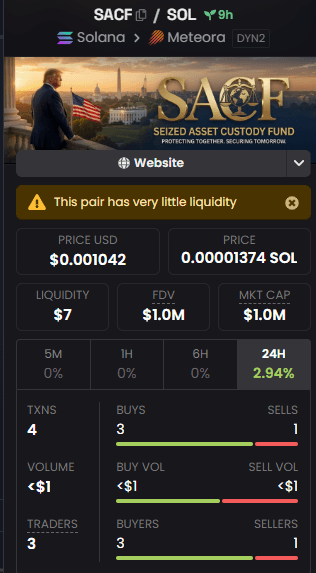
Meanwhile, the SACF/SOL pair listed in the initial link only had liquidity of around US$7 at the time of review. The market page even warns that the pair has very low liquidity.
These differences indicate that users should not simply look at the SACF symbol. Check the contract address and liquidity pool used before signing a transaction.
While there is a SACF pricing page on a centralized exchange, the page clearly states that SACF is not available for direct trading on that exchange.
Thus, current SACF trading access is more geared towards swaps via decentralized protocols or the swap feature of the Solana wallet.
Start trading SOL/IDR with Bittime here!
How to Buy SACF on Solana?
The following is a general guide to purchasing SACFs. This guide is for educational purposes only and is not an investment recommendation.
1. Prepare a Solana wallet
Create a non-custodial wallet that supports the Solana network. Store your seed phrase offline and never share it with anyone.
2. Prepare SOL or USDC
You'll need SOL or USDC as your payment asset. Keep a small amount of SOL in your wallet to cover transaction fees.
You can register on Bittime to check the availability of major assets like SOL or USDC and stay up-to-date on the latest news about the Solana ecosystem. Before withdrawing, ensure the selected withdrawal network is Solana and matches the destination wallet address.
3. Transfer assets to wallet
Copy the Solana wallet address and then make a withdrawal from the platform you're using. It's recommended to send a small amount first as a test transaction.
4. Open the swap feature or DEX that supports SACF
Connect your wallet to the Solana swap service. Ensure the domain you're using is valid to reduce the risk of phishing.
5. Enter the official contract address
Use the following contract address:
SACFEuRRK1QxJV1PEXTaWo88DSfk2hxjnSton9Ehdad
Don't choose a token solely based on its name or ticker, as anyone can create another token with the same symbol. The contract address serves as the token's unique identifier on the Solana network.
6. Check the liquidity pool
Compare liquidity, volume, price impact, and trading pairs. Based on the snapshot reviewed, the SACF/USDC pool has much greater liquidity than the SACF/SOL pool.
7. Enter the purchase amount
Use a nominal amount that aligns with your risk tolerance. New tokens with limited volume and traders can experience extreme price swings.
8. Review price impact and slippage
High price impact means your transactions can significantly move prices. Excessively low slippage can also result in execution prices that differ significantly from expectations.
9. Confirm transaction
Double-check the payment asset, destination token, amount, fee, and contract address. Once everything is correct, confirm the transaction through your wallet.
10. Verify balance and transactions
Once the transaction is complete, check the SACF balance in the wallet and the transaction record on the blockchain explorer.
Fancy buying some SACF? Sign up to Bittime now, buy the underlying asset, then swap it with ease.
What are the risks of investing in SACF?
SACF includes speculative crypto assets with a number of significant risks.
Risk of unproven reserve claims
There are no independent audit reports, asset lists, custodial accounts, or ownership documents linking the tokens to any specific seized assets.
Risk of lack of legal rights of token holders
Owning a SACF does not necessarily imply a claim to property, commodities, auction proceeds, or income from seized assets. These rights must be clearly defined through contracts and legal documents.
Team identity risk
Public information regarding the founders, legal entities, and project managers remains limited. This situation can complicate the accountability process if disputes arise.
Liquidity risk
Liquidity determines how easily tokens can be bought or sold. Pools with liquidity of just a few dollars are highly susceptible to extreme price impacts, while pools with liquidity of tens of thousands of dollars remain relatively small for large-value transactions.
Risk of price manipulation
The limited number of traders and the relatively small volume can make prices more susceptible to influence by a few wallets.
Ownership concentration risk
Investors need to monitor token distribution. If a large portion of the supply is controlled by a few wallets, large sales can sharply depress the price.
Smart contract risks and token authority
Third-party data indicates that SACF has a fixed supply of one billion tokens, and mint and freeze controls have been lifted. However, this status should still be verified directly through a blockchain explorer before purchasing.
Revoking mint authority can prevent the creation of new supply, while revoking freeze authority removes the issuer's ability to freeze account tokens through that authority. However, neither of these measures proves the existence of an asset reserve or price security.
Wallet security risks
Address errors, phishing sites, leaked seed phrases, or malicious transaction approvals can result in permanent loss of funds.
Regulatory risks
The use of the terms fund, custody, reserve, and tokenized assets can raise regulatory questions. The legal status of tokens can vary by jurisdiction.
Risk of fake tokens
SACF tickers can be faked. Always match the contract address, not just the token name and logo.
Risk of rapidly changing market information
Prices, volume, liquidity, number of traders, and pool status can change within minutes. The data displayed on the market page does not guarantee that orders will be executed at the same price.
The automated check system on the marketplace page did not reveal any specific contract issues at the time of the check. However, the page also warns that automated checks are not always 100% accurate.
Read also:What Are Hood Stocks ($HSTOCKS)? How They Work and the Risks
Conclusion: Is SACF Worth Your Attention?
SACF offers a compelling narrative, combining seized assets, blockchain transparency, and real-world asset tokenization. This token already has an active contract address and liquidity pool on the Solana network.
However, the SACF's main claims are not supported by sufficient evidence of reserves. There are no asset lists, custodial reports, independent audits, complete team identities, redemption mechanisms, or documents proving official ties to the government or law enforcement agencies.
Now that you understand SACF’s potential, don’t miss out on this trending token.Monitor more news about it with Bittime!
Bittime is a licensed and regulated Digital Financial Asset Trader (PAKD) supervised by Indonesia’s Financial Services Authority (OJK) — where you can buy Bitcoin in Indonesia and hundreds of other crypto assets starting from just Rp10,000. The registration process is fast, secure, and you can get started today.
Track USDT to IDR conversions and monitor your favorite crypto assets in real time. Everything is available in one crypto investment app that you can download for free on the Play Store
Ready to start? Register now on Bittime and execute your investment strategy with a platform trusted by millions of users in Indonesia.
FAQ
What is a Seized Asset Custody Fund?
The Seized Asset Custody Fund, or SACF, is an SPL token on the Solana network that promotes the concept of tokenization and transparency of seized assets. There is currently no evidence that the token confers direct ownership rights to any specific physical assets.
Apa contract address SACF?
The SACF contract address isSACFEuRRK1QxJV1PEXTaWo88DSfk2hxjnSton9Ehdad. Always match all addresses before swapping to avoid counterfeit tokens.
Is SACF a government token?
There is no public evidence that SACF is issued, endorsed, or managed by any government or law enforcement agency. The names and narratives surrounding the seized assets should not be construed as evidence of official affiliation.
Where can SACF be purchased?
SACF can be accessed through decentralized liquidity pools on the Solana network. Users need to use a Solana wallet, prepare SOL or USDC, and ensure the pool has sufficient liquidity.
Is SACF investment safe?
No crypto investment is completely safe. SACFs carry additional risks, including a non-transparent team, limited proof of reserves, relatively low liquidity, volatility, and unclear token holder rights.
Disclaimer: The views expressed belong exclusively to the author and do not reflect the views of this platform. This platform and its affiliates disclaim any responsibility for the accuracy or suitability of the information provided. It is for informational purposes only and not intended as financial or investment advice.

.png)