What Is Project Cortex (XTX)? The Concept of AI and Its Risks
2026-11-03
What is Project Cortex? Project Cortex is the name of the XTX token on the Solana network that is associated with the idea of decentralized memory for AI. To understand this project, you need to examine two things: the asset being traded and the evidence behind its technology.
The term AI memory layer sounds appealing, but how does it benefit users? This article explores the concept, the available information about XTX, and what you should check before connecting your wallet or making a transaction.
Key Takeaways
- The XTX discussed here refers to a single mint address on Solana to avoid confusion with similarly named tokens.
- The AI memory concept describes the proposed direction of development, while the product's capabilities still require evidence.
- Trading conditions should be assessed through liquidity and data quality, rather than price movements alone.
What Is Project Cortex (XTX)?
The name Project Cortex and the ticker XTX appear on Solana token information and trading pages. The asset referenced in this article has the following mint address:
v2sv5awjgCV1jgMDz15u8Z7Gk5rwpNpqgrsfJxYpump
A mint address serves as a token's identifier on the network. Multiple assets can use the same name and ticker, so those two details alone are not enough to identify the token you are viewing.
Matching the address helps ensure that price, transaction, and holder data all refer to the same asset. However, to find out who manages it and what they are building, you still need verifiable project information.
Read also: What Is Duino-Coin (DUCO)? How It Works and Mining for Beginners
Understanding the AI Memory Layer Through a Simple Example
Imagine using an AI assistant to conduct research over several days. To continue the work, the application needs to retrieve the notes, sources, and decisions you previously made.
In general, an AI memory layer helps store and retrieve this kind of context. Relevant information can then be provided to the application when needed for the next task.
The Project Cortex AI narrative relates to this idea. The research assistant example above only illustrates the general concept of AI memory; this article has not tested that capability as a Project Cortex feature.
What Does Decentralized Memory Mean?
The term decentralized memory layer refers to managing memory through infrastructure involving multiple parties. Assessing it requires knowing where data is stored, who maintains its availability, and what access rules apply.
Privacy is an important part of this design. Conversation histories and personal documents require clear access controls, especially if the system involves an open network.
A useful technical explanation should clarify who can add information, how the data is checked, and how users retrieve it. These answers provide a basis for assessing the benefits of decentralization.
How Should You Interpret Other Technical Terms?
If you encounter the term knowledge graph, think of it as a way to connect information based on its relationships. To evaluate its results, you still need to examine search examples, answer accuracy, and the sources of the data used.
Claims about consensus or a standalone network also require specific explanations. The existence of a token on Solana alone does not demonstrate that the developers operate a blockchain with a new consensus mechanism.
Read also: What Is the IAO Token? Understanding Ptah's Initial Agent Offering
What Is the XTX Token Used For?
The most important question about the XTX token's function is: what activities require it? The answer could involve service fees or incentives for infrastructure providers, but it must be supported by clear project terms.
The material available on the two reference pages is not sufficient to confirm these mechanisms. Features such as staking, governance, and service payments therefore cannot yet be listed as available uses for XTX.
The relationship between the product and the token needs to be explained directly. If an AI service exists, find out when users need XTX, how fees are calculated, and what they receive after paying.
Project Cortex Tokenomics: The Data You Need to Know
Project Cortex's tokenomics cannot be fully explained using trading pages alone. An assessment requires details about supply, allocation recipients, release schedules, and token authorities.
When reading supply figures, pay attention to the terminology used. Total supply indicates the number of tokens in existence, while circulating supply describes the amount considered to be in circulation according to the data provider's methodology.
Holder lists also need to be interpreted according to each account's function. Personal wallets, service accounts, and liquidity pools can appear in the same list even though their roles differ.
A large balance at an address is not enough to identify it as a team allocation. That conclusion requires verifiable information about ownership or relationships between accounts.
Read also: What Is the National Oil Trust Fund (NOTF)? Tokenomics and Risks
XTX Price: Why Does Liquidity Matter?
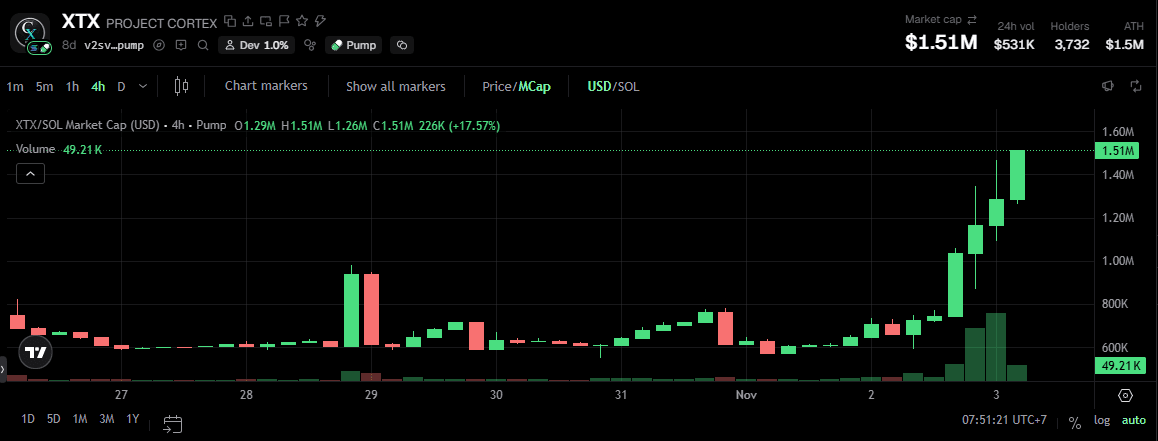
The XTX chart displays market capitalization at 4-hour intervals. The figure of approximately US$1.51 million in the screenshot represents market cap, not the price of a single token.
Leading up to November 3, a series of green candles shows a sharp rise from around US$600,000 to US$1.5 million. Volume bars also increase across several of the latest candles, indicating greater trading activity during the rally.
Although the movement looks strong, this chart does not show the pool's liquidity. Market capitalization is a valuation based on the price and supply used by the data provider, while liquidity concerns the funds available for exchanging tokens.
This distinction matters when interpreting XTX's price. If liquidity is limited, a transaction can move the price considerably, causing the proceeds from a sale to differ from an estimate based on the latest price.
As you continue monitoring, watch whether the rise holds as volume changes and how the market responds to selling. The US$1.5 million market cap area can serve as a reference point for observation, but there is not yet enough evidence to call it confirmed support.
Before making a transaction, check pool liquidity, the estimated number of tokens you will receive, and slippage. The figures above refer to the provided screenshot, not real-time market data.
5 Checks Before Interacting with XTX
1. Match the Full Mint Address
Check every character of the address when moving from an information page to a transaction interface. This reduces the chance of selecting another asset with a similar ticker.
2. Look for a Product Example You Can Try
Documentation is more helpful when it includes examples of inputs, processes, and results. This material helps readers understand what the system does and where its limitations remain.
3. Check Whether the Service Requires the Token
Look for terms explaining when the token is used and how fees are set. Also note whether the service is already available or remains a development plan.
4. Review the Operator's Authorities
Check the status of the mint and freeze authorities using network data. Mint authority concerns the issuance of additional tokens, while freeze authority may allow token accounts to be frozen under the program's rules.
5. Read the Transaction Estimate
Before approving a transaction, review the estimated number of tokens you will receive, the fees, and the slippage limit. Slippage is the price difference that can occur between the initial estimate and transaction execution.
Read also: What Is Cambria (RSGP)? TGE Schedule, Tokenomics, and Utility
How to Buy XTX: Start by Identifying the Asset
To explore how to buy XTX, open a trading page that refers to the mint address in this article. Then check whether a swap route is available and which asset is used for payment.
In general, transactions on Solana require a compatible wallet and SOL to cover network fees. Check the details in the interface before connecting your wallet or granting approval.
This article has not confirmed an XTX listing on any specific centralized exchange. If you want to learn more about crypto transactions, you can sign up for Bittime and explore the guides and assets available on the platform.
Which Developments Are Worth Monitoring?
To assess Project Cortex's progress, prioritize integration documentation, published code, and product demonstrations. These materials help explain the relationship between the proposed concept and usable results.
For AI memory systems, relevant measures include context retrieval accuracy, response speed, cost, and access controls. These are examples of testing criteria, not findings from an evaluation of Project Cortex.
Updates are more meaningful when they include ways to test features and explain their usage limits. This allows readers to follow the project's progress based on observable results.
Conclusion
Understanding what Project Cortex is begins with identifying XTX on Solana and examining the AI memory concept associated with it. Further assessment still requires product documentation, an explanation of its utility, and adequate tokenomics information.
Use the correct mint address and check the quality of the information before making a decision. Guides to Solana wallets and tokenomics can help you understand these checks.

Bittime is a Digital Financial Asset Trader (PAKD) platform licensed and supervised by the Financial Services Authority — a place where you can buy Bitcoin in Indonesia and hundreds of other crypto assets starting from IDR 10,000. Registration is fast and secure, and you can get started today.
Track conversions from USDT to IDR and the price movements of your favorite crypto assets in real time. Everything is available in one crypto investment app that you can download for free from the Play Store.
Ready to get started? Sign up for Bittime now and put your investment strategy into action with a platform already trusted by millions of users in Indonesia.
FAQ
What Is Project Cortex (XTX)?
Project Cortex is the name of the XTX token on Solana, which is associated with the concept of decentralized memory for AI. The mint address discussed in this article is listed in the token introduction section.
How Does Project Cortex Relate to an AI Memory Layer?
Its narrative focuses on storing and retrieving context for AI applications. The product's capabilities still need to be examined through documentation and reproducible testing.
What Is the XTX Token Used For?
The mechanisms for using XTX could not be confirmed from the material available in this review. Staking, governance, or service payments need to be confirmed through the project's terms before being treated as features.
How Can You Verify the Identity of the XTX Token?
Match the full mint address on the information page and the transaction interface. Matching addresses helps confirm that they refer to the same asset, while the project's credibility requires additional checks.
Where Can You Find XTX Price and Trading Information?
Use a market page that refers to the mint address you are checking. Review the update time, asset pair, and liquidity to put the price figures into clear context.
Disclaimer: The views expressed belong exclusively to the author and do not reflect the views of this platform. This platform and its affiliates disclaim any responsibility for the accuracy or suitability of the information provided. It is for informational purposes only and not intended as financial or investment advice.

.png)