What Is PLAGUE Coin? Get to Know the Yersinia pestis Token on Solana
2026-10-07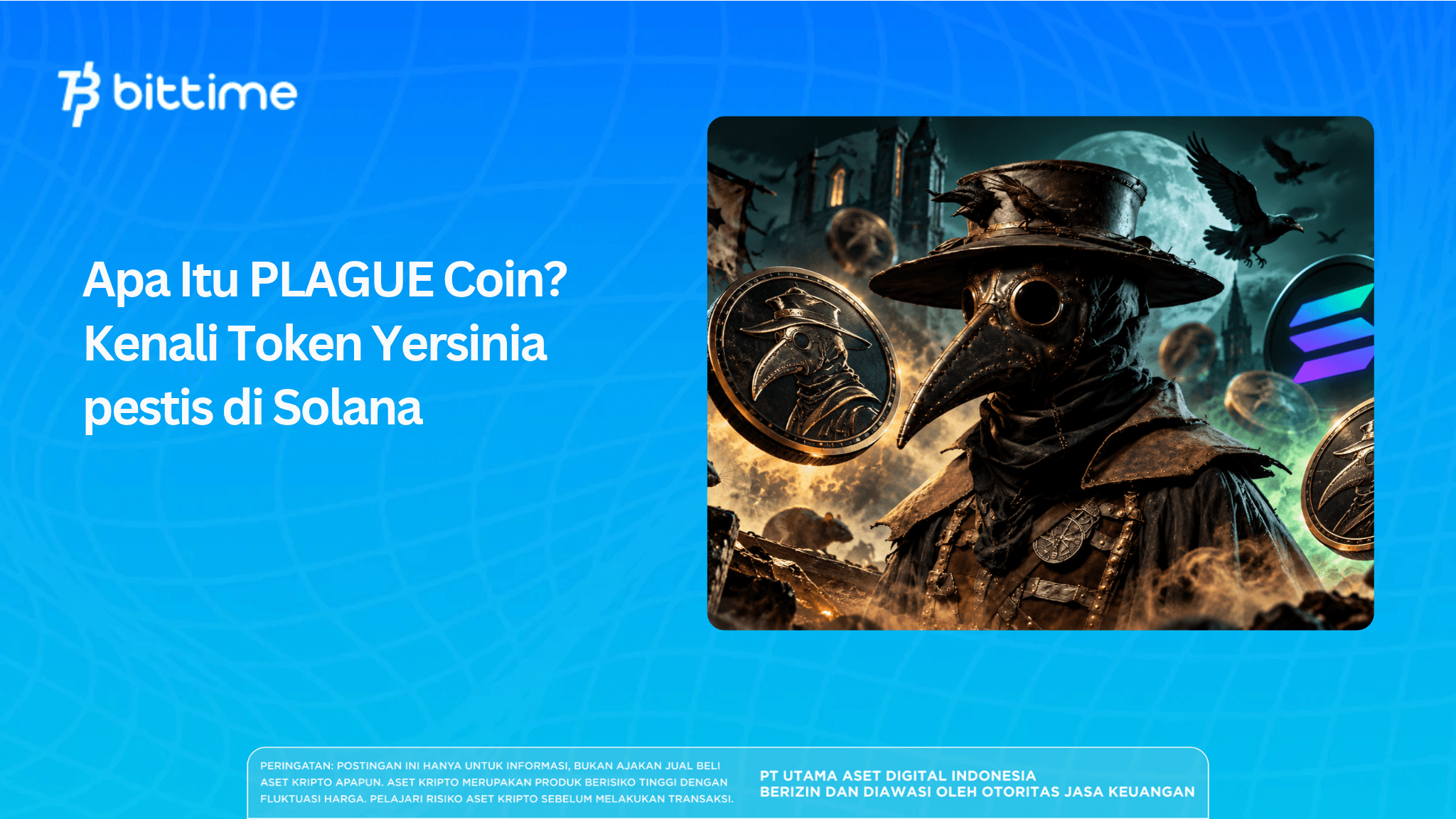
The name Yersinia pestis usually refers to the bacteria that causes the plague. However, in the crypto market, the term is also used as the identity of the PLAGUE Coin token that runs on the Solana network. So, what is PLAGUE Coin and why is this token starting to gain attention?
PLAGUE is a memecoin-themed crypto token that uses the Yersinia pestis narrative as its project identity. Its movements should be viewed as a high-risk crypto asset, not as part of a health institution or scientific project related to the bacteria.
Key Takeaways
- PLAGUE Coin is a Yersinia pestis-themed crypto token on the Solana network.
- The name PLAGUE Coin does not mean this token is part of a health organization or has a biological connection to Yersinia pestis.
- Price movements, liquidity, volume, and holder concentration indicate high risks that need to be considered before making transactions.
What is PLAGUE Coin?
PLAGUE Coin is a Solana-based crypto asset with the ticker PLAGUE and the name Yersinia pestis. This token uses the plague and Black Death theme as part of its identity and community narrative.
The token can be found through on-chain market data with the contract address:
CscZaq5twomhUkvCY8Jdd1tge32L4Yj9FbkFFEZQpump
This address is important because token names and symbols can be imitated by other tokens. When swapping, users should match the complete contract address, rather than just relying on the name or logo.
PLAGUE is also categorized as a memecoin. The project website states that the token has no intrinsic value or expectation of financial return and is intended for entertainment purposes.
Read also: USDF and Trump: Is There Really a Connection to the Trump Dividend?
What is the Relationship Between Yersinia pestis and PLAGUE Coin?
This is where users need to distinguish between two contexts.
Yersinia pestis is the bacteria that causes the plague. The World Health Organization explains that the bacteria is a zoonotic bacteria usually found in small mammals and their fleas.
Meanwhile, PLAGUE Coin is a crypto asset that uses the name as part of its branding.
This means the two terms should not be considered the same entity.
PLAGUE Coin is not a bacteria. The token has no biological, medical, or health functions just because it uses the name Yersinia pestis.
Why is this name gaining attention?
The name PLAGUE gained attention again when discussions regarding suspected plague cases in Siberia surfaced on social media.
However, this information needs to be read carefully. Recent reports mentioned a laboratory worker in Irkutsk died after contracting pneumonia, but Russian authorities stated the cause has not been confirmed as the plague and found no evidence of an incident involving the plague bacteria. About 200 people were placed under observation as part of the health response.
Therefore, the emergence of narratives about the plague on social media is not automatic proof that PLAGUE Coin has an official relationship with the incident.
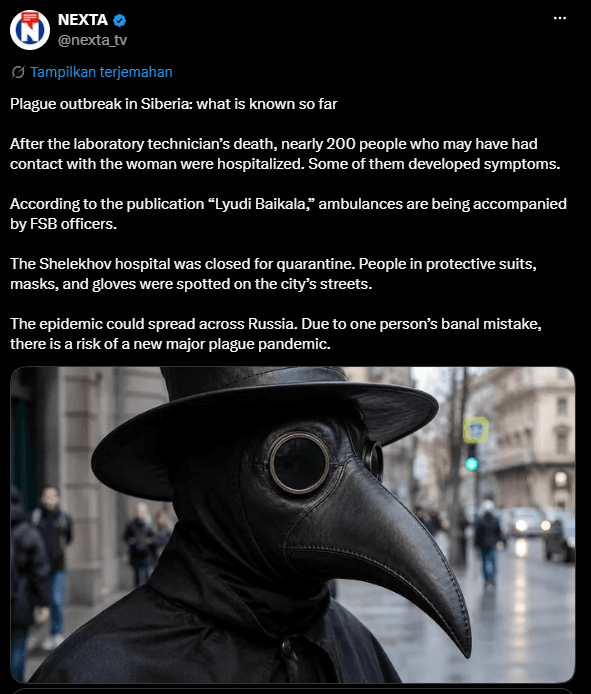
Its Relationship with PLAGUE Coin
The timing becomes interesting from a market perspective because PLAGUE Coin uses Yersinia pestis and the “Black Death” concept as its memecoin identity. The project website explicitly uses narratives of outbreak, surveillance, and containment in the token's branding.
More importantly, the project website also states that PLAGUE is a memecoin with no intrinsic value or expectation of financial return and is not affiliated with the WHO, CDC, or any health authority. The site also explains that the outbreak data displayed is collected from public sources for thematic purposes.
This means the increased attention to PLAGUE should not be read as proof that the token has an official relationship with the health events in Russia.
Read also: What is the Global Oil Institution Fund (GOIF)? Functions, Token, and Risks
PLAGUE Solana: Network and Contract Address
PLAGUE is a token on the Solana network. Market data for the contract address CscZaq5twomhUkvCY8Jdd1tge32L4Yj9FbkFFEZQpump shows the token is traded through the Solana DEX ecosystem.
The contract address is one of the most important pieces of information when searching for PLAGUE Coin Solana.
Before making a transaction, check:
- The network used is Solana.
- The token symbol is PLAGUE.
- The token name matches Yersinia pestis.
- The contract address matches exactly.
- The selected trading pool indeed refers to the same token.
Do not buy a token just because it has the name PLAGUE. On a public blockchain, anyone can create a token with a similar name and logo.
PLAGUE Coin Price and Latest Market Conditions
The price of PLAGUE Coin is highly volatile, so market figures need to be read based on the time of data collection.
The latest available market snapshot shows PLAGUE hovering around US$0.001685, with a market cap of about US$1.62 million, a 24-hour trading volume of roughly US$6.07 million, and liquidity of about US$135.7 thousand. This data indicates substantial trading activity compared to its market size.
These movements also show that PLAGUE is not an asset with stable price action. In the same snapshot, the price was recorded up by about 105% in 24 hours, but also experienced a drop of about 29.5% within six hours.
Conditions like this are important because very rapid price increases can be followed by sharp corrections.
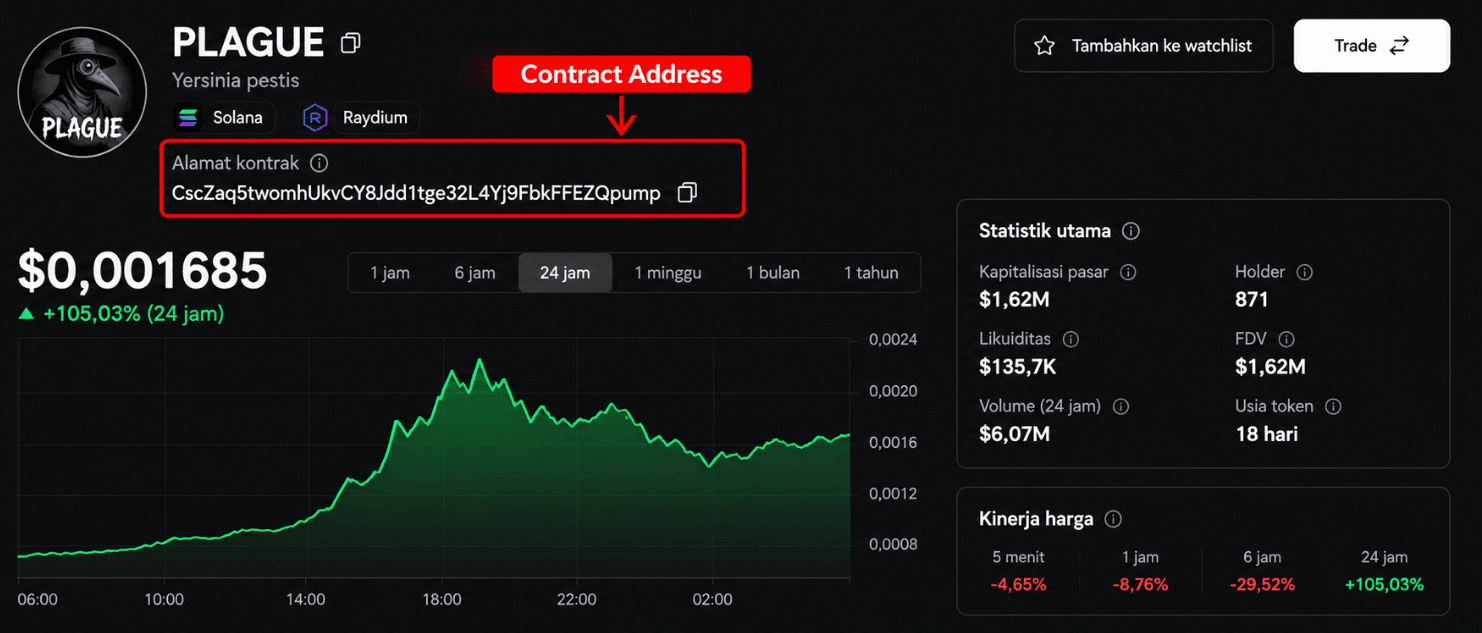
The PLAGUE market page on OKX displays the Yersinia pestis token on the Solana network.
5 Data Points to Check Before Buying PLAGUE
1. PLAGUE Price
The price indicates the current token position, but it is not enough to assess whether a token is cheap or expensive.
Tokens with small fractional prices can still have high valuations if their total supply is extremely large.
2. Liquidity
Liquidity determines how easily a transaction can be executed without causing excessive price changes.
In the latest snapshot, PLAGUE's liquidity is around US$135.7 thousand, much smaller than its 24-hour volume which reached about US$6.07 million. A ratio like this needs to be noted because massive transaction activity compared to liquidity depth can increase volatility and price impact.
3. Trading Volume
Volume shows how actively the token is traded.
High volume indeed indicates market activity, but it does not mean all of that activity comes from long-term purchases. Volume can come from both buy and sell transactions.
4. Holder Distribution
The number of holders needs to be looked at alongside ownership concentration.
A previous snapshot showed 871 holder addresses with about 34.69% of the supply held by the top 10 holders. This data also serves as a reminder that wallet addresses are not always identical to individuals, as they can include pools, exchanges, burn addresses, or other related addresses.
Because holder data changes rapidly, these figures should be considered a snapshot, not a permanent condition.
5. Contract and Token Authority
Besides market data, check token controls such as mint authority, freeze authority, and liquidity pool status if such data is available.
Some of the latest market data highlights that token examinations need to be conducted separately from price movements. A price increase cannot be used as proof that a token is safe.
Read also: What is the American Institutional Oil Fund (IOF)? A Solana Token with an Oil Narrative
Is PLAGUE Coin Considered a Memecoin?
Yes. PLAGUE is more accurately viewed as a Solana memecoin rather than a blockchain project with its own infrastructure.
Its primary narrative comes from the theme of Yersinia pestis, the Black Death, and community content. The project website itself calls PLAGUE a memecoin and issues a warning that the token has no intrinsic value or expectation of financial return.
Characteristics like this make its price movements heavily dependent on:
- community attention;
- social media trends;
- trading volume;
- liquidity;
- number of new traders;
- narrative momentum;
- large wallet activity.
Therefore, the analytical approach for PLAGUE should be different from Ethereum or Solana, which have much broader technological ecosystems.
Read also: What is SARP? Get to Know the Strategic American Protocol and SARP Token
3 Main Risks of PLAGUE Coin
1. Extremely High Volatility
A change of over 100% in a single day shows how fast the price can move. Such conditions can offer speculative opportunities, but they also increase the risk of losses in a short period.
2. Liquidity is smaller than volume
Relatively small liquidity compared to trading volume means large-sized transactions can have a greater impact on price.
Slippage can also increase when market conditions change rapidly.
3. Holder concentration
Large wallet ownership needs to be monitored.
If a large portion of the supply is concentrated in a few addresses, sell-offs from large wallets can put pressure on the price. However, analysis must consider whether these addresses are investors, liquidity pools, exchanges, burn addresses, or other categories.
What are the Prospects for PLAGUE Coin?
PLAGUE's prospects highly depend on the token's ability to maintain market attention.
A positive scenario could occur if volume remains high, liquidity increases, the number of holders grows, and the community narrative continues to develop.
Conversely, the price could correct sharply if social media momentum weakens, early traders realize profits, or volume drops drastically.
With characters like this, PLAGUE Coin price predictions should not be made as definite numbers. The very short historical data also makes long-term projections far more uncertain compared to crypto assets with a long track record.
Read also: What is Super Intelligence Force (SIF)? Functions, Token, and Risks
What Should Be Done Before Buying PLAGUE?
If you still want to monitor PLAGUE, use a data-driven approach.
Step 1: Verify the contract address
Make sure the contract address used is:
CscZaq5twomhUkvCY8Jdd1tge32L4Yj9FbkFFEZQpump
Do not just search based on the word “PLAGUE”.
Step 2: Check liquidity
Liquidity needs to be compared with the size of the transaction you want to make.
The smaller the liquidity is relative to the transaction, the greater the potential price impact.
Step 3: Check holder distribution
Do not just look at the number of holders.
Also pay attention to the percentage of supply controlled by the largest wallets.
Step 4: Pay attention to volume
Increasing volume alongside a growing number of holders can indicate growth in market activity.
However, volume derived only from short-term transactions does not necessarily indicate healthy growth.
Step 5: Separate narrative from facts
This is crucial for PLAGUE.
Narratives regarding Yersinia pestis or news about suspected disease cases should not be immediately considered as token fundamentals.
Yersinia pestis is indeed the bacteria causing the plague, but the PLAGUE token only uses the name and theme as a crypto identity.
If you want to follow the latest updates regarding PLAGUE Coin and other crypto assets, you can register on Bittime to get market information, the latest news, and periodic analysis.
Conclusion
What is PLAGUE Coin? PLAGUE is a Yersinia pestis-themed token running on the Solana network and is more accurately categorized as a memecoin.
The most important thing is distinguishing PLAGUE Coin from Yersinia pestis, which is the bacteria that causes the plague. Having the same name does not mean the token has an official relationship with health organizations, medical research, or specific disease outbreaks.
From the market side, PLAGUE demonstrates speculative characteristics with high volatility, large volume, relatively limited liquidity, and rapid holder turnover. Therefore, anyone interested in PLAGUE Coin should check the contract address, liquidity, volume, holder distribution, and token risks before making a decision.

Bittime is a licensed Digital Financial Asset Trader (PAKD) platform supervised by the Financial Services Authority (OJK) — where you can buy Bitcoin in Indonesia and hundreds of other crypto assets starting from IDR 10,000. The registration process is fast, safe, and can be started today.
Monitor USDT to IDR conversions and real-time price movements of your favorite crypto assets. Everything is available in one crypto investment app that can be downloaded for free on the Play Store.
Ready to start? Register now on Bittime and execute your investment strategy with a platform trusted by millions of users in Indonesia.
FAQ
What is PLAGUE Coin?
PLAGUE Coin is a Yersinia pestis-themed crypto token running on the Solana network. This token is positioned as a memecoin and uses the plague theme as part of the project's identity.
What is the relationship between Yersinia pestis and PLAGUE Coin?
Yersinia pestis is the bacteria causing the plague, while PLAGUE Coin is a crypto asset that uses the name. There is no basis for equating the token with the bacteria or assuming the token is a health project.
Is PLAGUE Coin a Solana token?
Yes. PLAGUE is traded within the Solana ecosystem and uses the contract address CscZaq5twomhUkvCY8Jdd1tge32L4Yj9FbkFFEZQpump. The contract address should always be verified before making a transaction.
Is PLAGUE Coin legit or a scam?
Market data shows the token indeed exists and is traded on the Solana network, but that is not enough to conclude that PLAGUE is a safe investment. Users still need to check liquidity, holder distribution, token authority, the creator wallet, and on-chain activity.
Is PLAGUE Coin safe to buy?
PLAGUE has memecoin characteristics with high volatility, meaning the risk is significant. Rapid price changes, relatively limited liquidity, and holder concentration are some of the factors to consider before making a transaction.
Disclaimer: The views expressed belong exclusively to the author and do not reflect the views of this platform. This platform and its affiliates disclaim any responsibility for the accuracy or suitability of the information provided. It is for informational purposes only and not intended as financial or investment advice.

.png)