What Is PIGGER, the New Memecoin That Carries a Satirical Identity in the Crypto Market?
2025-11-10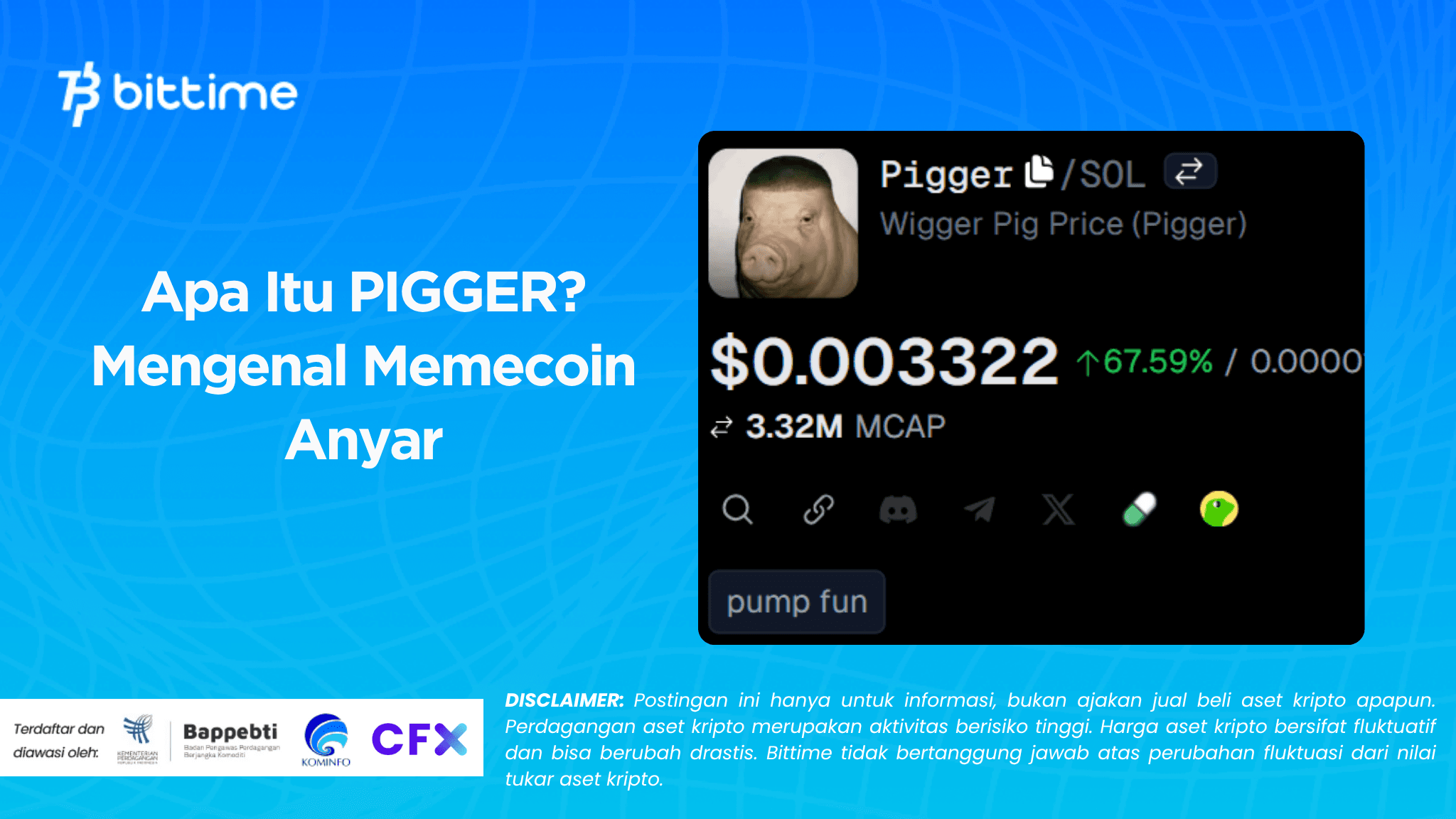
Bittime - PIGGER or its full name PIGGER Wigger Pig is starting to appear on digital asset tracking dashboards like CoinGecko as one of the new memecoins growing through the open community.
His full name carries a satirical element that circulates online and is not used as a general term, so from now on, he will be referred to as PIGGER.
The emergence of this token stemmed from community discussions on X and community forums featuring the pig character as a mascot. Memecoin trends that emerge from the community tend to move quickly.
PIGGER was born from the same pattern: a project focused on simple narratives, visual icons, and social engagement. This combination allows small-cap tokens to grow rapidly in a short period of time when market sentiment is positive.
PIGGER's Origins and Project Identity Context
PIGGER originated from an online community that used pig characters as a humorous element. This visual identity is frequently featured in internet culture, making it easily recognizable. The developers didn't prioritize complex technical utilities.
Instead, they emphasize community participation, narrative surprises, and daily social activity. Therefore, these tokens follow the pattern of most memecoins, which rely on momentum and public support.
The mention of PIGGER's full name at the start of the launch sparked debate regarding the sensitivity of the term, but the community later redirected the conversation to a satirical context and explained that the name was part of a meme style not intended for general use outside the project.
Amidst the increasingly dense memecoin competition, community strategy is one of the advantages of small projects.
The PIGGER community actively produces images, humorous statements, and discussion boards containing short updates about the token.
This practice makes their presence more easily detected by new users looking for projects with a light presentation style.
Read Also:How to Mine ORE Coin on the Solana Network
PIGGER Token Structure and Movement in the Market
PIGGER is traded on decentralized exchanges and falls into the memecoin category with volatile price movements.
According to CoinGecko data, the token's capitalization is still small, making it susceptible to daily volume fluctuations.
This type of structure is common in new assets. Interested users typically examine liquidity, token distribution, and transaction activity to determine the short-term stability of the market.
Memecoins like PIGGER often follow social patterns. Volume spikes typically occur when a post goes viral in the community or when a prominent account quotes the PIGGER character.
These conditions require a more careful understanding of the memecoin market. Technical fundamentals aren't always the primary price drivers. Instead, community interactions and internet trends often play a role.
Community X and the Role of Social Media in PIGGER's Growth
The PIGGER community on X has become the center of the project's movement. Community members regularly post memes, hold lighthearted discussions, and share screenshots of token movements.
This social activity helps maintain the project's visibility amidst the multitude of new tokens emerging every day.
Social media plays a significant role in shaping PIGGER's identity. The community narrative is built through humor and visuals. Every post that receives high engagement contributes to the token's reach.
New users are then attracted to join, read the conversations being discussed, or try to buy small amounts of tokens.
This pattern is similar to other memecoins that grow through social media. However, social media can also trigger volatility, as market reactions to viral posts are often swift and volatile.
PIGGER's Potential, Risks, and Future Direction
As a memecoin, PIGGER's potential depends more on the strength of its story, community, and ability to sustain social activity.
Without complex technical utility, a token's future depends on how long the community can maintain momentum. If participants can maintain a consistent posting pattern, discussion forum, and organic participation, a token like this can thrive in the market.
However, risks remain high. Small capitalization makes prices volatile. Furthermore, reliance on social media can create periods of extreme volatility.
Interested users are generally advised to check transaction history, liquidity, and community response to the market. Projects like PIGGER lack a deep technical foundation, so speculative approaches should be considered with caution.
Conclusion
PIGGER is a new memecoin that grew out of the internet community and relies on a satirical visual identity. Its controversial full name is explained as a humorous element and not used as a generic term, so the safer term is PIGGER.
This project follows the memecoin model, emphasizing social activity and community participation as its primary drivers. Its potential depends on its narrative and public support.
Users reading about the movements of these types of tokens need to understand that volatility and risk remain key factors.
FAQ
What is PIGGER?
PIGGER is a community-driven memecoin with a pig as its main icon. The project emerged from the social space on X and lacks complex technical utility.
Why is the full name PIGGER considered sensitive?
The initial name PIGGER contained a term that, in modern linguistic contexts, is considered sensitive. The community later confirmed that it was simply part of the humorous style and not intended as a general term.
Does PIGGER have any special utilities?
Not yet. PIGGER functions as a community memecoin that relies on social participation and lighthearted narrative.
Is PIGGER suitable for long-term investment?
Most memecoins aren't designed for long-term goals. PIGGER's risk is quite high due to its small capitalization and price movements following social trends.
Disclaimer: The views expressed belong exclusively to the author and do not reflect the views of this platform. This platform and its affiliates disclaim any responsibility for the accuracy or suitability of the information provided. It is for informational purposes only and not intended as financial or investment advice.

.png)