What Is OpenAI Dots? Meet Astra's New GPT-6-Based AI Agent
2026-09-30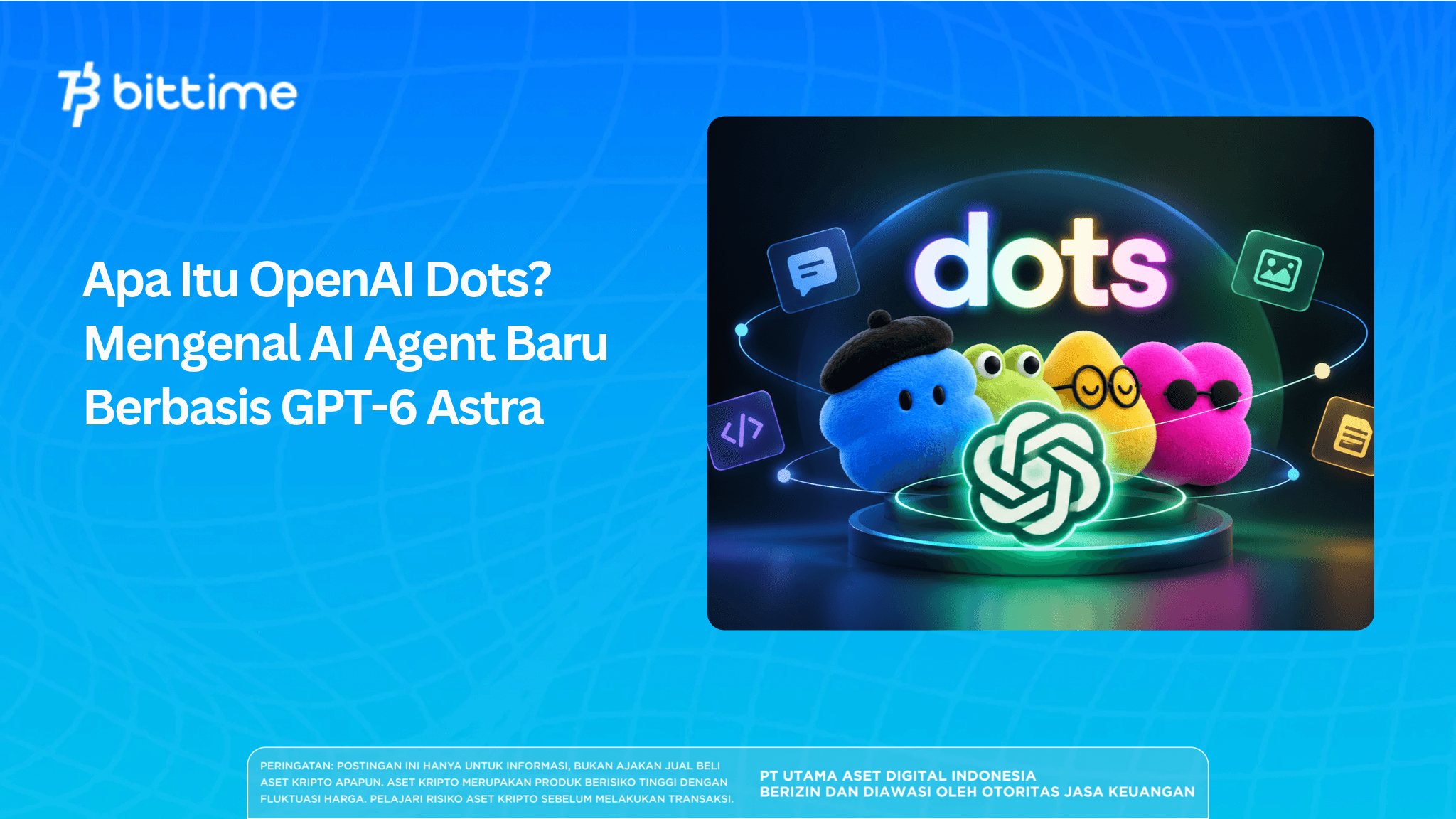
Questions about what OpenAI Dots is have become increasingly common as AI has evolved from chatbots into systems that can more actively help with work. OpenAI Dots was introduced as an AI agent concept AI agent designed to help users perform various tasks with the support of advanced AI models.
This development represents a major shift in how people use artificial intelligence. While chatbots previously waited for user instructions, AI agents such as Dots are designed to understand context, help complete work, and support digital workflows more proactively.
Key Takeaways
- OpenAI Dots is an AI agent designed to help with work proactively.
- Dots differs from a chatbot because it can execute workflows and specific tasks.
- The future of AI agents will depend on capabilities, security, and user control.
What Is OpenAI Dots?
OpenAI Dots is an AI agent system developed to help users perform various digital activities with a more proactive approach than traditional chatbots.
In simple terms, Dots is an AI assistant that not only answers questions but can also help complete a series of tasks based on the user’s goals.
OpenAI introduced Dots as an always-on agent that can help with various tasks. The system is designed to work with connected applications so users can leverage AI in their everyday workflows.
The main difference between Dots AI and a conventional chatbot lies in how they interact. Chatbots generally respond after receiving a question, whereas an AI agent focuses on achieving a goal through multiple steps.
For example:
- Chatbot: the user asks for a document summary, and the AI provides a summary.
- AI agent: the user provides a goal, and the AI helps organize the steps needed to achieve it.
This concept places Dots in the category of proactive AI assistants.
Read also: GPT-6 Sol vs GPT-5: Here Are the Latest Feature Differences
How Does OpenAI Dots Work?
How OpenAI Dots works is related to the AI agent concept, an artificial intelligence system capable of understanding goals, planning actions, and carrying out specific tasks.
Unlike a simple conversational model, an AI agent operates through several components:
1. Understanding the user’s context
Dots needs to understand the user’s needs, preferences, and provided information in order to offer relevant assistance.
2. Executing workflows
An AI agent can help organize multiple work steps, such as creating documents, managing information, or handling other digital activities.
3. Using application integrations
Modern AI agents are designed to work with a variety of digital tools. These integrations make AI more useful in the workplace.
4. Giving users control
Although AI agents offer automation capabilities, users still need control over permissions, data, and actions performed by the AI.
The concept of an autonomous AI agent does not mean that AI operates without limits. The system still requires rules, oversight, and usage boundaries.
Read also: Claude Opus 5.5 vs GPT: Which AI Is Best for Coding and Work?
Getting to Know GPT-6 Astra, Which Supports OpenAI Dots
GPT-6 Astra is an AI model described as a technology supporting OpenAI Dots. The relationship between the language model and the AI agent lies in their ability to understand instructions, process information, and help carry out complex tasks.
AI models such as GPT-6 Astra serve as the intelligence engine behind an agent’s capabilities.
However, a language model alone is not enough to create an AI agent. An agent requires:
- the ability to understand context,
- a planning system,
- tool integrations,
- security mechanisms,
- usage rules.
Therefore, Dots is not only about the AI model, but also about how the technology is used to help people work.
Read also: Dola AI vs ChatGPT: Which Is More Capable for 2026?
OpenAI Dots Features That Set It Apart
Several OpenAI Dots features of interest are related to the capabilities of modern AI agents.
1. Proactive Assistance
OpenAI Dots is not only designed to provide answers, but also to help users accomplish specific goals.
2. Task Automation
Dots can help reduce repetitive work through digital workflow automation.
3. Personalization
The AI assistant can be tailored to users’ needs, making the experience more personalized.
4. Productivity Support
AI productivity tools such as Dots can potentially help digital workers manage information, create content, and complete administrative tasks.
5. Enterprise Use Cases
In business, AI agents can support various work processes such as documentation, communication, and information management.
Read also: GPT-6 Astra Officially Launches: Has the AGI Era Really Begun?
OpenAI Dots vs ChatGPT: What Is the Difference?
The difference between OpenAI Dots and ChatGPT lies in how they work and in the level of AI involvement in helping users.
ChatGPT is essentially a chatbot based on a large language model (LLM) that responds to user requests. The user provides an instruction, and the AI generates an answer based on the available context.
Meanwhile, Dots AI is developed using an AI agent approach that is more focused on achieving goals. An AI agent does not only provide information, but can also help manage multiple work steps based on the user’s instructions.
The main differences can be seen in several aspects:
1. Interaction Pattern
ChatGPT:
- Waits for the user’s questions or commands.
- Provides answers based on the input.
- Suitable for information searches, brainstorming, writing, and analysis.
OpenAI Dots:
- Designed as a more proactive assistant.
- Helps carry out tasks based on the user’s goals.
- Focuses on workflows and automation.
2. Task Execution Capabilities
ChatGPT is typically used as a conversational tool.
Example:
“Develop an article idea about AI technology.”
The AI provides an article idea.
Meanwhile, an AI agent can be directed to assist with longer processes, such as creating plans, organizing information, and helping complete several stages of work.
3. Use in Productivity
ChatGPT is widely used for:
- Writing content.
- Explaining concepts.
- Helping with coding.
- Analyzing data.
OpenAI Dots is more focused on:
- Work automation.
- Workflow support.
- Context-based personal assistance.
- Integration of digital activities.
The difference between AI agents and chatbots reflects the current direction of AI development. Technology is moving from systems that only answer questions toward systems that can help people complete work.
Read also: Nvidia x OpenAI: Ohio Data Center Project Worth Hundreds of Billions
7 Things to Know About OpenAI Dots
1. Dots Is More Than Just a Chatbot
The core concept of OpenAI Dots is not limited to text-based conversation. Dots is developed as an AI agent that can help users achieve specific goals.
This change means AI serves not only as a source of information, but also as a tool for supporting work.
2. The AI Agent Concept Is Evolving
AI agents have become an important development in the artificial intelligence industry.
While generative AI previously focused on creating text, images, or code, AI agents focus on taking actions and completing tasks.
However, an agent’s capabilities still depend on supporting technology, access permissions, and system design.
3. Productivity Becomes a Primary Focus
One reason technologies such as Dots are being developed is the need to improve human productivity.
In the workplace, many activities are repetitive, such as:
- Managing information.
- Creating reports.
- Preparing documents.
- Managing communications.
AI agents can potentially help reduce this manual work.
4. Work Automation Becomes an Important Use Case
AI automation is one of the main applications of AI agents.
Companies can use this technology to help with digital processes that require many steps.
However, implementation in enterprise environments requires consideration of security, privacy, and data governance.
5. AI Still Requires Human Oversight
Although AI agents have automation capabilities, humans remain the primary decision-makers.
AI can generate recommendations or assist with work processes, but its output needs to be reviewed, especially for tasks with significant impact.
6. Data Security Is a Concern
An AI assistant that works with user context requires access to certain information.
Therefore, important aspects to consider include:
- Personal data protection.
- Access permission management.
- System security.
- Transparency in data use.
7. User Adaptation Is an Important Factor
Successful use of AI agents depends on more than technology.
Users also need to understand how to provide instructions, evaluate results, and integrate AI into their workflows.
Read also: Grok 4.5 vs GPT-5: The AI Competition to Solve Mathematical Conjectures
The Impact of OpenAI Dots on the Future of Work
The development of AI productivity tools such as OpenAI Dots shows how the way people use technology is changing.
AI is no longer just an information-search tool; it can potentially become part of digital work systems.
Some possible impacts include:
1. Changes to Digital Workflows
AI agents can help simplify work that previously required many manual steps.
For example:
- Document management.
- Information analysis.
- Report preparation.
- Customer service support.
2. Improving Work Efficiency
AI automation can potentially help workers complete administrative tasks more quickly.
However, improving efficiency still requires appropriate workflow design. AI technology does not automatically replace entire work processes without organizational adjustments.
3. Human-AI Collaboration
The future of work will likely involve increasing collaboration between humans and AI.
Humans remain responsible for:
- Setting goals.
- Making decisions.
- Evaluating results.
- Managing ethical considerations.
AI serves as a supporting tool that assists with work processes.
If you want to follow the latest developments in AI technology and digital assets, you can register with Bittime to receive regular market information, technology news, and analysis.
Risks and Challenges of OpenAI Dots
Although AI agents offer various opportunities, technologies such as OpenAI Dots also present several challenges.
1. Data Privacy
An AI agent that understands user context requires secure data management. Users and companies need to understand what information is provided to the AI system.
2. Information Accuracy
AI can still produce inaccurate information. Therefore, AI output needs to be verified, especially for important decisions.
3. Dependence on AI Systems
Excessive use of AI can create dependence. Users still need to maintain critical-thinking skills and understand the work processes being carried out.
4. Enterprise Security
Companies need to consider:
- AI usage policies.
- Internal data protection.
- Access control.
- System usage audits.
5. Human Oversight
Responsible AI is an important aspect of AI agent development.
Technology should be developed with security, transparency, and human control in mind.
The Future of AI Agents and the Development of OpenAI Dots
The development of AI agents is expected to become one of the main directions of the artificial intelligence industry.
If this technology continues to develop, AI agents could potentially be used across sectors such as education, business, customer service, research, and software development.
However, the future of AI agents will still depend on several factors:
- Advances in AI models.
- Technology regulation.
- Data security.
- The level of user trust.
OpenAI Dots shows how AI is beginning to move from reactive systems toward technology that can better help people proactively.
This development should be monitored because AI agent capabilities may change as new models emerge and supporting infrastructure improves.
Conclusion
AI development today is not focused solely on answering questions, but also on how technology can help people complete their work.
Understanding what OpenAI Dots is helps illustrate the shift from traditional chatbots toward more proactive AI agents. Dots AI introduces the concept of a digital assistant that can support users’ workflows, automation, and productivity.
However, using AI agents still requires attention to data security, information accuracy, and human oversight. The future of this technology will depend on how people develop and use AI responsibly.
To keep up with the latest developments in AI technology, digital assets, and innovation, you can follow updates through trusted technology platforms and AI communities.

Bittime is platform for Digital Financial Asset Traders (PAKD), licensed and supervised by the Financial Services Authority — where you can buy Bitcoin in Indonesia and hundreds of other crypto assets starting from IDR 10,000. Registration is fast and secure, and you can get started today.
Track the USDT to IDR and the real-time price movements of your favorite crypto assets. Everything is available in one crypto investment app that can be downloaded for free from the Play Store.
Ready to get started? Sign up now on Bittime and execute your investment strategy with a platform trusted by millions of users in Indonesia.
FAQ
What is OpenAI Dots?
OpenAI Dots is an AI agent concept designed to help users carry out tasks more proactively. Dots differs from a conventional chatbot because it focuses on goal-based assistance and workflows.
What is the function of OpenAI Dots?
OpenAI Dots helps users with digital activities such as work automation, information management, and productivity support.
What is the difference between OpenAI Dots and ChatGPT?
ChatGPT is a chatbot that responds based on user instructions. OpenAI Dots uses an AI agent approach that is more focused on task completion and proactive assistance.
How does an AI agent work?
An AI agent works by understanding the user’s goals, processing context, determining the necessary steps, and helping execute specific workflows.
Can OpenAI Dots help with work?
OpenAI Dots can potentially help with work that involves information management, task automation, and digital workflow support. However, users still need to oversee AI output.
Disclaimer: The views expressed belong exclusively to the author and do not reflect the views of this platform. This platform and its affiliates disclaim any responsibility for the accuracy or suitability of the information provided. It is for informational purposes only and not intended as financial or investment advice.

.png)