NATF Coin: What is the National American Trust Fund and What Are the Risks?
2026-11-17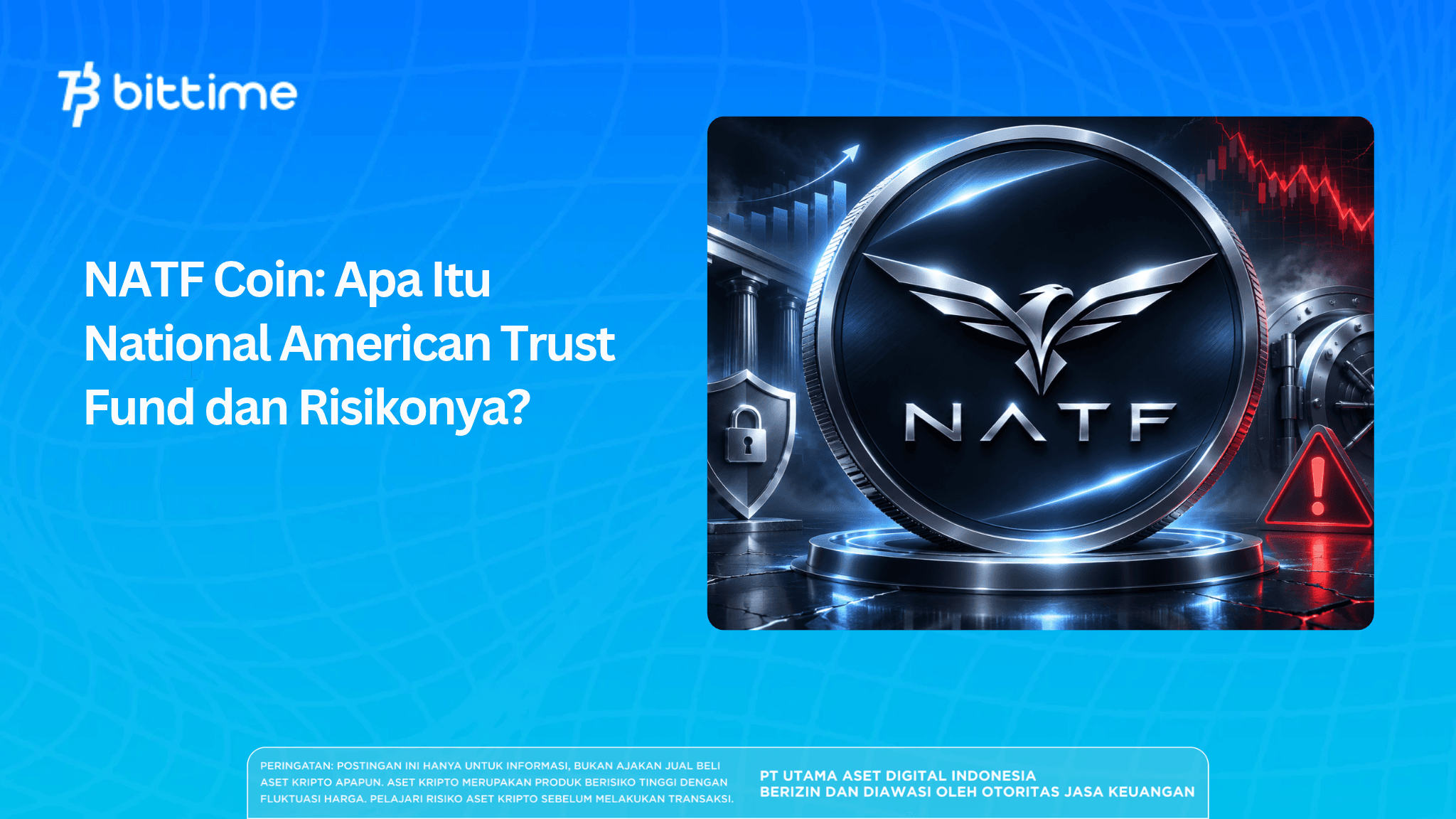
NATF Coin, or National American Trust Fund, is a Solana-based token that promotes the idea of direct digital asset ownership through blockchain. Although its name sounds like an official U.S. trust fund, the project has no affiliation with any U.S. government financial program.
Ahead of an announcement scheduled for November 25, 2026, prospective investors should note one important detail: two tokens share the NATF ticker but have different contract addresses and prices. So, what exactly is National American Trust Fund, how does it work, and what makes this token both appealing and risky?
Key Takeaways
- National American Trust Fund is a Solana-based crypto project that emphasizes direct digital asset ownership through personal wallets.
- Two tokens using the NATF ticker have different contract addresses and market characteristics, and their relationship has not been verified.
- NATF has scheduled an announcement for November 25, 2026, but has not disclosed what it will cover.
What Is NATF Coin or National American Trust Fund?
National American Trust Fund is a crypto project built around the idea of enabling people to participate in digital asset ownership through the NATF token. It draws attention to challenges in the traditional financial system, such as banking fees and limited access to financial services.
NATF offers an alternative approach through a token that users can hold in their own wallets and trade on the open market. Despite its appealing ownership narrative, NATF has no verified investment structure backed by reserve assets.
The token's value depends on market demand, community activity, and project developments. These characteristics make NATF more appropriately classified as a speculative crypto asset than a conventional investment instrument.
As a token operating on the Solana network, NATF is also influenced by developments within that ecosystem. You can monitor the SOL/IDR price chart on Bittime to get a clearer picture of Solana market conditions before assessing NATF Coin's prospects.
Read also: What Is Make.fun? How AI Agents Join Bounties and Earn USDC Rewards
How Does National American Trust Fund Work?
NATF uses the Solana network to record token ownership and transfers. Users can store their assets in compatible wallets without entrusting them to a centralized custodian.
Its ownership model is relatively straightforward:
- Acquire NATF through a trading platform that supports it.
- Store the tokens in a Solana wallet.
- Check balances and transaction history using a blockchain explorer.
- Manage the assets according to market conditions and individual goals.
The price of NATF is determined by buying and selling activity. No fixed value is set by a government or financial institution.
What Are the Functions and Advantages of the NATF Token?
NATF offers features such as direct ownership, easy transfers, and transaction records that can be publicly verified on the blockchain.
However, these features are not exclusive to NATF. Many other Solana tokens offer similar capabilities, while NATF's specific technical innovations have not been explained in detail.
Direct ownership also comes with additional responsibilities. Users must safeguard their private keys and seed phrases, as losing access to a wallet may make assets difficult or even impossible to recover.
Read also: What Is Octos? Exploring the Multi-Chain GameFi Platform and Its Ecosystem
Is NATF Coin Owned by the U.S. Government?
No. National American Trust Fund is simply the name of an independent crypto project, not an investment fund established or managed by the U.S. government.
The project also states that NATF is not a bank account, an official trust fund, or a government-backed asset. There is no verified evidence that Donald Trump is involved in developing the token.
To understand the distinction, here is a comparison between NATF and a conventional trust fund:
In other words, buying NATF does not entitle anyone to receive government funds or own a share of U.S. government assets.
Do NATF Coin Holders Receive Rewards?
National American Trust Fund has also mentioned the possibility of distributing rewards to token holders. According to the project, holding larger amounts of NATF may provide opportunities to receive additional rewards.
However, the project has not provided detailed information about funding sources, eligibility requirements, reward amounts, or distribution schedules. These claims are not sufficient to conclude that NATF offers a staking program or a passive income scheme.
Until the mechanism is publicly explained, potential rewards should not be treated as guaranteed income for token holders.
Read also: 6 Best AI Tools for Crypto Trading in 2026: A Guide Using TAAFT
Why Are There Different NATF Coin Contract Addresses?
One of the most notable aspects of NATF is that two Solana tokens share the same name and ticker but use different contract addresses.
Here are the two addresses:
NATF listed on CoinMarketCap DexScan:
Bqyk22eQcnNdLpWNBHz5Hv3pot2vtsXdrE8TeX5pump
NATF listed on the National American Trust Fund website:
nAtfsjupJJMrL5Ns6fCRUHRSTuRS3oh9NnshDNVz8xv
The project website uses the term fresh start and directs users to check the token using the second address.
However, there is not enough information to determine whether this difference is related to a token migration, a relaunch, or issuance by different parties.
The first token also remains unverified on CoinMarketCap. This status does not necessarily indicate fraud, but it highlights the importance of conducting additional checks before trading.
How Can You Verify the NATF Contract Address?
Token names and logos can be made to resemble those of other projects. That is why the contract address is one of the most important details for identifying a crypto asset.
Key things to check include:
- Whether the contract address matches the project's published information.
- Token issuance and transaction history on Solscan.
- Trading pairs and liquidity on decentralized exchanges (DEXs).
- Token ownership distribution.
- Mint authority and freeze authority status.
These checks help reduce the risk of buying the wrong token, although they cannot eliminate investment risk.
NATF Coin Price and Tokenomics
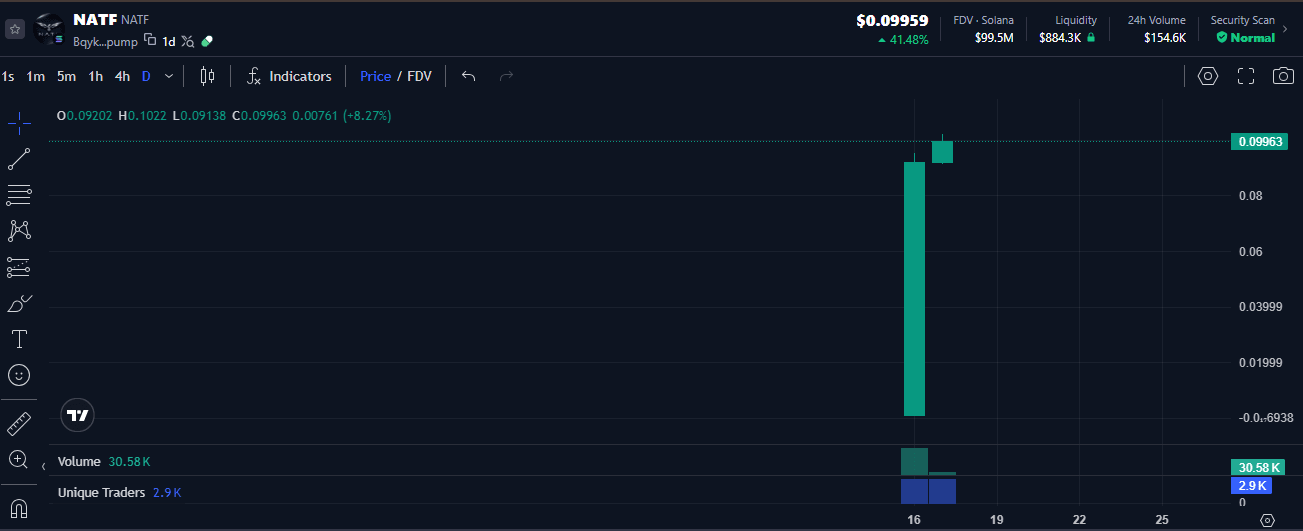
Market data from November 17, 2026, shows striking differences in price and valuation between the two NATF tokens.
Market data as of November 17, 2026, and subject to change at any time.
The token listed on the National American Trust Fund website is traded on Meteora in the NATF/USDC pair.
The price difference should not automatically be seen as an arbitrage opportunity because the two tokens have different identities. Information about total supply and ownership distribution also requires further verification.
Liquidity is another key metric to watch. Even if a token has a multimillion-dollar valuation, limited liquidity can make it difficult to execute large trades at the expected price.
This is known as slippage and is relatively common among crypto assets with shallow market depth.
Read also: What Is United Crypto Intelligence (UCI)? Solana Token & Risks
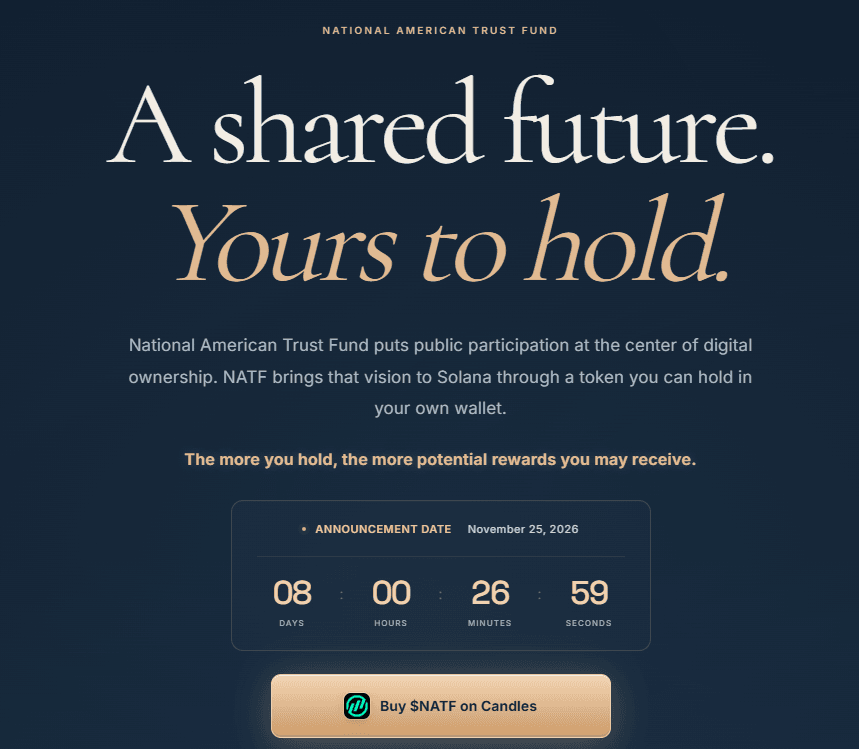
What Is NATF Announcing on November 25, 2026?
National American Trust Fund has listed November 25, 2026, as the date of a project announcement. The event could attract traders awaiting details about the project's development direction, token utility, or reward mechanisms.
However, as of November 17, 2026, no further details have been provided about what will be announced. A possible exchange listing, reward distribution, or new feature launch remains speculation unless confirmed by the project.
Investors should also remember that a highly anticipated announcement does not always lead to a price increase.
What Is the Outlook for NATF Coin?
NATF's appeal comes from its digital asset ownership narrative combined with a U.S.-themed identity. Community activity, growth in the Solana ecosystem, and development of new features could help the project maintain market interest.
However, NATF's long-term outlook will depend more heavily on the project's ability to deliver clear utility and earn users' trust. Uncertainty surrounding rewards, token distribution, and development plans remains a challenge.
Price movements leading up to the announcement also warrant attention. In crypto markets, rallies driven by expectations sometimes end in profit-taking when the awaited news is finally released.
What Are the Risks of Investing in NATF Coin?
Before considering NATF as an investment asset, it is important to understand five key risks:
- High volatility: Prices can change sharply as market sentiment shifts.
- Token identification errors: Similar names and tickers increase the risk of purchasing a different asset.
- Limited liquidity: Investors may struggle to sell tokens at their desired price.
- Unproven utility: The economic benefits and reward mechanisms have not been fully explained.
- Ownership concentration risk: If tokens are concentrated among a small number of holders, large sell-offs could put downward pressure on the price.
The NATF case illustrates why understanding a crypto asset requires more than looking at its name and price movements. If you want to learn more about how to evaluate a token, you can sign up for Bittime and follow market developments through crypto news and educational resources.
Conclusion
NATF Coin, or National American Trust Fund, is a Solana token built around the idea of direct digital asset ownership, not a trust fund managed by the U.S. government.
The November 25, 2026, announcement is worth monitoring, particularly if the project provides more concrete information about token utility, rewards, and its development direction.
For investors, the different contract addresses are an important consideration before assessing NATF's price or prospects. An appealing narrative may attract market attention, but project transparency, liquidity, and clearly defined token benefits remain central considerations.
Check the prices of Bitcoin (BTC), Ethereum (ETH), XRP, Solana (SOL), GRAM, and BNB , as well as the leading memecoin DOGE. You can trade directly on Bittime!
Bittime is a licensed Digital Financial Asset Trader (PAKD) platform regulated and supervised by Indonesia's Financial Services Authority (OJK) — where you can buy Bitcoin in Indonesia and hundreds of other cryptocurrencies starting from Rp10,000. Registration is fast and secure, and you can get started today.
Track USDT to IDR conversions and real-time price movements of your favorite cryptocurrencies. Everything is available in one crypto investment app that you can download for free from the Play Store.
Ready to get started? Sign up for Bittime now and put your investment strategy into action on a platform trusted by millions of users in Indonesia.
FAQ
What Is NATF Coin?
NATF Coin is a Solana token named National American Trust Fund, built around the concept of digital asset ownership. It can be stored in a personal wallet and traded on platforms that support it.
Is National American Trust Fund a U.S. Government Program?
No. National American Trust Fund is an independent crypto project with no affiliation to the U.S. government. Owning NATF does not grant any rights to government funds or assets.
Why Are the NATF Coin Contract Addresses Different?
CoinMarketCap DexScan and the NATF website list different Solana token addresses. As of the article's date, there is no verified information confirming a relationship or migration between the two tokens.
What Is the NATF Announcement on November 25, 2026?
National American Trust Fund has scheduled a project announcement for that date. However, as of November 17, 2026, no detailed information about its contents has been released.
Can NATF Coin Generate Passive Income?
The project has mentioned possible rewards for NATF holders. However, no verified payment mechanism has been established, so the token cannot be considered a guaranteed source of passive income.
Disclaimer: The views expressed belong exclusively to the author and do not reflect the views of this platform. This platform and its affiliates disclaim any responsibility for the accuracy or suitability of the information provided. It is for informational purposes only and not intended as financial or investment advice.
.png)