What Is Mint (MNTD)? Functions, Tokenomics, and Airdrop Status
2026-10-20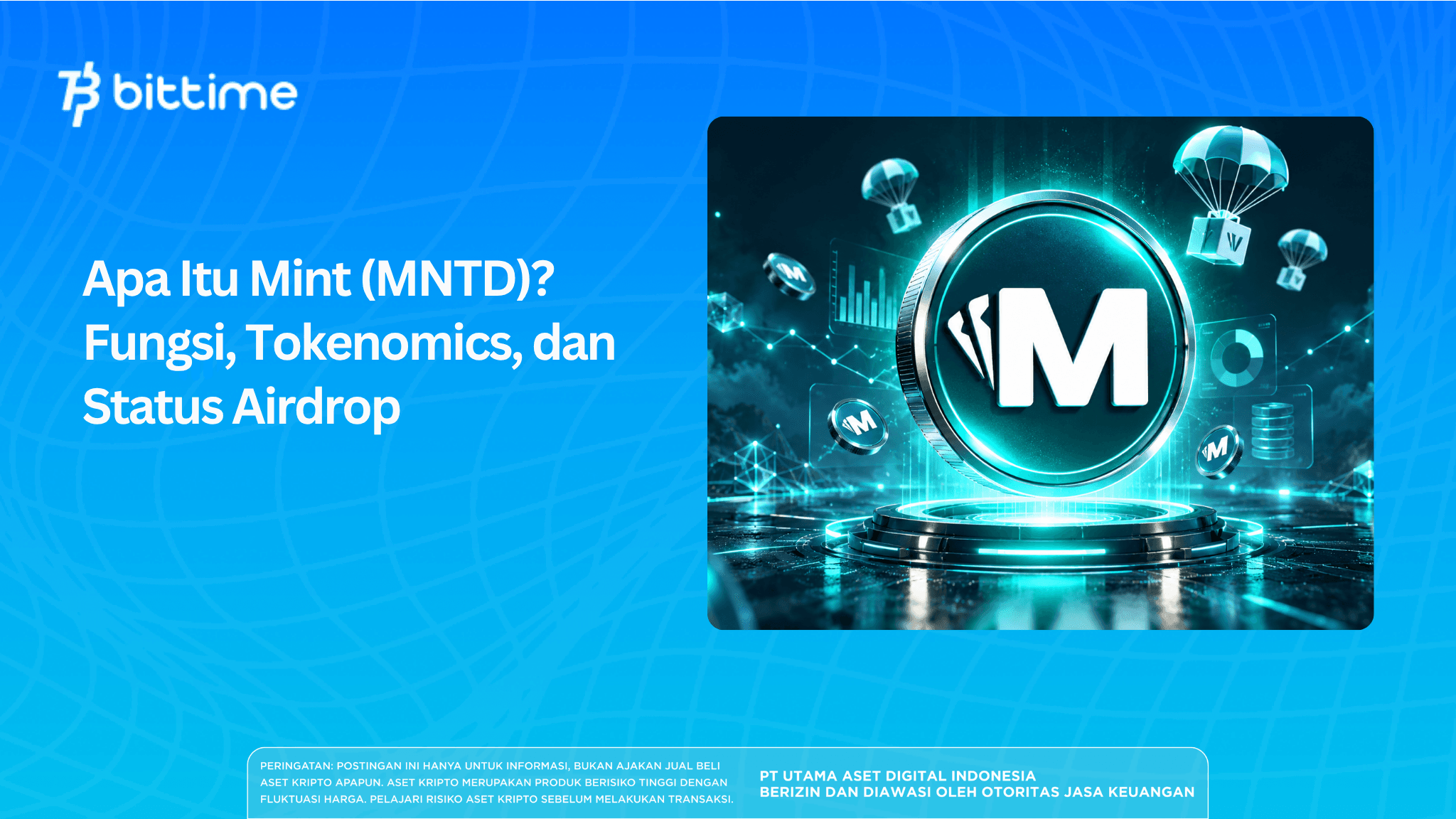
What is Mint (MNTD)? Mint is a platform ecosystem encompassing sports predictions and prediction markets, while MNTD is its utility token. Since its underlying activities involve prediction markets, any discussion of the token needs to address platform risks, not just potential rewards.
The MNTD TGE is targeted for October 20, 2026, making the launch status important information for readers. However, a date on the project calendar does not prove that the token is already trading or that all distributions have taken place.
Key Takeaways
- MNTD is designed to support utility and reward systems within the Mint ecosystem.
- An assessment of tokenomics needs to distinguish between allocations, token releases, and the supply actually in circulation.
- A TGE schedule does not automatically confirm a listing, liquidity, or the opening of airdrop claims.
What Is Mint (MNTD)?
Mint is the platform's name, while MNTD identifies its associated token. This distinction helps you understand whether an announcement concerns platform services, token distribution, or asset trading.
The term utility token describes a token's use within an ecosystem. The term alone does not establish the project's quality, contract security, or the existence of sustained market demand.
When searching for information about MNTD crypto, match the project name with its official channels. The MINT links page connects to the platform website, token information website, whitepaper, and the project's social accounts.
A name and logo alone are not enough to identify an asset. Tokens with similar symbols can appear on other networks without any connection to the project you are researching.
Read also: What Is NeoSoul (DNA)? Token Utility and Tokenomics
The Role of the MNTD Token in the Mint Ecosystem
MNTD's planned utility includes staking for the MINT Status system, platform rewards, and use within the ecosystem. The project page also links the token to buyback and burn mechanisms.
From an analytical perspective, these uses should be assessed through three questions:
- Are the features already available? Descriptions in documents do not necessarily indicate that implementation is already underway.
- Who can use them? Platform access rights may differ from the ability to hold the token.
- Where do the rewards come from? Distributions from token reserves differ from revenue generated by business activities.
The amount of rewards is also not the same as net profit. If the token's value falls, holding more tokens does not necessarily increase the value of your assets in rupiah or dollars.
When assessing the MNTD token's utility, consider the actual need for the token. Features that require its use have different implications from features that simply distribute tokens as incentives.
Read also: What Is American Dividend Protocol (ADP)? Understanding the Token and Its Risks
MNTD Tokenomics: Supply, Allocation, and Vesting
Maximum Supply and Distribution
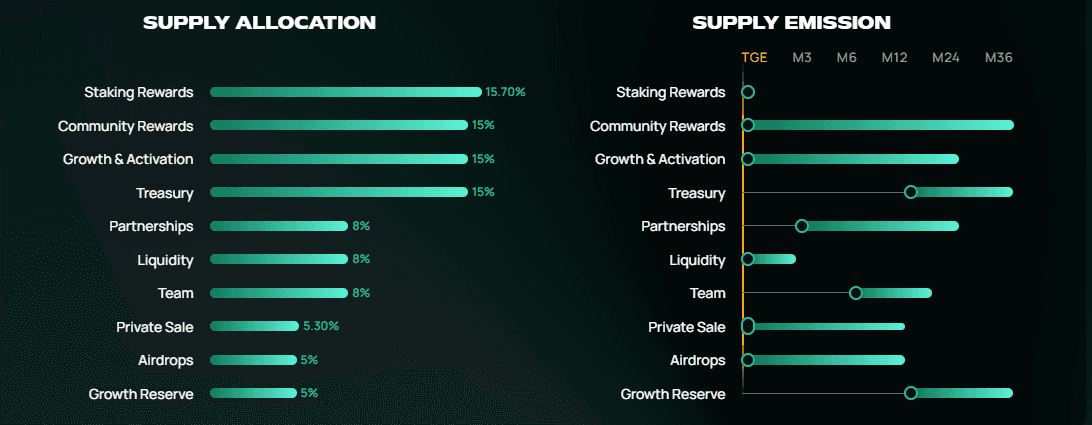
MNTD's design sets a maximum supply of 1 billion tokens. The allocations shown in the tokenomics chart include:
- Staking Rewards: 15.70%.
- Community Rewards: 15%.
- Growth and Activation: 15%.
- Treasury: 15%.
- Partnerships: 8%.
- Liquidity: 8%.
- Team: 8%.
- Private Sale: 5.30%.
- Airdrops: 5%.
- Growth Reserve: 5%.
These allocations total 100%. However, the supply allocation does not mean that all tokens are immediately available on the market.
Maximum supply indicates the upper limit on the number of tokens. Circulating supply, meanwhile, indicates the amount considered to be in circulation under the measurement methodology used.
This distinction matters when comparing project sizes. Multiplying the price by the maximum supply produces the fully diluted valuation, or FDV, rather than automatically yielding market capitalization based on circulating supply.
How to Read Token Release Schedules
In MNTD's schedule, the release percentage at TGE is calculated from each respective allocation. Staking reserves released into the pool are also not immediately considered to be entirely in circulation.
As a general illustration, if a category receives 100 million tokens and releases 10% at launch, the amount released is 10 million tokens. That percentage is not calculated from the project's entire supply.
Next, distinguish between the waiting period and the distribution period. A cliff or lockup defines when releases may begin, while vesting explains how the remainder is released over a specified period.
An unlock schedule helps readers estimate changes in token availability. However, unlocked tokens are not necessarily sold immediately by their recipients.
Assessing Buybacks and Burns
A buyback involves repurchasing tokens, while a burn reduces the number of tokens through a destruction mechanism. Both should be assessed through implementation and transaction records, rather than simply being named as features.
A more complete analysis compares tokens burned with tokens newly entering the market. A reduction in supply on one side can occur alongside reward distributions or allocation releases on the other.
For this reason, burning tokens does not guarantee a price increase. Demand, liquidity, and holder behavior still influence price formation.
Read also: Is the Trump $1 Coin Legit or a Scam? Examining Binance and Presale Claims
MNTD TGE Schedule and Listing Status
The launch calendar lists a target TGE date of October 20, 2026, the Robinhood Chain network, and no public sale. This information describes the launch plan.
When reviewing subsequent updates, distinguish between three events:
- TGE: the token issuance or activation stage.
- Distribution: the delivery of tokens to recipients under the applicable terms.
- Listing: the availability of trading on a specific venue and trading pair.
These three events may take place at different times. Confirmation of one is not enough to conclude that the other two have been completed.
The checks conducted for this article did not obtain sufficient official confirmation to state that MNTD has been listed. For this reason, exchange names, trading pairs, and market opening times are not presented as facts.
If listing news appears, check announcements from the exchange named. A news article published on an exchange's website is not necessarily an asset listing announcement.
MNTD Airdrop Status and Distribution Terms
The project documents specify a Season 1 distribution of approximately 3.79 million MNTD, with claims scheduled for the TGE. This schedule does not prove that the claim process was active when this article was checked.
Readers need to distinguish between the overall airdrop allocation and the distribution for a particular campaign. The amount for one season does not automatically represent all the tokens set aside for the airdrop program.
The term airdrop also does not always mean tokens are given away unconditionally. In MINT's case, the campaign mechanism is tied to platform activity and eligibility restrictions, so it should not be promoted as free money.
Items to check include distribution status, lockup terms, and the amount already available to use. A balance shown in an interface, a promised allocation, and tokens received in a wallet represent three different situations.
Do not treat the nominal value of an allocation as guaranteed cash proceeds. The ability to sell depends on market availability, buyers, and liquidity conditions.
Read also: What Is Golden Dome Fund (GDF)? Understanding the Token and Its Risks
MNTD Token Price: Reference Price or Market Price?
The listed TGE reference price is US$0.033 per MNTD. This figure is a benchmark in the launch documents, rather than a verified actual market price.
A market price requires verifiable transactions or trading quotes. Readers also need to know the time, the asset pair, and the depth of the market where that price was formed.
As a general example, a small transaction in a thin market can produce a price that is difficult to obtain for a large sale. The last traded price is therefore not always the price every seller will receive.
This article does not provide an MNTD price prediction or support and resistance levels. Verified trading data was not available in the checks conducted.
Five MNTD Token Risks to Understand
1. Changes in Circulating Supply
Token distributions can increase the number of assets available for trading. Their impact depends on the size of the release relative to demand and market activity.
2. Limited Liquidity
A token listed on a market is not necessarily easy to sell in large quantities. Check volume, bid-ask spreads, and order book depth before assessing liquidity.
3. Dependence on the Ecosystem
Utility concentrated within a single ecosystem needs to be assessed alongside the service's continued viability. Changes to the product or user interest may affect demand for the token.
4. Uncertainty About Technical Security
The whitepaper states that the token contract is still undergoing security checks. This status is not equivalent to a completed public audit.
To assess an audit, readers need to know who conducted it, which contract version was tested, the findings, and the follow-up actions. An “audited” label without details is insufficient to assess the scope of the review.
5. Risks Associated with Platform Activities
Price prediction and sports prediction activities add risks of losing funds that differ from token volatility. Potential rewards do not eliminate the risks of the underlying activities.
Read also: Is NODF Legit or a Scam? Check the Facts, Contract, and Risks
MNTD Developments to Monitor
The most useful next updates would be launch confirmation, publication of the official contract, security review results, and circulating supply data. This information helps shift the assessment from the project's design to its implementation.
Use document dates and versions when comparing changes. If two official pages show different figures, seek clarification before using either as a basis for analysis.
If you want to explore cryptocurrency trading more broadly, you can consider signing up for Bittime after understanding its services and risks. This invitation does not imply that MNTD is available on Bittime.
Conclusion
Understanding what Mint (MNTD) is requires examining the token's utility, supply distribution, and underlying platform activities. Launch information should be read alongside implementation status, rather than just the planned date.
Before drawing conclusions, make sure contract, trading, and distribution data can be verified. Prioritize consistent official updates with clear dates.

Bittime is a Digital Financial Asset Trader (PAKD) platform licensed and supervised by the Financial Services Authority (OJK), where you can buy Bitcoin in Indonesia and hundreds of other cryptocurrencies starting from IDR 10,000. Registration is quick and secure, and you can get started today.
Track the USDT to IDR conversion rate and your favorite cryptocurrencies' price movements in real time. Everything is available in one crypto investment app that you can download for free from the Play Store.
Ready to get started? Sign up for Bittime now and put your investment strategy into action on a platform trusted by millions of users in Indonesia.
FAQ
What is Mint (MNTD)?
Mint is a platform that uses MNTD as a utility token within its ecosystem. Any discussion of the token needs to consider the context of the price prediction and sports prediction services associated with the platform.
How do MNTD's tokenomics work?
The supply is allocated to rewards, development, the treasury, liquidity, the team, partners, private funding, and airdrops. These allocations need to be read alongside their release schedules so they are not confused with supply immediately entering circulation.
Has MNTD been listed?
The checks conducted for this article did not obtain sufficient official confirmation to establish a listing. A TGE schedule cannot replace a trading announcement from an exchange.
Can the MNTD airdrop be claimed yet?
The opening of claims is scheduled in connection with the TGE, but its implementation was not confirmed in this review. Distribution status should be checked through the latest official updates.
Is the TGE reference price the same as the market price?
No. The reference price serves as a project benchmark, while the market price is formed through trading activity and may differ.
Disclaimer: The views expressed belong exclusively to the author and do not reflect the views of this platform. This platform and its affiliates disclaim any responsibility for the accuracy or suitability of the information provided. It is for informational purposes only and not intended as financial or investment advice.
.png)