What is Ethereum pERC20?
2026-06-26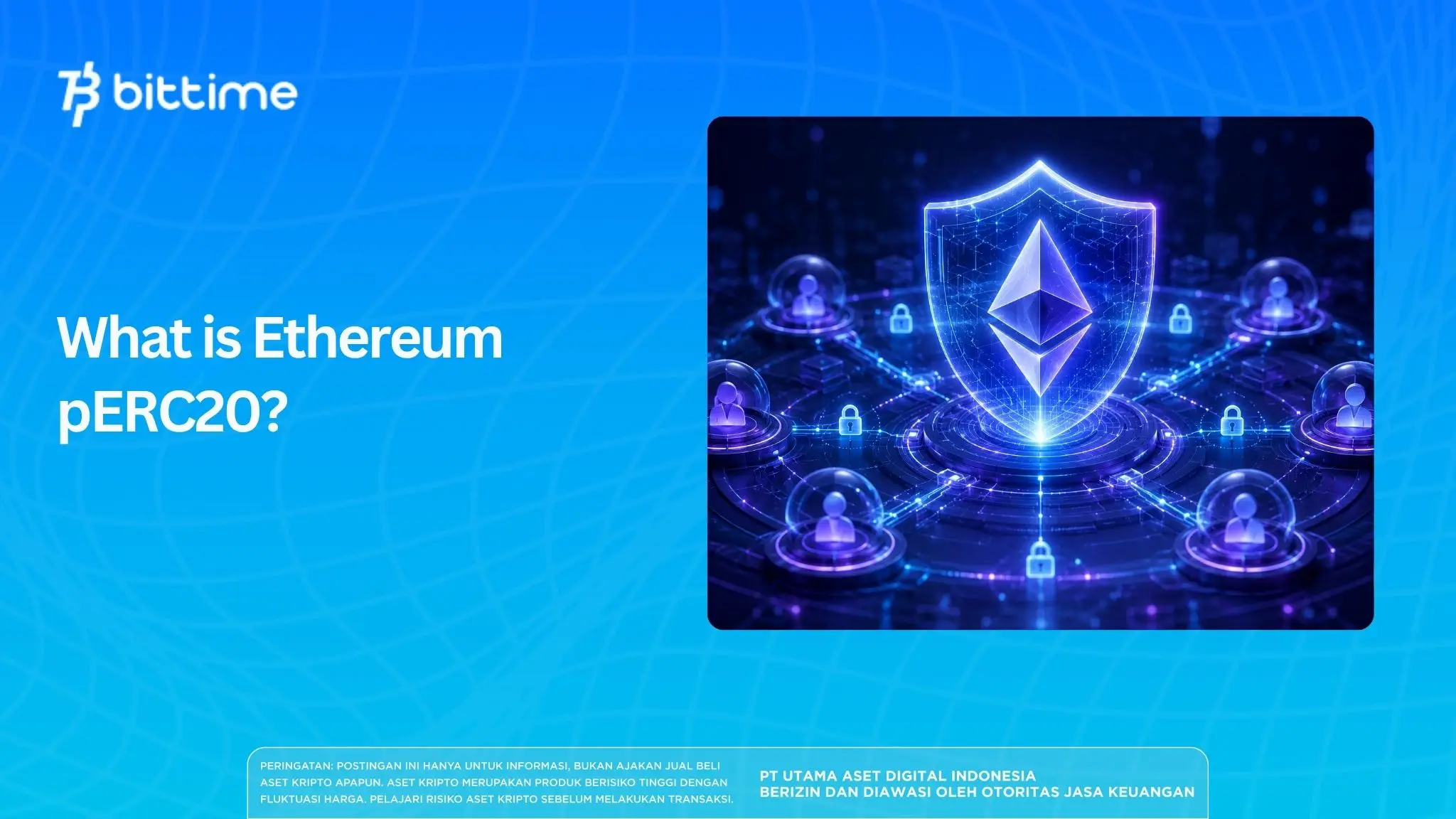
Ethereum introduced pERC20 (ERC-7605) in June 2026, a private token standard that hides balances, transfer amounts, and sender-recipient identities by default, unlike the previously transparent ERC-20.
Based on Zcash Orchard's ZK-UTXO and Groth16 proof-of-concept system, pERC20 turns tokens into encrypted cryptographic notes instead of publicly readable account balances.
There is no balanceOf, approve, or transferFrom, all replaced by a private interface that allows the transfer, minting, and burning of tokens without exposing any details on the public chain, while providing a compliance mechanism through frozen roots to meet regulatory requirements.
Key Points
pERC20 (ERC-7605) is a private token standard on Ethereum that hides balances, transfer amounts, and sender/recipient identities by default, with no public balances ever being present.
Using the ZK-UTXO (Zcash Orchard) model with Groth16 zero-knowledge proofs, tokens do not exist as account balances, but rather as encrypted cryptographic notes.
Not compatible with ERC-20: no balanceOf, approve, allowance, or transferFrom. Replaced by a private interface with mint, burn, and transfer methods that require zero-knowledge proof.
Register at Bittime now and start trading crypto with a fast, safe, and easy process in the app.
What is pERC20?
pERC20 is a private token standard for Ethereum designed to make privacy the default, not an option.
Formally tracked as ERC-7605, this proposal introduces a completely private token interface: no public balances, no visible transfers, and no traceable transaction history.
Proposed by Cyimon in June 2026, pERC20 uses the ZK-UTXO model adopted from Zcash Orchard, instead of the account balance model like regular ERC-20.
What makes pERC20 different: privacy starts from the token itself, not after going through a mixer or shielded pool.
pERC20 tokens have never had a public balance on the chain since they were first minted.
Read also: ETH to IDR Crypto Converter
How pERC20 Works
The way pERC20 works is fundamentally different from ERC-20:
Tokens are not stored as account balance.
They exist as cryptographic notes, each note representing a specific number of tokens, owned by a key pair, and can be spent exactly once.
To transfer tokens, the user creates a zero-knowledge proof (Groth16) that proves:
- Input notes are owned by the sender
- Input value is equal to output (value conservation)
- Note has never been spent (nullifier check)
This process occurs without revealing the amount, sender, or recipient. All on-chain transfers appear identical, and observers cannot distinguish between regular transfers, approves, and transfersFrom.
Public metadata such as name, symbol, decimals, and totalSupply remain available. totalSupply is public to prevent hidden inflation.
Read also: How to Buy Ethereum (ETH)

ERC-20 vs pERC20: Key Differences
ERC-20 makes all balances, transfers, and allowances visible forever.
pERC20 eliminates all of that. There's no balanceOf, no approve, no allowance, no transferFrom as public functions.
Instead, pERC20 introduces methods that require zero-knowledge proof: mint (issuer only), burn (anyone), and transfer.
Why is pERC20 Important?
Ethereum currently has no built-in privacy for tokens.
Every ERC-20 transfer is visible to everyone. pERC20 fills this gap by offering a token standard that is private from the start.
With the increasing adoption of on-chain finance, payroll, and treasury, the need for private tokens is becoming increasingly urgent.
pERC20 allows issuers to launch private assets today, without waiting for an Ethereum protocol upgrade.
The proposal also includes a compliance mechanism, frozen root, which allows admins to freeze certain notes if needed.
This is a deliberate trade-off: privacy while still allowing regulation.
Read also: Privacy Token Narrative 2026: Which Assets Will Rise?
Is pERC20 Ready to Use?
pERC20 is still in the draft stage. It must undergo a full ERC review process before widespread deployment. However, no mainnet changes are required; it is an application-level standard.
Some things to know:
- No new precompile required.
- Compatible with MetaMask via standard ECDSA signature.
- A reference implementation is available at PERC20Labs/pERC20_ on GitHub.
- Groth16 proof verification in EVM has been proven.
If pERC20 passes review and becomes a stable standard, the question of whether Ethereum tokens should be transparent or private becomes a real, not a theoretical, design choice.
Read also: What Is Ten Protocol (TEN)? L2 Ethereum Privacy with AI Agents
Conclusion
pERC20 is a private token standard for Ethereum that hides balances, transfers, and identities by default.
Using ZK-UTXO (Zcash Orchard) and Groth16 zero-knowledge proofs.
Not compatible with ERC-20, no balanceOf, approve, or allowance. Tokens exist as cryptographic notes, not account balances.
Ethereum pERC20 definition: a standard for assets that is private from the ground up, with built-in compliance (frozen root).
pERC20 is a complement to EIP-8182 (shielded pool for public assets), not a competitor.

Bittime is a licensed and regulated Digital Financial Asset Trader (PAKD) supervised by Indonesia’s Financial Services Authority (OJK) — where you can buy Bitcoin in Indonesia and hundreds of other crypto assets starting from just Rp10,000. The registration process is fast, secure, and you can get started today.
Track USDT to IDR conversions and monitor your favorite crypto assets in real time. Everything is available in one crypto investment app that you can download for free on the Play Store
Ready to start? Register now on Bittime and execute your investment strategy with a platform trusted by millions of users in Indonesia.
FAQ
What is Ethereum pERC20?
A private token standard for Ethereum that hides balances, transfers, and identities by default. Tracked as ERC-7605.
What is the difference between pERC20 and ERC-20?
Transparent ERC-20 (public balance). Private pERC20 (no public balance, hidden transfers). Incompatible with each other.
How does pERC20 work?
Using the ZK-UTXO model (Zcash Orchard). Tokens are stored as cryptographic notes, not account balances. Transfers require a Groth16 zero-knowledge proof.
Is pERC20 ready to use?
Still a draft. Must go through the full ERC review process. A reference implementation is available on GitHub.
What is Groth16?
Zcash uses a zero-knowledge proof system that allows transactions to be verified without revealing details.
Does pERC20 support compliance?
Yes. There is a compliance frozen root that allows admins to freeze specific records if needed. This is a privacy vs. regulation trade-off.
Is pERC20 compatible with MetaMask?
Yes, pERC20 uses the ECDSA signature standard, making it compatible with existing wallets.
Who can mint pERC20?
Only the issuer is specified at deployment. Implementations may expand authorization in the future.
What is Orchard?
The shielded pool model from the Zcash Protocol Specification adapted for the EVM. Utilizes note commitments, nullifiers, and Groth16 proofs.
When is pERC20 released?
There's no set date yet. The draft was submitted in June 2026. Follow the developments on Ethereum Magicians and GitHub.
Disclaimer: The views expressed belong exclusively to the author and do not reflect the views of this platform. This platform and its affiliates disclaim any responsibility for the accuracy or suitability of the information provided. It is for informational purposes only and not intended as financial or investment advice.

.png)