Sainsbury’s AI Camera Error: Customer Wrongly Flagged as a Shoplifter
2026-08-18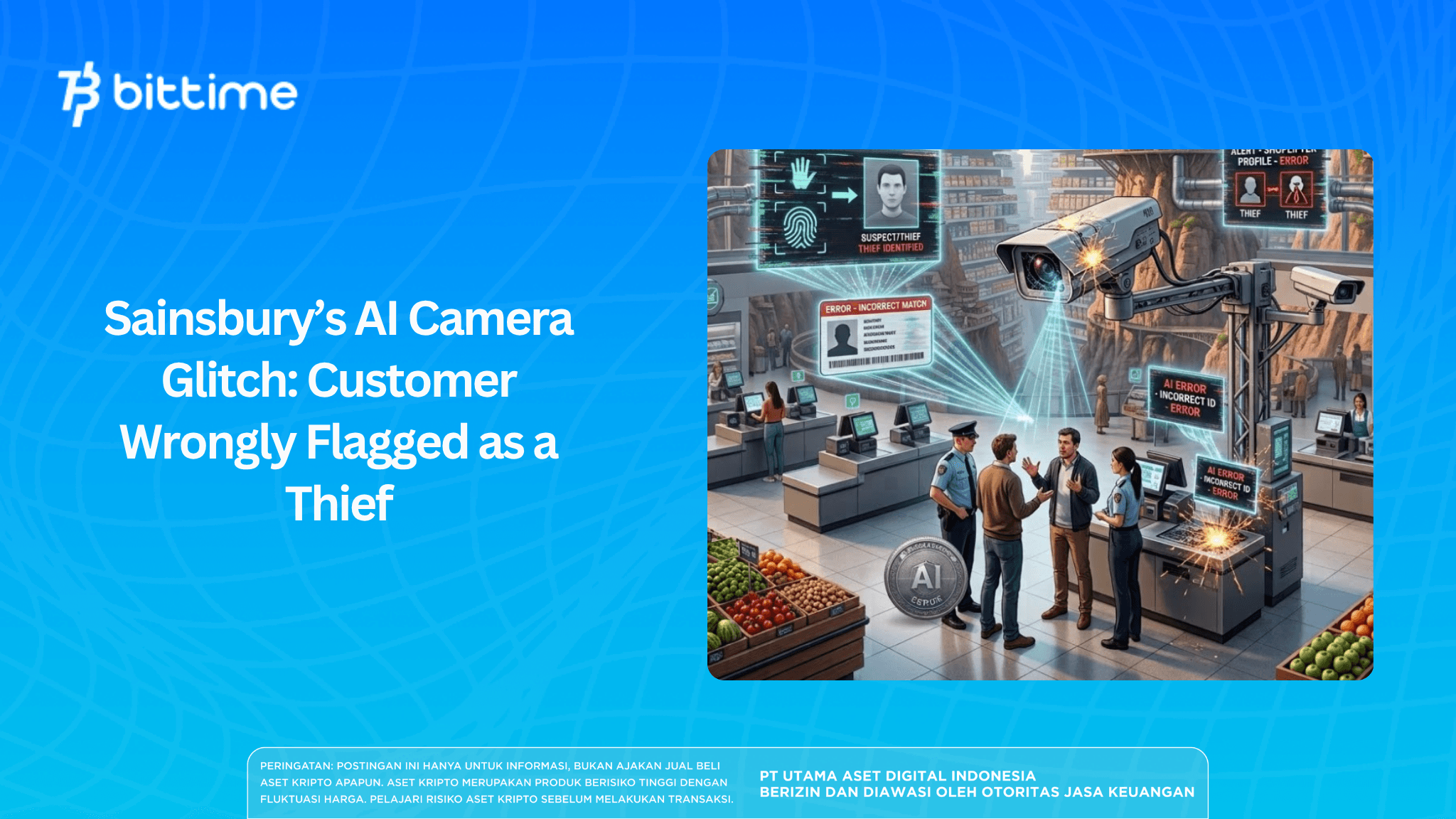
AI facial recognition technology is increasingly being used in the retail sector to help prevent theft and improve store security.
However, a recent case at Sainsbury’s in the UK shows that the technology can still have consequences when the system or the handling process results in an error.
On August 6, 2026, Matt Arnold, a 46-year-old customer, was shopping at Sainsbury’s East Dulwich in London.
After using the self-checkout and his Nectar card, he was stopped by staff because he was said to be associated with a previous incident. Arnold then saw his face circled in red on the store’s CCTV screen. Sainsbury’s eventually apologized and temporarily suspended the use of facial recognition technology at the branch.
The case has once again raised questions about AI misidentification: how much should humans trust automated warnings when technology is used to make decisions that directly affect customers?
Key Takeaways
- The Sainsbury's AI camera error occurred when a customer who claimed he had done nothing wrong was stopped after the facial recognition system issued an alert that was subsequently mishandled by staff.
- Sainsbury’s and Facewatch stated that the technology issued the correct alert, while the problem occurred due to human error in the process of handling the alert.
- The case shows that AI accuracy alone is not enough. Human verification procedures, transparency, and correction mechanisms are equally important.
Sainsbury's AI Camera Error Timeline
Matt Arnold went to Sainsbury’s East Dulwich to buy several items. After completing the scanning process at the self-checkout and using his Nectar loyalty card, two members of management approached him.
He was told that he was associated with a previous incident and was asked to leave the store. After leaving, Arnold saw a CCTV screen near the entrance showing his face inside a red circle.
For Arnold, the experience was not merely an administrative error. He described it as embarrassing and concerning because the staff’s decision appeared to be heavily influenced by a warning from the automated system.
Sainsbury’s later contacted him to apologize and stated that the incident was caused by human error, not a failure of the facial recognition technology.
The company also temporarily suspended the use of the system at the East Dulwich branch while providing additional training to staff.
Read Also: Lobstar Wilde AI Agent Stumbles: Misread Decimal & Lost Hundreds of Thousands of USD
Did AI Misidentify the Customer’s Face?
This is the most interesting part of the case.
Sainsbury’s stated that the Facewatch system has an accuracy rate of 99.98% and that every match must be reviewed by a trained manager before any action is taken.
Facewatch also said that the alert sent to the store was actually correct, but human error subsequently occurred in how the alert was handled and communicated to the customer.
Therefore, AI misidentifying the face is not the official conclusion from Sainsbury’s or Facewatch regarding Arnold’s case. Instead, the companies stated that the algorithm generated a correct alert, while the problem occurred at the subsequent stage.
This distinction is important. A system can have a high accuracy rate but still result in a poor experience if humans are too quick to treat an alert as proof of wrongdoing.
Be productive with AI, invest wisely. Register on Bittime and build your portfolio now.
Why Does AI Misidentification Remain a Risk?
Accuracy figures do not always reflect the experience of every individual.
Facial recognition technology is used to identify facial patterns and match them against a specific database. In a supermarket environment with high customer traffic, misinterpretation or misuse of system results can still occur.
The risk becomes greater when an alert is understood as certainty rather than as a signal that needs to be verified.
In the Sainsbury’s case, the company itself stated that every match must be reviewed by a trained manager. This rule shows that false accusations by AI can be minimized through a human-in-the-loop approach.
The problem is that a security system is not determined solely by its algorithm. SOPs, staff training, communication quality, and customer appeal mechanisms also determine the final outcome.
Read Also: High AI Investment, More Job Openings? Here’s the Latest Research
Sainsbury’s Expands the Use of Facial Recognition
The East Dulwich case emerged as Sainsbury’s was expanding facial recognition technology across its stores.
The company previously said the results of the Facewatch trial were quite positive. Trials at two stores showed a 46% reduction in incidents involving theft, aggressive behavior, hazards, and antisocial behavior, while around 92% of identified offenders did not return to the stores.
In its first-quarter fiscal 2026/27 report, Sainsbury’s stated that facial recognition technology had been used in more than 55 stores and planned to expand it to an additional 150 stores before Christmas. The company said more than 90% of identified offenders did not return.
This means the company views the technology as part of a broader security strategy. However, the more stores that use the system, the more important it becomes to maintain consistent procedures when the system generates an alert.
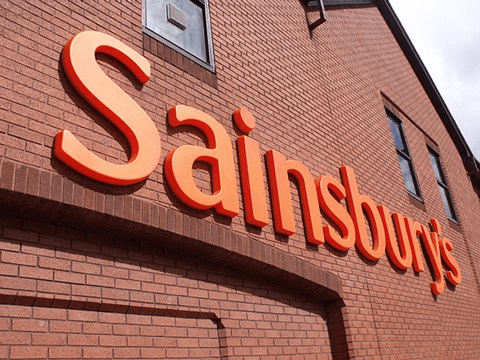
Source: Flickr/Elliott Brown
Impact on Customers and Privacy
The Sainsbury AI error issue is not only about the possibility of customers being wrongly accused. There are broader questions about how biometric data is used in public spaces.
Sainsbury’s said the Facewatch system is used to help trained staff identify repeat offenders associated with theft, violence, or aggression.
The company also stated that images of unidentified people would be deleted immediately and that notices regarding the use of the technology are available in stores where it operates.
However, for customers who experience AI misidentification, the presence of a notice does not erase the social impact of a mistake. Being flagged as a thief in front of staff or other customers can affect a person’s sense of security, reputation, and trust in technology.
Read Also: Is OpenClaw AI Safe? Here Are the Security Risks
What Can We Learn from the Sainsbury's AI Camera Error?
The case shows that the main issue with AI in the real world is not only how accurate its algorithm is, but also how AI results are used.
Even a system with very high accuracy can still produce false positives. Therefore, companies need to ensure that every alert is treated as information to be investigated, rather than as a final decision.
For the retail industry, several layers of protection are important: staff training, manual verification, documentation of every alert, customer appeal procedures, and regular evaluation of error rates.
Arnold’s case also shows that AI misidentifying a face or mishandling facial recognition results can have a much greater impact than errors in ordinary recommendation systems. When AI is used to accuse someone or restrict their access, the standard of caution must be much higher.
Don’t miss AI coin price updates such as Bittensor (TAO), Venice Token (VVV), NEAR Protocol (NEAR), and Internet Computer (ICP) on Bittime.
Is Facial Recognition Technology Worth Using in Retail?
Facial recognition technology can help retailers address theft and security issues. Sainsbury’s own data shows a reduction in incidents during the trial phase.
However, these benefits must be weighed against the risk of false positives and the impact on innocent customers.
The Sainsbury's AI camera error case serves as a reminder that automation does not eliminate human responsibility. Instead, when decisions concern a person’s reputation, humans must remain the final decision-makers.
Ultimately, the success of technology such as Facewatch should not only be measured by how many thieves it successfully identifies, but also by how well the system protects innocent customers when mistakes occur.

Interested in investing in the AI crypto sector? Monitor prices and start trading popular AI coins such as Bittensor (TAO), NEAR Protocol (NEAR), and Artificial Superintelligence Alliance (FET) directly on Bittime
Bittime is a licensed Digital Financial Asset Trader (PAKD) platform authorized and supervised by the Financial Services Authority (OJK) — where you can buy Bitcoin in Indonesia and hundreds of other crypto assets starting from IDR 10,000. The registration process is fast, secure, and can be started today.
Monitor the USDT to IDR conversion and your favorite crypto asset price movements in real time. Everything is available in one crypto investment app that can be downloaded for free from the Play Store.
Ready to get started? Register now on Bittime and execute your investment strategy with a platform trusted by millions of users in Indonesia.
FAQ
What is the Sainsbury's AI camera error?
The Sainsbury's AI camera error refers to a case in which a customer at the East Dulwich store was stopped after being associated with a theft incident based on a facial recognition alert. Sainsbury’s and Facewatch stated that the problem occurred due to human error in handling the alert.
Did Sainsbury’s AI actually misidentify the customer’s face?
According to Sainsbury’s and Facewatch, the technology generated a correct alert. The error occurred in how the alert was handled by staff at the store.
Why did Sainsbury’s suspend facial recognition in East Dulwich?
Sainsbury’s temporarily suspended the use of the technology at the branch following the incident to conduct an investigation and provide additional training to staff.
Is facial recognition used at all Sainsbury’s stores?
No. Sainsbury’s is implementing it gradually. In the first quarter of 2026/27, the company stated that the technology had been used in more than 55 stores.
Is AI facial recognition always accurate?
No AI system can be considered perfect. Even with a very high accuracy rate, there is still a possibility of false positives. Therefore, AI results need to be verified before they are used to take action against someone.
Disclaimer: The views expressed belong exclusively to the author and do not reflect the views of this platform. This platform and its affiliates disclaim any responsibility for the accuracy or suitability of the information provided. It is for informational purposes only and not intended as financial or investment advice.

.png)