The Agentic Economy and the Role of Sana AI on Solana
2026-02-06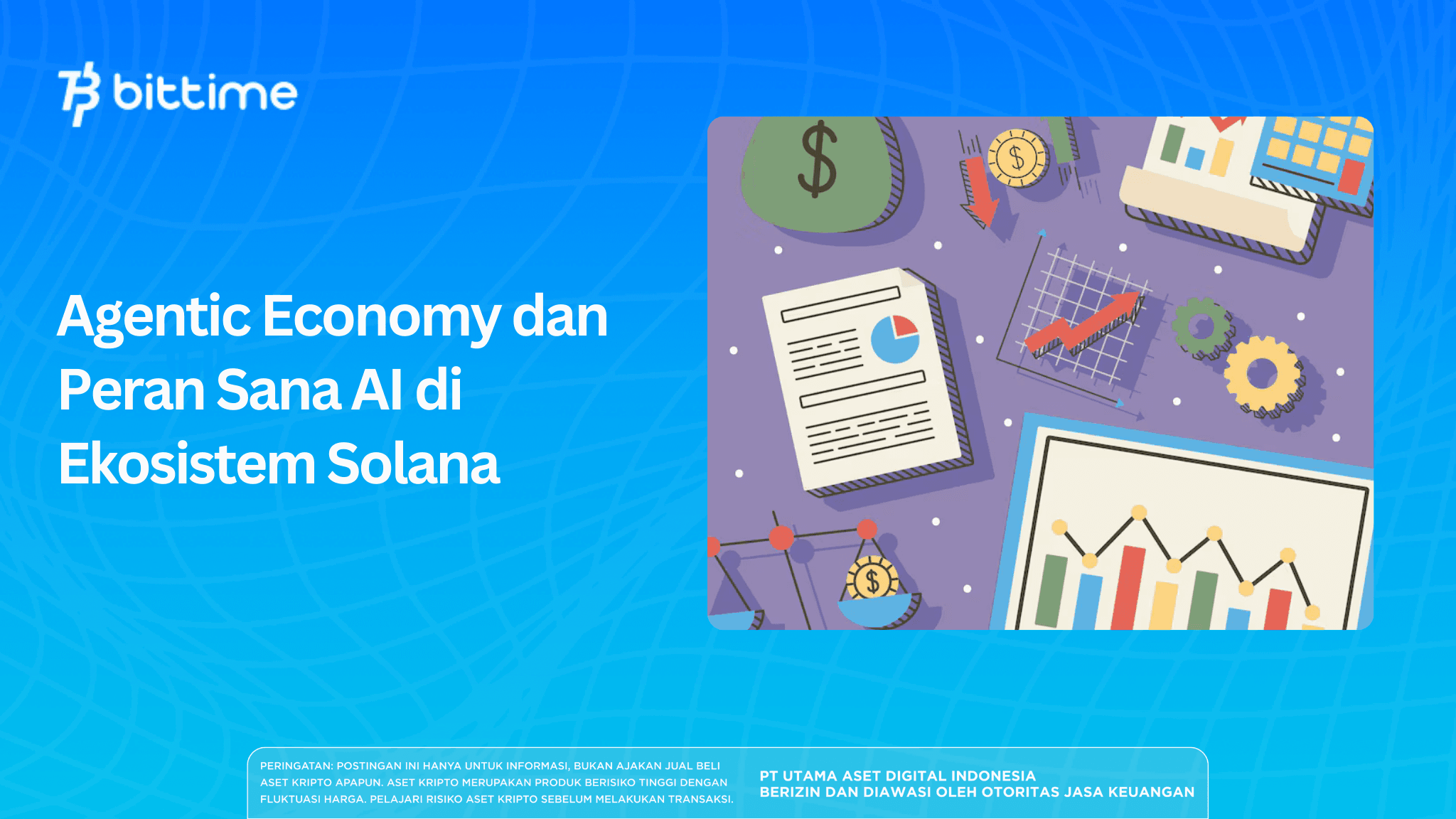
The agentic economy is a concept growing in relevance alongside advances in artificial intelligence and blockchain. In this model, AI agents not only assist users but can also carry out economic activities autonomously on decentralized networks. Sana introduces an agentic-economy approach through an ecosystem based on Solana, focusing on AI agents, stablecoins, and non-custodial wallets. This article discusses how the agentic economy works, the role of Sana AI, and the implications for modern crypto transactions.
Key Takeaways:
Agentic economy enables AI agents to act as economic actors
Sana connects AI with the Solana blockchain and stablecoins
Non-custodial wallets keep asset control in the hands of users

How Agentic Economy Works on the Blockchain
The agentic economy operates through a combination of rules, artificial intelligence, and blockchain infrastructure. In general, the flow can be understood through the following stages:
- Human mandate setting
Users define goals, constraints, and the types of activities allowed for the AI agent, such as transaction limits or permitted asset types. - AI agent executes instructions
Based on the mandate, the AI agent performs economic tasks automatically, including sending or receiving crypto assets and stablecoins. - Direct interaction with the blockchain
Agents operate on networks like Solana that support fast transactions and low fees, enabling efficient activity. - Use of stablecoins for stability
Stablecoins help agents avoid price volatility, making them more suitable for routine payments and funds management. - Oversight and control remain with the user
Although agents act autonomously, users can monitor and adjust rules whenever needed.
Through this flow, the agentic economy increases efficiency without removing the human role as the primary controller.
Read Also: How to Buy a Bitcoin ETF: Step-by-Step Guide – Bittime
Sana AI and the Sana Solana Ecosystem
Sana builds an ecosystem designed to support the agentic economy by integrating AI with the Solana blockchain. Sana AI acts as an agent capable of performing various crypto-based tasks, from asset management to interacting with decentralized applications.
The Sana ecosystem also leverages stablecoins such as USDC to support more stable transactions. Stablecoins allow AI agents to perform economic functions without exposure to high price volatility. In addition, using non-custodial wallets ensures asset control remains with the owner, not the platform or third parties.
With this approach, Sana attempts to bridge blockchain technical requirements with a simpler user experience.
Read Also: What Is Moonbirds (BIRB)? From NFT Project to Token on Solana
The Role of AI Agents in Crypto Transactions
In the agentic economy, AI agents act as automated and measurable managers of crypto transactions. Agents can receive and send stablecoins, allocate funds, or execute specific instructions according to the mandates given.
Sana’s integration with Solana allows AI agents to process transactions with low latency. This is important for digital economic activities that demand speed and accuracy, such as blockchain-based payments or cross-application asset management.
Although AI agents can act autonomously, the system is designed with oversight principles. Users can set transaction value limits, asset types, or certain conditions before the agent executes commands. Thus, AI agents function as digital economic assistants that help, not completely take over control.
Read Also: Brevis (BREV) Price Predictions 2026-2030: Latest Analysis
Conclusion
The agentic economy offers a new approach to combining artificial intelligence and blockchain. Through Sana AI and the Solana ecosystem, AI agents can actively participate in crypto transactions and digital asset management efficiently. Integration of stablecoins and non-custodial wallets forms an important foundation for maintaining stability, security, and user control. Looking ahead, the agentic economy has the potential to shape a more adaptive digital financial system aligned with modern economic needs.
Start Your Crypto Journey Today

If you want to get involved in an increasingly advanced crypto ecosystem supported by AI, an important first step is to use a trusted trading platform.
Register on the Bittime platform to start trading crypto assets, learn the market, and understand on-chain dynamics firsthand before diving deeper into DeFi and AI trading.
FAQ
What is meant by agentic economy?
The agentic economy is a digital economic model in which AI agents can act as active participants in transactions and asset management.
What is Sana AI’s role in this ecosystem?
Sana AI acts as an agent that performs digital economic tasks on the Solana blockchain according to rules set by users.
Why does Sana use Solana?
Solana is chosen for its high transaction speed and low costs, supporting efficient AI agent operations.
What is a non-custodial wallet for AI agents?
A non-custodial wallet ensures asset control remains with the owner, even when an AI agent executes transactions.
Does the agentic economy replace humans?
No. The agentic economy emphasizes collaboration between humans and AI, with humans retaining primary control.
Disclaimer: The views expressed belong exclusively to the author and do not reflect the views of this platform. This platform and its affiliates disclaim any responsibility for the accuracy or suitability of the information provided. It is for informational purposes only and not intended as financial or investment advice.

.png)