What is the National Oil Trust Fund (NOTF)? Tokenomics and Risks
2026-10-30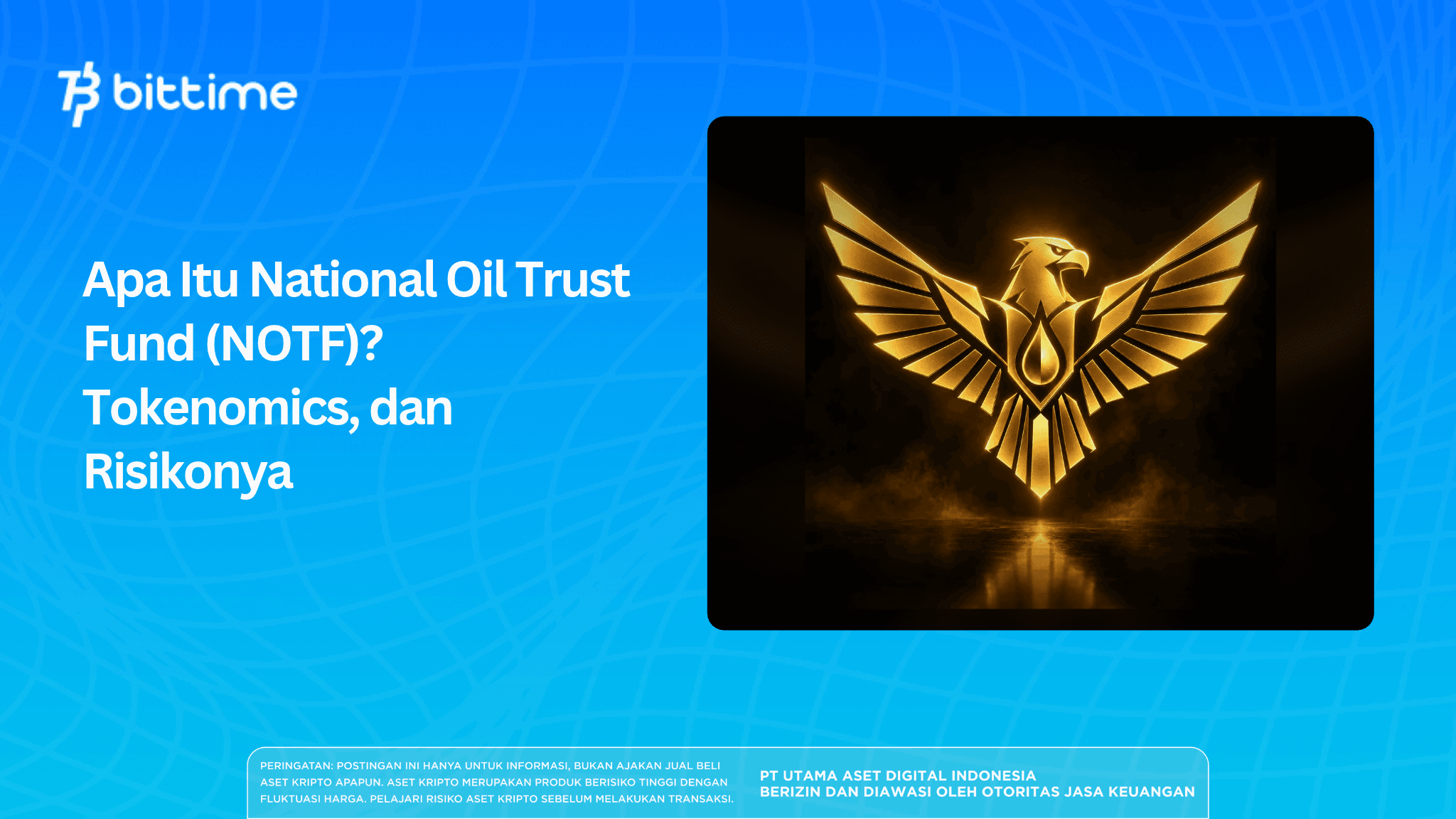
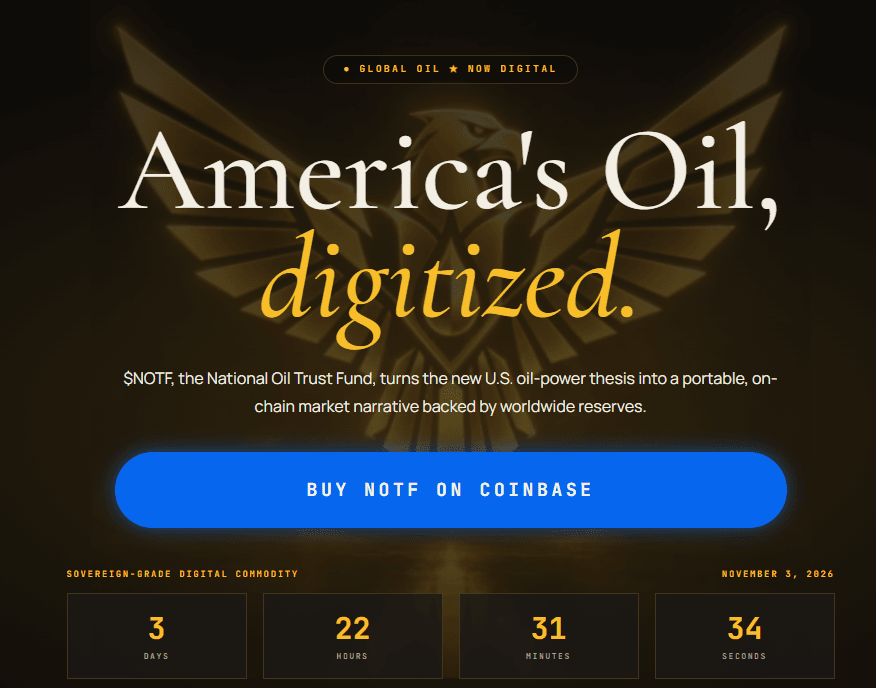
National Oil Trust Fund (NOTF) is a Solana-based crypto asset that brings the narrative of the oil and U.S. energy markets into the blockchain ecosystem. The project uses the NOTF ticker and positions its token as a digital asset associated with commodity-market theses, oil reserves, and on-chain trading.
However, there is an important point to consider before learning more about NOTF. Its official website claims to have a concept related to oil reserves, but this claim must be distinguished from verifiable proof of physical asset ownership, reserve audits, and redemption rights.
In addition, the contract address listed by CoinMarketCap DEX differs from the one on the official website. This discrepancy must be resolved before the token can be considered definitively identified.
Key Takeaways
- National Oil Trust Fund (NOTF) is a Solana-based token built around an oil and energy market narrative.
- The project website lists a total supply of 1 billion tokens, but its oil-backing claims cannot yet be considered proof of physical asset ownership.
- The difference between the contract addresses in the two references is an important detail to verify before making a transaction.
Getting to Know the National Oil Trust Fund Project
National Oil Trust Fund promotes the concept of digitizing the oil commodity narrative. Its official website uses the slogan “America's Oil, digitized” and connects the project to issues involving oil reserves, energy security, and global oil distribution routes.
The project highlights three main concepts:
- Reserves: Highlights the narrative of global oil reserves and U.S. energy strategy.
- Chokepoint: Highlights the Strait of Hormuz as a key route for global crude oil trade.
- Settlement: Promotes the idea that energy commodity narratives can be traded through open blockchain-based markets.
Through this approach, NOTF seeks to connect traditional energy markets with digital asset trading. However, using an oil-related narrative does not automatically make the token a representation of physical oil ownership.
Read also: Is DIOR Coin Legit? Check the Evidence of Its Oil Backing
How Does the NOTF Project Work?
According to its official website, NOTF is built as a digital asset that follows developments in the energy market narrative. Changes in U.S. energy strategy, oil supply conditions, and geopolitical dynamics are among the themes featured in the project ecosystem.
One issue of particular interest is the Strait of Hormuz. This route plays an important role in global oil trade, so distribution disruptions, policy changes, or geopolitical tensions can affect sentiment in energy markets.
NOTF seeks to bring this narrative into on-chain trading. This means users can trade the token through the blockchain ecosystem without directly owning or storing oil commodities.
However, following a commodity price narrative is different from having economic exposure to that commodity. The NOTF website has not provided sufficient evidence to conclude that each token represents a certain number of barrels of oil or grants a claim on physical reserves.
Which Network Does NOTF Run On?
National Oil Trust Fund uses the Solana network. This network enables token issuance and transactions through smart contracts, supported by various wallet applications and decentralized exchanges (DEXs).
The official website lists the following contract address:
EVzBqTfq24KS63ahUjRCTxAeWqHJ6pNmrNYqL5Wipump
The CoinMarketCap DEX link uses the address vFcboNofYNQuHo2HEhfEtfghUNbYZNuXXiJhxSipump,
while the official website lists EVzBqTfq24KS63ahUjRCTxAeWqHJ6pNmrNYqL5Wipump.
These are two different addresses. On-chain data research also found that the NOTF token at the EVzB address was launched on October 24, 2026, while the vFcbo address is recorded as a token created on October 29, 2026. Having the same name and ticker does not prove that they are the same asset.
Therefore, do not use price, volume, or liquidity data from one address to describe a token at another address. Verify the contract address before making a transaction.
Read also: What Is Federal Oil Trust Fund (FOTF)? Purpose, Tokenomics, and Risks
Understanding NOTF Tokenomics
Tokenomics describes a token's economic structure, from its supply and distribution to its utility and the factors that affect its circulation in the market.
The National Oil Trust Fund website provides some information about the structure of the NOTF token.

Although the website lists a total supply of 1 billion tokens, this information is not enough to describe the overall ownership distribution. Circulating supply, token allocation, and vesting schedule data are not fully explained on the page reviewed.
There are several aspects to consider when evaluating NOTF tokenomics:
- Total supply: The website states a supply of 1 billion tokens. This figure should be cross-checked against the mint account data for the correct contract address.
- Circulating supply: No verified information is currently available on the number of tokens actually circulating in the market.
- Token distribution: Allocation data for the team, community, early investors, and other parties has not been transparently disclosed.
- Token utility: Actual usable token functions should be distinguished from concepts and development plans.
- Liquidity: Liquidity availability determines how easily users can buy or sell tokens without causing significant price changes.
Important note: The total supply figure on the website should not automatically be treated as evidence of healthy distribution. Investors should still examine wallet ownership, early transactions, and token concentration across addresses.
Read also: What Is USHS? An Introduction to United States Heat Supply on Solana
What Are the Functions and Utility of the NOTF Token?
NOTF is positioned as a digital asset that brings the oil market narrative into blockchain trading. However, the token's role as a trading instrument should be distinguished from utility that provides direct benefits to its holders.
Based on the available information, several concepts highlighted by the project include:
- Exposure to the energy narrative: NOTF features themes involving oil reserves, energy security, and commodity market dynamics.
- On-chain trading: The token is designed to be traded through the Solana blockchain ecosystem.
- Open-market participation: The website promotes permissionless trading through blockchain infrastructure.
However, there is not yet sufficient documentation proving that NOTF holders receive rights to physical oil, commodity revenue, profit sharing, or asset redemption facilities.
Accordingly, the utility that can currently be identified is more closely related to token trading and the energy market narrative. Do not consider owning NOTF equivalent to owning shares in an oil company or a certificate of ownership of oil reserves.
Read also: What Is SOXLB? How It Works, Its Risks, and How It Differs from SOXL
What Is NOTF's Price and Market Condition?
The price of NOTF can change in response to trading activity, market demand, liquidity, and sentiment toward the project. Since the token uses the Solana network, its market activity can be tracked through DEX monitoring platforms and blockchain explorers.
One factor to watch is the token's age and ownership concentration. Third-party analytics data for the EVzB address records its launch on October 24, 2026, and shows that one wallet purchased approximately 79.3% of the supply within the first ten seconds of trading.
The same data records that this concentration remained among the deployer and early buyers after accounting for sales up to the October 25, 2026 snapshot.
This finding is important because concentrated ownership can increase the risk of selling pressure. If large holders sell significant amounts of tokens, the price may fall sharply, especially when market liquidity is limited.
To assess NOTF's market conditions, pay attention to the following five indicators:
- Token price: Check price movements and percentage changes across different periods.
- Trading volume: An increase in volume should be compared with the number of transactions and liquidity.
- Market capitalization: Use capitalization data from the correct contract address.
- Liquidity pool: Check the amount of assets available to support buy and sell transactions.
- Holder distribution: Observe whether the supply is widely distributed or concentrated in a few wallets.
Do not rely solely on increases in volume or market capitalization to assess a project's strength. For tokens with concentrated ownership, market capitalization based on the latest transaction price may not reflect the value that can actually be realized when large holders sell.
Read also: What Is Float (FLOAT)? How It Works, Rewards, and Tokenized Stocks
Is National Oil Trust Fund Backed by Oil?
This is one of the most important aspects to examine because NOTF's identity is closely tied to the narrative of U.S. oil reserves.
Its official website mentions the 65B+ Barrel Thesis concept, a custodian claimed to come from a top-tier regulated institution, and weekly attestations. The website also uses the term National Crude to describe the project's commodity basis.
However, mentioning reserve figures, a custodian, and an attestation process does not automatically prove that the token is backed by physical oil.
To verify these claims, at least several pieces of evidence are needed:
- Asset ownership documents: Evidence that the project or a related entity actually holds rights to oil reserves.
- Custodian identity: The name of the institution holding or managing the assets, along with evidence of its legal relationship with the project.
- Independent audit: A third-party report verifying the quantity and existence of the reserves.
- Periodic attestation: An examination report that can be accessed and verified by the public.
- Redemption rights: Terms explaining whether token holders can exchange digital assets for physical commodities or specific claims.
Until such evidence is available and can be examined, NOTF's oil-backed claim cannot be considered independently verified.
It is important to understand that an oil-themed token is not necessarily a tokenized oil asset. A project may use a commodity as a market narrative without granting ownership or direct economic rights to that asset.
Read also: USOR vs. USDF: Which Is More Attractive to Buy? Check These 5 Factors
What Are the Risks of Investing in NOTF Crypto?
Before buying NOTF, investors should understand that crypto assets with small market capitalizations and commodity-related narratives can be highly volatile.
Here are some of the main risks:
- Price volatility: Changes in sentiment can cause prices to rise or fall within a short period.
- Liquidity risk: Not all tokens can be sold quickly at the desired price.
- Ownership concentration: Large holders may influence prices through significant transactions.
- Contract risk: Choosing the wrong token address may result in purchasing an asset other than the intended one.
- Unclear backing: The lack of independent evidence of oil reserve ownership means this claim should be treated with caution.
- Speculation risk: Prices may be influenced more by the popularity of the narrative than by fundamental utility.
- Regulatory risk: The token's legal status and commodity-related claims may create uncertainty across different jurisdictions.
Investors should not use money needed for everyday expenses to buy speculative assets. Check the contract, wallet distribution, and liquidity before making a decision.
How to Buy NOTF Tokens
NOTF uses the Solana network, so transactions require a compatible wallet and SOL to pay network fees.
However, before making a purchase, first resolve the contract address discrepancy explained above. Do not buy a token based only on the NOTF ticker or the National Oil Trust Fund name.
Once the intended address has been successfully verified, the general steps are as follows:
- Prepare a Solana wallet: Use a wallet that supports the Solana network and store your recovery phrase securely.
- Prepare SOL: Fund your wallet with SOL for the transaction and network fees.
- Check the contract address: Match the token address against official information and on-chain data.
- Check the liquidity pool: Make sure there is sufficient liquidity and an appropriate trading pair.
- Make the swap: Use a DEX or swap service that supports the token. Check the number of tokens to be received and the estimated slippage.
- Verify the transaction: Check the transaction status through a Solana block explorer.
Avoid purchase links from unverified social media accounts. Never share your private key or recovery phrase with anyone.
If you want to follow developments in digital assets, crypto news, and other market analyses, you can also sign up on Bittime to receive regular market updates.
Conclusion
National Oil Trust Fund (NOTF) is a Solana-based crypto asset built around the narrative of oil reserves, energy security, and commodity trading through blockchain. The project offers a concept for digitizing the oil narrative, but the token's utility and its economic relationship with physical assets still need to be proven.
The official website lists a total supply of 1 billion tokens and makes several claims about reserves and a custodian. However, there is not yet sufficient independent evidence to confirm that NOTF is genuinely backed by physical oil or grants ownership rights to token holders.
Other risks include ownership concentration, liquidity, volatility, and differences between the contract addresses cited in the references. Therefore, National Oil Trust Fund should be viewed as a speculative crypto asset until its fundamentals and project claims can be further verified.
Before buying NOTF, make sure the contract address, tokenomics, and market conditions have been checked. Do not make a decision based solely on the oil narrative or the potential for price increases.
Bittime is alicensed Digital Financial Asset Trader (PAKD) platform supervised by the Financial Services Authority (OJK) — where you can buy Bitcoin in Indonesia and hundreds of other crypto assets starting from IDR 10,000. Registration is fast and secure, and you can get started today.
Track the USDT to IDR conversion and the real-time price movements of your favorite crypto assets. Everything is available in one crypto investment app that you can download for free from the Play Store.
Ready to get started? Sign up on Bittime now and put your investment strategy into action with a platform trusted by millions of users in Indonesia.
FAQ
What is National Oil Trust Fund (NOTF)?
National Oil Trust Fund is a Solana-based crypto asset built around the narrative of oil reserves and the U.S. energy market. The token is traded on-chain under the NOTF ticker.
Which network does NOTF coin run on?
NOTF uses the Solana blockchain. Users can check token information and transaction activity through DEX monitoring services and blockchain explorers using the correct contract address.
What are the functions and uses of the NOTF token?
NOTF is positioned as a digital asset that brings the oil market narrative into the blockchain ecosystem. However, there is insufficient evidence that the token grants ownership rights to physical oil or a share of commodity revenue.
Is National Oil Trust Fund Backed by Oil?
The NOTF website makes claims about oil reserves, a custodian, and periodic attestations. However, these claims cannot be considered proof of physical oil backing without ownership documentation and independent verification.
Is NOTF coin legitimate and safe to buy?
There is not enough evidence to fully establish NOTF's legitimacy and safety. Differences in contract addresses, ownership concentration, and uncertainty surrounding its oil backing are among the risks that should be examined before buying.
Disclaimer: The views expressed belong exclusively to the author and do not reflect the views of this platform. This platform and its affiliates disclaim any responsibility for the accuracy or suitability of the information provided. It is for informational purposes only and not intended as financial or investment advice.
.png)